• HOME
  • NEWS
  • EXPLORE
    • CAREER
      • Companies
      • Jobs
    • EVENTS
    • iGEM
      • News
      • Team
    • PHOTOS
    • VIDEO
    • WIKI
  • BLOG
  • COMMUNITY
    • FACEBOOK
    • INSTAGRAM
    • TWITTER
Tuesday, October 27, 2026
BIOENGINEER.ORG
No Result
View All Result
  • Login
  • HOME
  • NEWS
  • EXPLORE
    • CAREER
      • Companies
      • Jobs
        • Lecturer
        • PhD Studentship
        • Postdoc
        • Research Assistant
    • EVENTS
    • iGEM
      • News
      • Team
    • PHOTOS
    • VIDEO
    • WIKI
  • BLOG
  • COMMUNITY
    • FACEBOOK
    • INSTAGRAM
    • TWITTER
No Result
View All Result
Bioengineer.org
No Result
View All Result
Home NEWS Science News Biology

Agriculture blocks gene flow in fragmented sloth bear populations of India’s Terai

by
October 27, 2026
in Biology
Reading Time: 2 mins read
0
Agriculture blocks gene flow in fragmented sloth bear populations of India's Terai

Agriculture blocks gene flow in fragmented sloth bear populations of India's Terai

Share on FacebookShare on TwitterShare on LinkedinShare on RedditShare on Telegram

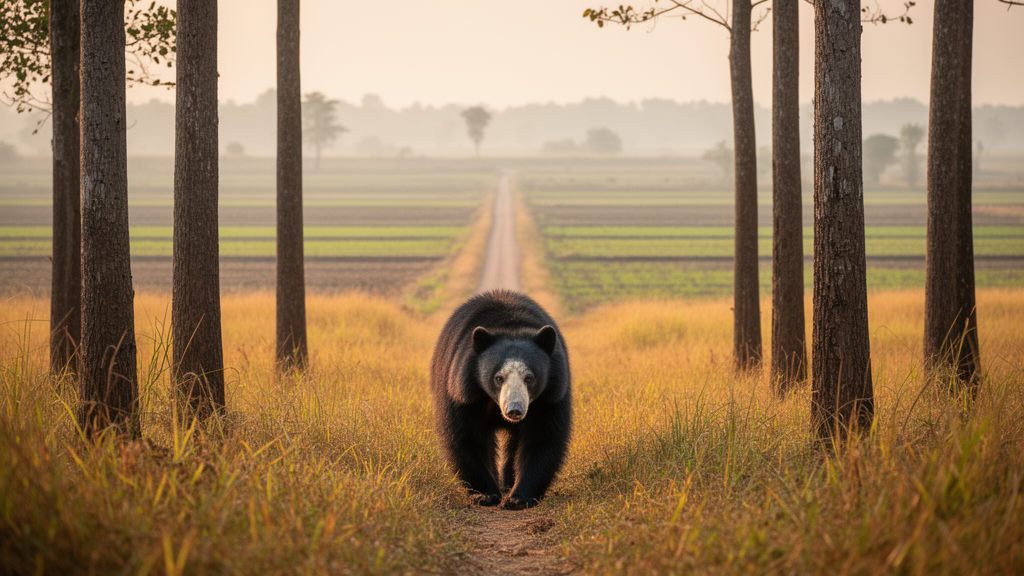
Sloth bears in India’s Central Terai landscape are split into small, genetically isolated clusters, with agriculture acting as the strongest barrier to their movement, according to a new landscape genetics study published in Heredity.

Researchers led by Divyashree Rana and Uma Ramakrishnan studied a human-dominated, multi-use region that exemplifies the challenges of conserving wildlife in highly fragmented habitats. Habitat fragmentation is a major global threat to biodiversity, producing small and isolated populations that can suffer reduced connectivity, eroded genetic diversity and elevated inbreeding risk, potentially contributing to local extinction.

The team relied entirely on non-invasively collected fecal samples, gathering 209 samples from across the landscape. Using ddRAD sequencing, they generated data at 964 genome-wide SNPs and identified 66 individual sloth bears (Melursus ursinus) among the samples.

Genetic analyses showed that spatial structure in the population was not strictly congruent with the boundaries of the protected areas. Instead, the bears formed four genetic clusters, and these clusters carried low genetic diversity, with a mean expected heterozygosity of 0.156 and a mean observed heterozygosity of 0.079.

Landscape genetic analyses pinpointed the drivers of this disconnection. Agriculture emerged as the primary barrier to gene flow across the landscape, followed by proximity to water. The finding highlights how farmland, rather than the arrangement of protected areas alone, shapes the movement of genes through this population.

The authors report that both historical population structure and contemporary fragmentation may jointly influence genetic connectivity and diversity across the landscape, meaning today’s patterns reflect layered processes rather than a single cause.

The study establishes the first genetic baseline for sloth bears in this region, a reference point against which future change can be measured. The researchers also demonstrate the utility of non-invasive samples and genome-wide SNP-based analyses for poorly studied species of conservation concern, despite experimental and bioinformatic challenges.

Because the work is based on a single landscape and a modest number of genotyped individuals, the results describe the Central Terai population specifically rather than the species across its range.

Subject of Research: Landscape genetics of sloth bear population fragmentation and connectivity in India's Central Terai

Article Title: Isolation to extinction: landscape fragmentation and connectivity in sloth bears of the Indian Terai

Article References: Rana, D., Samjith, J. C., & Ramakrishnan, U. (2026). Isolation to extinction: landscape fragmentation and connectivity in sloth bears of the Indian Terai. Heredity. https://doi.org/10.1038/s41437-026-00897-8

Image Credits: AI Generated

DOI: 10.1038/s41437-026-00897-8

Keywords: sloth bear, landscape genetics, habitat fragmentation, India, Terai, gene flow, genetic diversity, inbreeding, conservation, non-invasive sampling, SNPs, Heredity

News Source: Juliet Wilcox. (October 27, 2026). Agriculture blocks gene flow in fragmented sloth bear populations of India’s Terai. Scienmag.


Tags: Conservationgene flowGenetic diversityhabitat fragmentationHeredityinbreedingIndialandscape geneticsnon-invasive samplingsloth bearSNPsTerai
Share12Tweet7Share2ShareShareShare1

Related Posts

New framework proposes how to pick safer targets for senolytic immunotherapy

New framework proposes how to pick safer targets for senolytic immunotherapy

October 27, 2026
Herbal compound diosbulbin B worsens doxorubicin liver injury in mice

Herbal compound diosbulbin B worsens doxorubicin liver injury in mice

October 27, 2026

Golden Jackal Helpers Step Up When Breeders Vanish, Study Finds

October 27, 2026

Hydrothermal Vents Reimagined: Life’s Origins May Hinge on Linked Environments

October 27, 2026

POPULAR NEWS

  • Research report: Comparison of non-invasive serum markers for discriminating significant liver fibrosis in children with choledochal cyst

    Research report: Comparison of non-invasive serum markers for discriminating significant liver fibrosis in children with choledochal cyst

    29 shares
    Share 12 Tweet 7
  • Home-Based Geriatric Rehabilitation Matches Inpatient Care for Daily Living Independence

    29 shares
    Share 12 Tweet 7
  • New framework proposes how to pick safer targets for senolytic immunotherapy

    29 shares
    Share 12 Tweet 7
  • Weight change after HIV treatment carries layered meanings of health, stigma and identity, review finds

    29 shares
    Share 12 Tweet 7

About

We bring you the latest biotechnology news from best research centers and universities around the world. Check our website.

Follow us

Recent News

Research report: Comparison of non-invasive serum markers for discriminating significant liver fibrosis in children with choledochal cyst

Home-Based Geriatric Rehabilitation Matches Inpatient Care for Daily Living Independence

New framework proposes how to pick safer targets for senolytic immunotherapy

Subscribe to Blog via Email

Enter your email address to subscribe to this blog and receive notifications of new posts by email.

Join 85 other subscribers
  • Contact Us

Bioengineer.org © Copyright 2023 All Rights Reserved.

Welcome Back!

Login to your account below

Forgotten Password?

Retrieve your password

Please enter your username or email address to reset your password.

Log In
No Result
View All Result
  • Homepages
    • Home Page 1
    • Home Page 2
  • News
  • National
  • Business
  • Health
  • Lifestyle
  • Science

Bioengineer.org © Copyright 2023 All Rights Reserved.