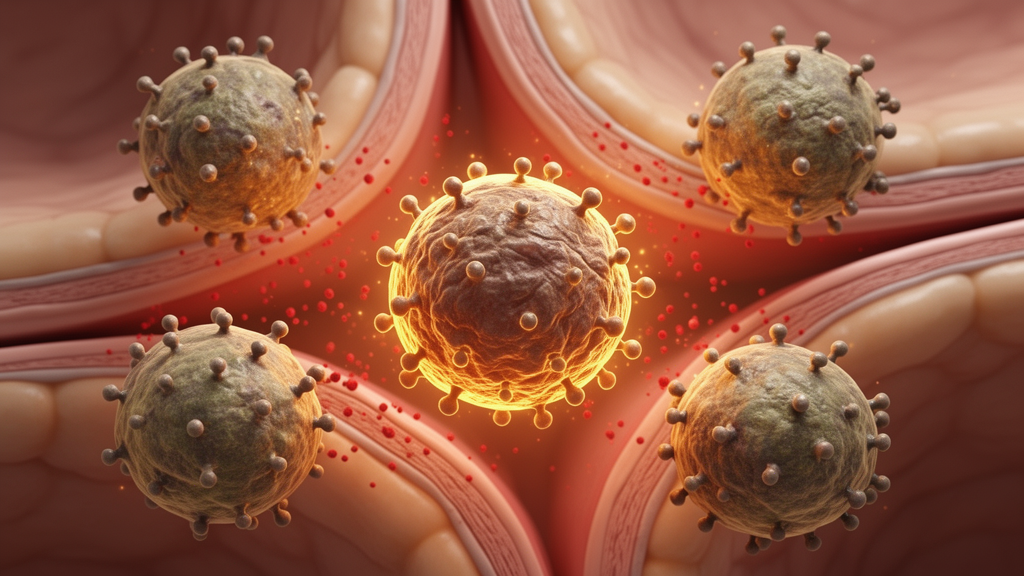
Rheumatoid arthritis has long been viewed as a disease that announces itself with burning joints and morning stiffness, but its true opening act happens years earlier, silently, in the blood. A new study published in Nature Aging by Xiaohao Wu, Mengrui Zhang, Jae-Seung Moon and colleagues, led from Stanford University and the VA Palo Alto Health Care System in collaboration with the University of Colorado Anschutz, Benaroya Research Institute and other centers, has now caught the immune system in the middle of that opening act. By applying single-cell multiomics to people who carry anticitrullinated protein antibodies, a well-known warning sign that precedes clinical rheumatoid arthritis, the team discovered that individuals who went on to develop the disease harbored a striking expansion of an unusual B cell population before they ever felt a symptom. These cells, which the researchers call activated naive B cells, or aNAVs, carry molecular hallmarks of cellular senescence, the same inflammatory, worn-out state that accumulates in tissues as we age.
The clinical backdrop to the finding is one of the most tantalizing opportunities in modern rheumatology. Anticitrullinated protein antibodies, often abbreviated ACPA, can be detected in the blood of at-risk individuals long before joints become inflamed, and their presence defines a preclinical stage of the disease. Yet only a fraction of ACPA-positive people progress to full-blown rheumatoid arthritis, and clinicians currently have no reliable way to tell who will convert and who will not. That uncertainty has frustrated prevention trials, including earlier attempts at B-cell-directed therapy in the preclinical phase, because the mechanisms that push an at-risk person over the threshold into clinical disease have remained poorly understood. The new study tackles that gap head-on by comparing the B cell landscapes of people who converted to clinical rheumatoid arthritis with those of ACPA-positive individuals who did not, alongside healthy ACPA-negative controls.
Using single-cell RNA sequencing paired with B cell receptor sequencing, the researchers profiled peripheral blood B cells from study participants sampled both before disease onset and after clinical rheumatoid arthritis had been diagnosed. The comparison revealed something remarkable: people who converted to clinical disease showed a marked expansion of a specific subset of activated naive B cells marked by the surface proteins CXCR5 and CD69. Naive B cells are normally the fresh recruits of the adaptive immune system, cells that have never yet encountered their antigen and have not undergone the affinity maturation that sharpens antibody specificity during an immune response. The idea that these immature cells should become activated, expanded and functionally dominant in the run-up to an autoimmune disease upends the conventional picture of how autoimmunity ignites.
The transcriptomic fingerprints of these cells were equally striking. Converters’ aNAV cells expressed proinflammatory gene programs alongside a suite of senescence-associated markers, including genes such as CDKN1A, which encodes the cell-cycle inhibitor p21, and other regulators long associated with aged and dysfunctional cells. In other words, these were not simply energized young lymphocytes responding to infection; they resembled senescent cells, locked into a state of chronic inflammatory secretory activity. The team validated this expansion, activation state and senescent-like phenotype in multiple independent preclinical rheumatoid arthritis cohorts, strengthening the case that the phenomenon is not an artifact of a single group of donors. Perhaps most tellingly, aNAV cells were also detectable in the synovium, the inflamed joint tissue where rheumatoid arthritis does its damage, suggesting that these cells are not bystanders in the circulation but participants in the disease process itself.
What were these cells actually doing? Sequencing of their B cell receptors provided a clue. The aNAV cells from converters expressed unmutated, polyreactive IgM receptors, antibodies capable of binding many different targets rather than one specific antigen, and a substantial fraction showed autoreactivity. Polyreactivity is a property usually associated with natural antibodies and with a subset of B cells that escape central tolerance checkpoints during development. In a healthy immune system, B cells bearing self-reactive or broadly reactive receptors are typically silenced or deleted to prevent autoimmunity. The finding that converters’ expanded aNAV population is dominated by such receptors suggests a breakdown in tolerance that occurs not in the bone marrow where B cells are born, but in the periphery, where chronically stimulated naive cells accumulate autoreactive specificities that would normally never see the light of day.
The functional experiments pushed the story further. In vitro, when the researchers stimulated aNAV cells with citrullinated antigens, the protein fragments bearing the citrulline modification that are the principal targets of the autoimmune response in rheumatoid arthritis, the cells did something naive B cells are not supposed to do well: they acted as antigen-presenting cells. The stimulated aNAV cells promoted T cell activation in a manner dependent on human leukocyte antigen molecules, the proteins that display peptide fragments to T cells for inspection. This means the senescent-like B cells are not merely producing questionable antibodies; they are actively recruiting T cells into the autoimmune conversation, potentially bridging the humoral and cellular arms of the disease. Blocking HLA class I and class II molecules in co-culture experiments abrogated this T cell activation, pinpointing antigen presentation as the mechanism.
The researchers also interrogated what drives naive B cells into this senescent-like activated state in the first place. In culture experiments using naive B cells from people with rheumatoid arthritis and from healthy controls, chronic exposure to citrullinated antigens combined with CpG, a synthetic mimic of bacterial DNA that acts as a potent innate immune stimulant through toll-like receptor 9, synergistically pushed the cells toward activation and senescent-like programming. Neither stimulus alone achieved what the combination did. This synergy offers a plausible mechanistic narrative for the preclinical phase of rheumatoid arthritis: citrullinated proteins, generated at sites of inflammation such as the lung or gum tissue where mucosal breaks have been implicated in triggering anticitrullinated antibody responses, together with innate immune signals from microbial stimulation, chronically tickle naive B cells until they adopt a dysfunctional, inflammatory, self-reactive identity that primes the system for clinical disease.
The implications for prevention are considerable. Because the aNAV expansion was observed before disease onset and distinguished converters from nonconverters, these cells could serve as a biomarker, a way of identifying which ACPA-positive individuals are truly on the path to clinical rheumatoid arthritis and might benefit most from early intervention. More ambitiously, the cells themselves represent a potential therapeutic target. If senescent-like aNAV cells are genuine contributors to disease progression rather than passive correlates, strategies aimed at depleting them, interrupting their antigen-presentation function, or reversing their senescent programming could intercept the disease before joints are ever damaged. The study’s authors are careful to frame these cells as potential contributors and therapeutic targets for prevention, and the distinction matters: demonstrating correlation across cohorts and mechanism in vitro is a crucial step, but clinical trials will be needed to show that targeting aNAV biology can actually prevent disease.
The work also resonates with a broader theme in immunology, the growing recognition that B cell senescence shapes both aging and autoimmune disease. Recent studies have shown that bacterial induction of B cell senescence drives age-related changes in the gut microbiota, that B cell senescence alters oral microbial communities, and that chronic B cell receptor signaling can push anergic B cells toward age-associated B cell states in autoimmunity. The new findings slot rheumatoid arthritis squarely into this emerging framework, portraying the preclinical phase as a period in which chronic antigenic and innate stimulation ages a subset of naive B cells prematurely, endowing them with the tools, autoreactive receptors, inflammatory gene programs and antigen-presenting capacity, to help ignite systemic autoimmunity. With the single-cell datasets and analysis code publicly deposited, the study offers the research community a detailed map of this process, and it reframes a question that has haunted rheumatology for decades: not simply why the immune system attacks the joints, but which cells, in the quiet years before the first swollen knuckle, decide to lead the charge.
Subject of Research: Senescent-like activated naive B cells in the progression from preclinical autoimmunity to clinical rheumatoid arthritis
Article Title: Senescent-like activated naive B cells contribute to progression to clinical rheumatoid arthritis
Article References: Senescent-like activated naive B cells contribute to progression to clinical rheumatoid arthritis. (n.d.). https://doi.org/10.1038/s43587-026-01236-6
Image Credits: AI Generated
DOI: 10.1038/s43587-026-01236-6
Keywords: rheumatoid arthritis, B cells, senescence, autoimmunity, ACPA, single-cell multiomics, antigen presentation, T cells, preclinical disease, immune aging, citrullinated antigens, disease prevention
News Source: Beatrice Stafford. (October 15, 2026). Aging-like B cells emerge as hidden drivers of rheumatoid arthritis onset. Scienmag.