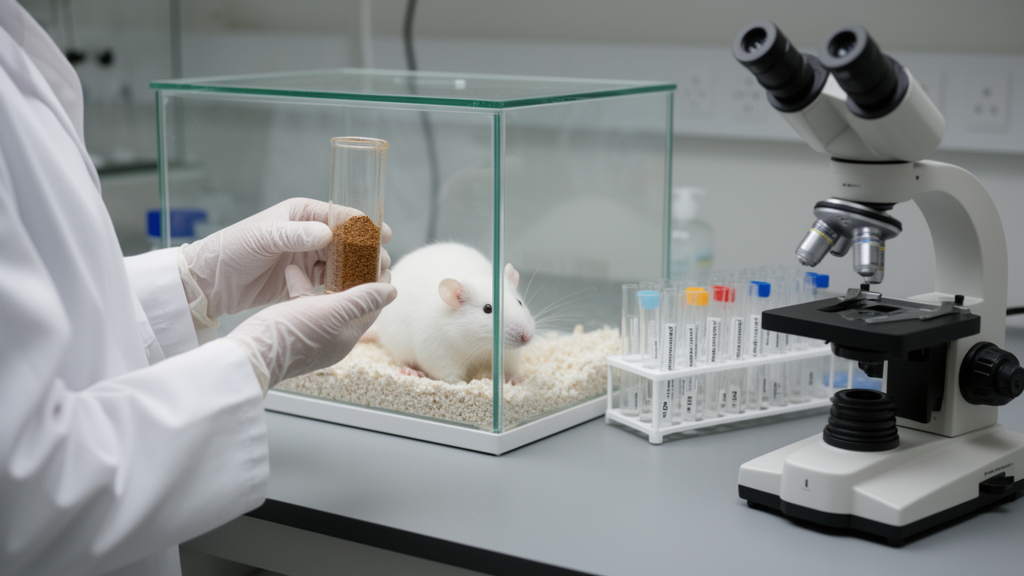
Seeds of the African walnut, Tetracarpidium conophorum, a plant widely eaten in West Africa, have been put to the test in a laboratory model of prostate enlargement. In a study published in Clinical Phytoscience, researchers at the University of Nigeria, Nsukka, reported that adding the seed meal to the diet of rats with testosterone-induced benign prostatic hyperplasia was associated with lower serum prostate-specific antigen and cholesterol levels compared with untreated animals carrying the condition. The work also mapped the seed’s nutritional and phytochemical composition and checked for acute toxicity in mice, finding no deaths or visible signs of poisoning at doses up to 5000 milligrams per kilogram of body weight.
Benign prostatic hyperplasia is one of the most common non-cancerous urological disorders of aging men. It involves growth of stromal and epithelial tissue in the transition zone of the prostate, producing enlargement and lower urinary tract symptoms such as urinary urgency, nocturia, and a weak stream. Epidemiological and autopsy studies indicate that histological evidence of the condition is present in roughly 50 to 60 percent of men in their sixties, rising to 80 to 90 percent of men older than 70. Androgen signaling is central to prostatic growth: the enzyme 5-alpha-reductase converts testosterone into the more potent dihydrotestosterone, which drives the cellular proliferation and tissue remodeling behind prostate enlargement.
Standard drug treatment relies on alpha-adrenergic blockers and 5-alpha-reductase inhibitors such as finasteride. These agents improve urinary symptoms and shrink prostate volume, but they can bring side effects including sexual dysfunction, orthostatic hypotension, and reduced libido. That trade-off has fueled interest in plant-derived compounds and dietary approaches as complementary options. Phenolic compounds and flavonoids, two classes of phytochemicals, are known to carry antioxidant and anti-inflammatory activity and may touch metabolic pathways relevant to prostate physiology, a connection that matters because oxidative stress and chronic inflammation have been implicated in prostatic disorders, including benign prostatic hyperplasia.
The Nigerian team began with the seeds themselves. Fresh Tetracarpidium conophorum seeds bought at Ogige Market in Nsukka, Enugu State, were authenticated at the university herbarium, cooked for 35 minutes, freeze-dried at minus 55 degrees Celsius for 48 hours, ground into powder, and mixed into experimental feed. Proximate analysis showed the seeds are predominantly carbohydrate, at 45.87 percent, followed by moisture at 22.50 percent and ash at 15.70 percent, with moderate crude fiber at 7.90 percent, fat at 4.50 percent, and protein the smallest fraction at 3.53 percent. Quantitative phytochemical screening by spectrophotometry found total phenolics as the most abundant bioactive class at 260.75 milligrams per 100 grams, followed by reducing sugars at 140.48 and flavonoids at 102.87, with smaller amounts of alkaloids, terpenoids, tannins, glycosides, and steroids.
Safety came next. Using the two-phase Lorke method, eighteen male mice received oral seed paste at doses from 10 up to 5000 milligrams per kilogram of body weight and were watched for 24 hours. No mortality, behavioral abnormality, or physiological disturbance appeared at any dose, so an exact median lethal dose could not be determined; the acute LD50 was simply above the highest dose tested. The authors stress that this short-term observation in mice does not establish long-term safety or safety in humans.
The main experiment used 32 male Wistar rats, each roughly 120 to 160 grams at the start. Benign prostatic hyperplasia was induced by daily subcutaneous injection of testosterone propionate at 20 milligrams per kilogram of body weight for 28 days. The animals were then split into eight groups of four. One group served as a normal control with no testosterone; one served as the untreated BPH control; one received finasteride at 1 milligram per kilogram as the standard treatment; three received testosterone plus graded doses of walnut seed meal at 400, 800, or 1200 milligrams per kilogram; and two received seed meal alone at 1000 or 1200 milligrams per kilogram. Treatments ran for 21 days after induction, and blood was drawn from the orbital venous plexus for analysis.
The biochemical readouts told a consistent story. The untreated BPH control group showed higher prostate-specific antigen, 6.10 nanograms per milliliter, and higher testosterone, 7.03 nanograms per milliliter, than the normal control, which registered 5.83 and 6.23 nanograms per milliliter respectively. PSA fell progressively across the walnut-treated groups, from 5.68 nanograms per milliliter at 400 milligrams per kilogram to 4.68 at 1200, the lowest value in the study. Statistical testing showed the 400-milligram group was not significantly different from the BPH control, while the 800 and 1200 milligram groups were significantly lower by Duncan multiple range testing. Relative to the BPH control, PSA reductions reached 6.89 percent at 400 milligrams per kilogram, 11.48 percent at 800, and 23.28 percent at 1200, while finasteride itself cut PSA by 8.69 percent. Effect size analysis attributed a large share of the PSA variation to treatment, with an eta-squared of 0.75.
Lipid changes followed a similar pattern. The BPH control group carried higher total cholesterol, 4.93 milligrams per deciliter, higher triglycerides, 1.63, and higher LDL-cholesterol, 3.19, than the normal control, and lower HDL-cholesterol at 1.18 versus 1.33. Treatment groups receiving the seed meal showed lower cholesterol relative to the BPH control, with the largest reduction, 15.82 percent, at the 400 milligram per kilogram dose. The treatment effect on total cholesterol was again large, with an eta-squared of 0.48. Antioxidant biomarkers shifted as well: reduced glutathione was lowest in the BPH control at 1.78 micromoles per liter and highest in the normal control at 3.17, with intermediate values among treated groups, while glutathione peroxidase activity was highest in the BPH control at 188.21 micromoles per liter and lowest, at 106.07, in the group given 1200 milligrams of seed meal with testosterone. Malondialdehyde differences among groups were not statistically significant. Correlation analysis tied PSA levels to the oxidative stress panel, with a moderate positive relationship with malondialdehyde, a correlation coefficient of 0.66, a strong positive relationship with glutathione peroxidase at 0.79, and a moderate negative relationship with glutathione at minus 0.46.
The authors are careful about what these numbers do and do not mean. PSA is not specific to prostate enlargement or cancer and can be influenced by several prostate-related conditions and other factors, so the observed reduction should be read as a change in a prostate-related biochemical marker rather than direct evidence that prostatic hyperplasia regressed. Likewise, the elevated glutathione peroxidase in the BPH control may reflect a compensatory response to oxidative challenge rather than better antioxidant protection, and lower enzyme activity after treatment cannot on its own be taken as proof of improved antioxidant status. No histology, prostate weights, or molecular pathways such as androgen receptor signaling or 5-alpha-reductase activity were assessed, so the mechanisms behind the PSA, lipid, and oxidative stress changes remain undetermined, and the correlations do not establish causation.
The study’s limitations frame its scope. The testosterone-induced rat model may not fully replicate the human condition, the sample size was four rats per group, and the toxicity work covered only a short observation window in mice. The researchers call for follow-up studies incorporating prostate histopathology, prostate weight measurement, molecular analyses, longer-term safety evaluation, and eventually clinical assessment to clarify whether the biochemical shifts seen here correspond to real structural or functional benefit. For now, the findings position the African walnut seed as a phytochemically rich food whose dietary administration was associated with favorable changes in selected biochemical markers in an experimental model of prostate enlargement, a hypothesis-generating result rather than a proven therapy.
Subject of Research: Effects of African walnut seed meal on biochemical markers in a rat model of testosterone-induced benign prostatic hyperplasia
Article Title: Protective effects of African walnut (Tetracarpidium conophorum) seed on biochemical and hormonal alterations in a rat model of testosterone-induced benign prostatic hyperplasia
Article References: Amaefula, A. C., Ezeanyika, L. U. S., Nwanguma, B. C., Iroha, O. K., Enemmuo, M. C., & Dingwoke, E. J. (2026). Protective effects of African walnut (Tetracarpidium conophorum) seed on biochemical and hormonal alterations in a rat model of testosterone-induced benign prostatic hyperplasia. Clinical Phytoscience, 12(1), Article 28. https://doi.org/10.1186/s40816-026-00443-3
Image Credits: AI Generated
DOI: 10.1186/s40816-026-00443-3
Keywords: African walnut, Tetracarpidium conophorum, benign prostatic hyperplasia, prostate-specific antigen, testosterone, oxidative stress, cholesterol, phytochemicals, acute toxicity, rat model, Wistar rats, Clinical Phytoscience
News Source: Alan Morgan. (October 28, 2026). African Walnut Seed Meal Alters PSA and Cholesterol in Rats with Induced Prostate Enlargement. Scienmag.