• HOME
  • NEWS
  • EXPLORE
    • CAREER
      • Companies
      • Jobs
    • EVENTS
    • iGEM
      • News
      • Team
    • PHOTOS
    • VIDEO
    • WIKI
  • BLOG
  • COMMUNITY
    • FACEBOOK
    • INSTAGRAM
    • TWITTER
Sunday, October 4, 2026
BIOENGINEER.ORG
No Result
View All Result
  • Login
  • HOME
  • NEWS
  • EXPLORE
    • CAREER
      • Companies
      • Jobs
        • Lecturer
        • PhD Studentship
        • Postdoc
        • Research Assistant
    • EVENTS
    • iGEM
      • News
      • Team
    • PHOTOS
    • VIDEO
    • WIKI
  • BLOG
  • COMMUNITY
    • FACEBOOK
    • INSTAGRAM
    • TWITTER
  • HOME
  • NEWS
  • EXPLORE
    • CAREER
      • Companies
      • Jobs
        • Lecturer
        • PhD Studentship
        • Postdoc
        • Research Assistant
    • EVENTS
    • iGEM
      • News
      • Team
    • PHOTOS
    • VIDEO
    • WIKI
  • BLOG
  • COMMUNITY
    • FACEBOOK
    • INSTAGRAM
    • TWITTER
No Result
View All Result
Bioengineer.org
No Result
View All Result
Home NEWS Science News Health

Advanced X-ray technology tells us more about Ménière’s disease

Bioengineer by Bioengineer
May 19, 2020
in Health
Reading Time: 2 mins read
0
IMAGE
Share on FacebookShare on TwitterShare on LinkedinShare on RedditShare on Telegram

IMAGE

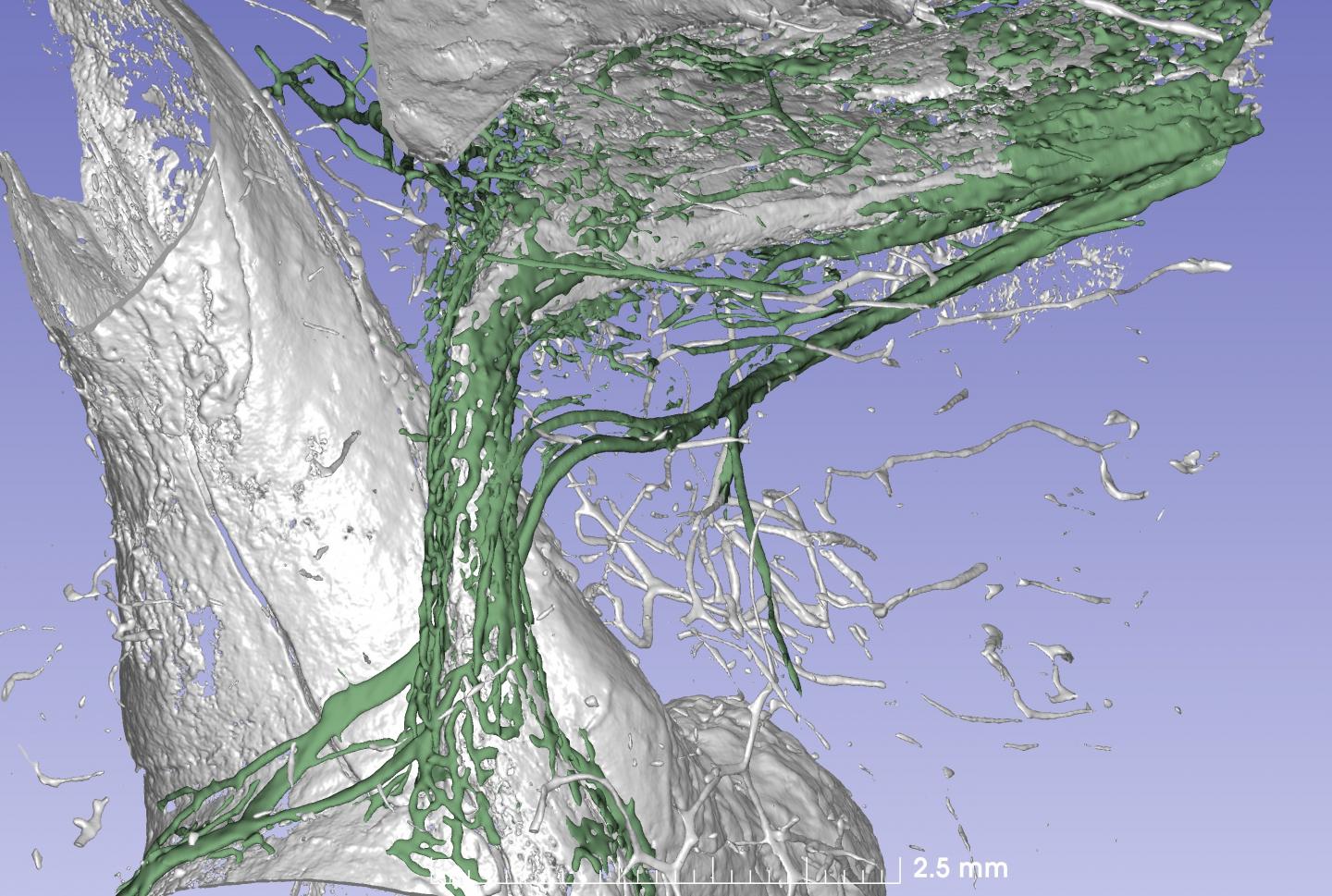
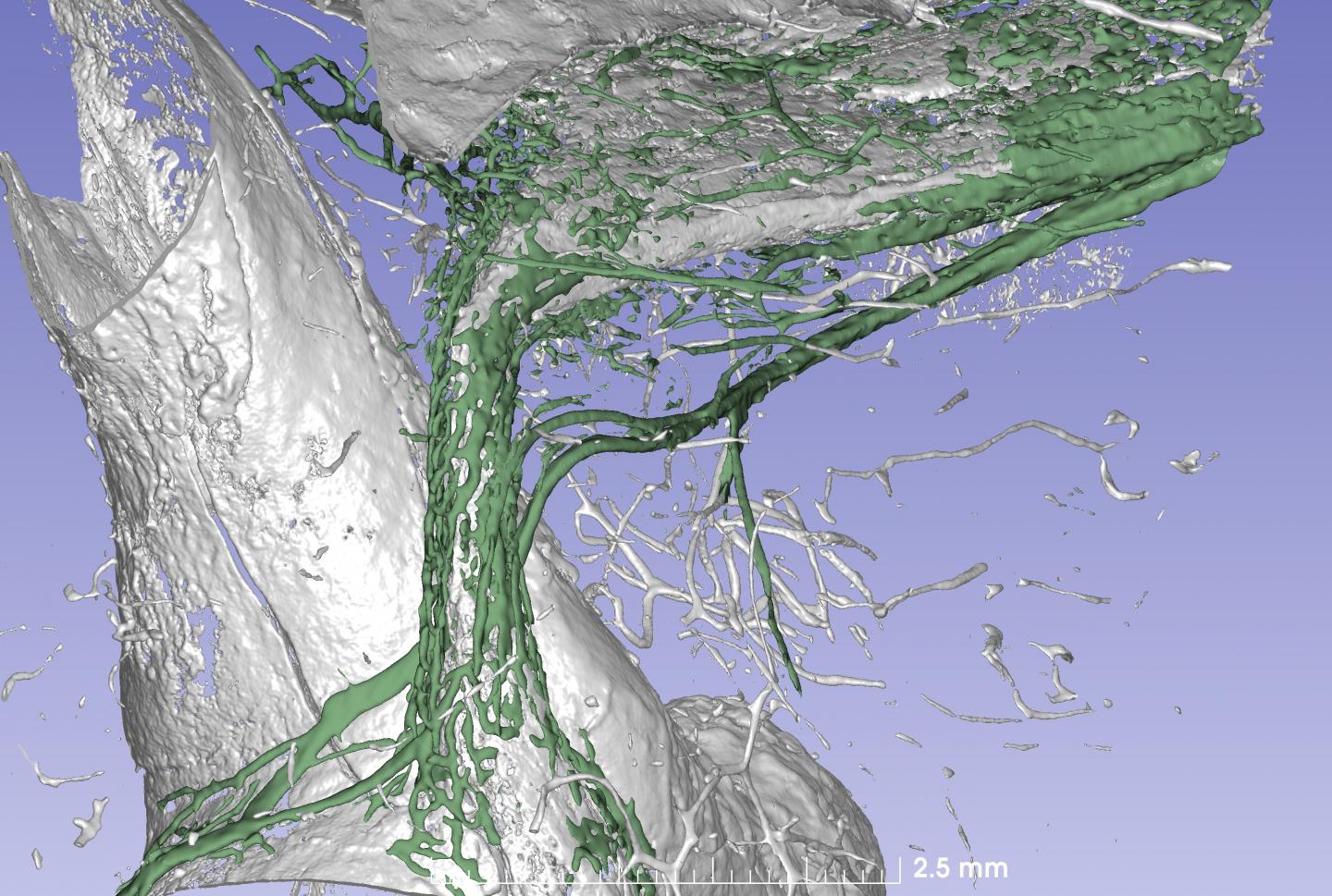
Credit: Nordström et al.

The organ of balance in the inner ear is surrounded by the hardest bone in the body. Using synchrotron X-rays, researchers at Uppsala University have discovered a drainage system that may be assumed to play a major role in the onset of Ménière’s disease, a common and troublesome disorder. These results are published in the journal Scientific Reports.

Ménière’s disease is manifested in sudden onset of severe dizziness (vertigo) attacks, hearing impairment and tinnitus. Accumulation of excess fluid in the inner ear is thought to cause the disorder, from which approximately an estimated 30,000 people in Sweden suffer.

The researchers behind the new scientific article have investigated the organs in the human inner ear, which are very difficult to study. This part of the ear is enclosed by the body’s hardest bone. Using synchrotron X-ray imaging, an advanced and powerful form of computer tomography (CT), the scientists were able to study the organ of balance with its surrounding blood vessels. Since the technology generates energy too high for use on living humans, donors’ temporal bones were used.

The images of the inner ear were reconstructed to make a three-dimensional model in the software, Inside the hard bone, the researchers discovered a drainage system that is thought to explain how the fluid in the inner ear is absorbed. This discovery may bring about an improved understanding of how and why Ménière’s disease arises.

The synchrotron imaging investigation was carried out in Saskatoon, in the Canadian province of Saskatchewan. The study was conducted jointly with Dr Sumit Agrawal and Dr Hanif Ladak, who are researchers in London, Ontario (Canada).

###

Media Contact
Helge Rask-Andersen
[email protected]

Related Journal Article

http://dx.doi.org/10.1038/s41598-020-65110-0

Tags: Hearing/SpeechMedicine/Health
Share12Tweet8Share2ShareShareShare2

Related Posts

Excess Weight Doubles Metabolic Risk and Halves IVF Success in Ovarian Syndrome Study

Excess Weight Doubles Metabolic Risk and Halves IVF Success in Ovarian Syndrome Study

October 4, 2026
Molecular Imaging Meets Genomics to Reshape Thyroid Cancer Care

Molecular Imaging Meets Genomics to Reshape Thyroid Cancer Care

October 4, 2026

Spinal Fluid Inflammatory Proteins Reveal Why ALS Progresses at Different Speeds

October 4, 2026

Lychee Seed Extract Shows Promise for Healing Oral Wounds in Lab Study

October 4, 2026
Please login to join discussion

POPULAR NEWS

  • Alloys That Shrink Their Own Grains: New PIX Mechanism Refines Metals With Heat Alone

    Alloys That Shrink Their Own Grains: New PIX Mechanism Refines Metals With Heat Alone

    29 shares
    Share 12 Tweet 7
  • Endurance Exercise Reshapes the Liver in Males and Females Through Distinct Molecular Routes

    29 shares
    Share 12 Tweet 7
  • Single Transcription Factor PU.1 Rapidly Converts Fibroblasts into Macrophage-Lineage Cells

    29 shares
    Share 12 Tweet 7
  • New Scale Measures How Ready Nurse Educators Really Are for the AI Era

    29 shares
    Share 12 Tweet 7

About

We bring you the latest biotechnology news from best research centers and universities around the world. Check our website.

Follow us

Recent News

Alloys That Shrink Their Own Grains: New PIX Mechanism Refines Metals With Heat Alone

Endurance Exercise Reshapes the Liver in Males and Females Through Distinct Molecular Routes

Single Transcription Factor PU.1 Rapidly Converts Fibroblasts into Macrophage-Lineage Cells

Subscribe to Blog via Email

Success! An email was just sent to confirm your subscription. Please find the email now and click 'Confirm' to start subscribing.

Join 85 other subscribers
  • Contact Us

Bioengineer.org © Copyright 2023 All Rights Reserved.

Welcome Back!

Login to your account below

Forgotten Password?

Retrieve your password

Please enter your username or email address to reset your password.

Log In
No Result
View All Result
  • Homepages
    • Home Page 1
    • Home Page 2
  • News
  • National
  • Business
  • Health
  • Lifestyle
  • Science

Bioengineer.org © Copyright 2023 All Rights Reserved.