• HOME
  • NEWS
  • EXPLORE
    • CAREER
      • Companies
      • Jobs
    • EVENTS
    • iGEM
      • News
      • Team
    • PHOTOS
    • VIDEO
    • WIKI
  • BLOG
  • COMMUNITY
    • FACEBOOK
    • INSTAGRAM
    • TWITTER
Wednesday, July 1, 2026
BIOENGINEER.ORG
No Result
View All Result
  • Login
  • HOME
  • NEWS
  • EXPLORE
    • CAREER
      • Companies
      • Jobs
        • Lecturer
        • PhD Studentship
        • Postdoc
        • Research Assistant
    • EVENTS
    • iGEM
      • News
      • Team
    • PHOTOS
    • VIDEO
    • WIKI
  • BLOG
  • COMMUNITY
    • FACEBOOK
    • INSTAGRAM
    • TWITTER
  • HOME
  • NEWS
  • EXPLORE
    • CAREER
      • Companies
      • Jobs
        • Lecturer
        • PhD Studentship
        • Postdoc
        • Research Assistant
    • EVENTS
    • iGEM
      • News
      • Team
    • PHOTOS
    • VIDEO
    • WIKI
  • BLOG
  • COMMUNITY
    • FACEBOOK
    • INSTAGRAM
    • TWITTER
No Result
View All Result
Bioengineer.org
No Result
View All Result
Home NEWS Science News Chemistry

Adding copper strengthens 3D-printed titanium

Bioengineer by Bioengineer
December 4, 2019
in Chemistry
Reading Time: 2 mins read
0
IMAGE
Share on FacebookShare on TwitterShare on LinkedinShare on RedditShare on Telegram

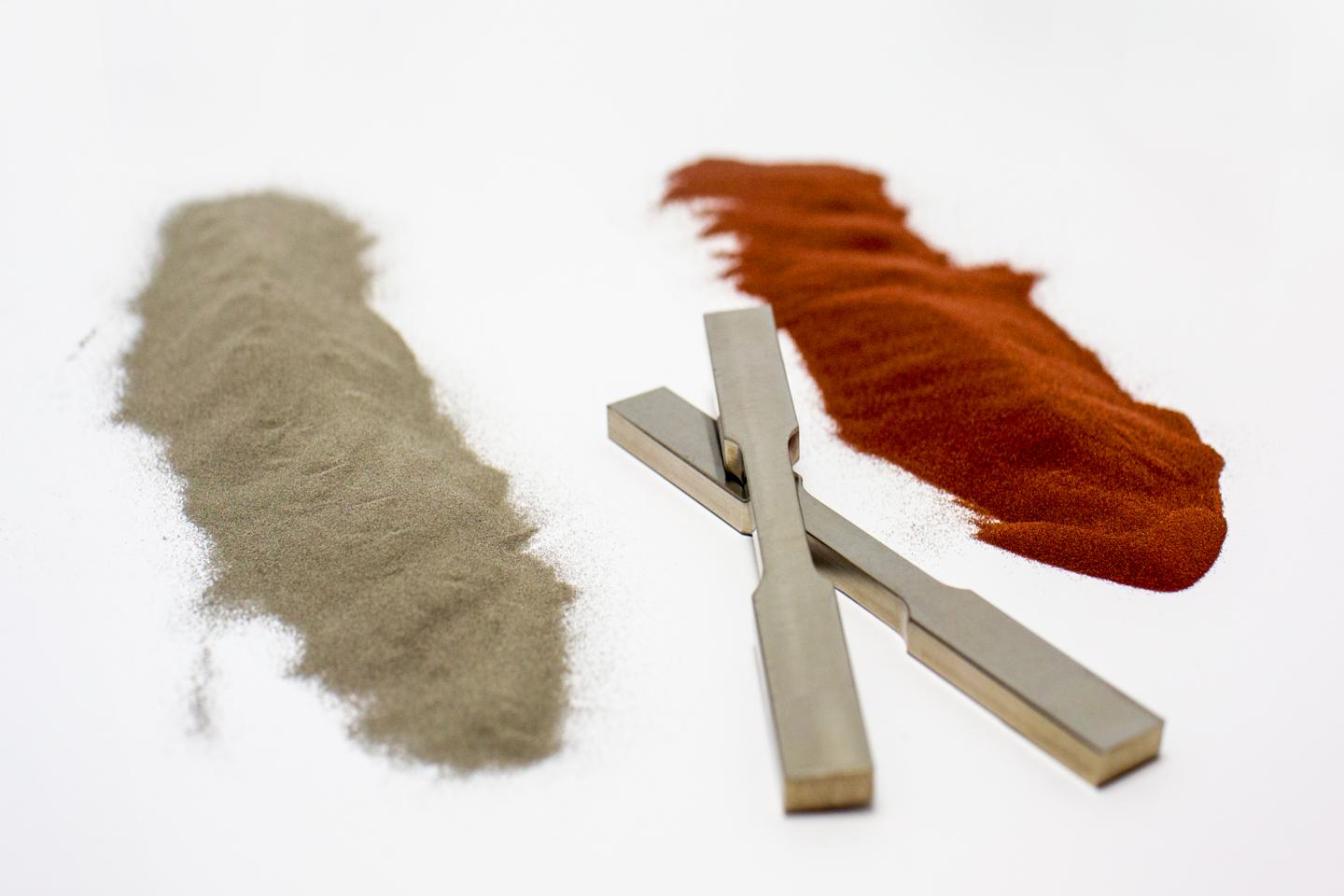
Successful trials of titanium-copper alloys for 3D printing could kickstart a new range of high-performance alloys for medical device, defence and aerospace applications
IMAGE

Credit: RMIT University

Successful trials of titanium-copper alloys for 3D printing could kickstart a new range of high-performance alloys for medical device, defence and aerospace applications.

Current titanium alloys used in additive manufacturing often cool and bond together in column-shaped crystals during the 3D printing process, making them prone to cracking or distortion.

And unlike aluminium or other commonly used metals, there is no commercial grain refiner for titanium that manufacturers can use to effectively refine the microstructure to avoid these issues.

But now a new titanium alloy with copper, unveiled today in Nature, appears to have solved this problem.

Professor Mark Easton from RMIT University’s School of Engineering said their titanium-copper alloy printed with “exceptional properties” without any special process control or additional treatment.

“Of particular note was its fully equiaxed grain structure: this means the crystal grains had grown equally in all directions to form a strong bond, instead of in columns, which can lead to weak points liable to cracking.”

“Alloys with this microstructure can withstand much higher forces and will be much less likely to have defects, such as cracking or distortion, during manufacture,” Easton said.

The collaborative project involved leading researchers in the area of alloy composition and grain microstructure from RMIT University, CSIRO, the University of Queensland and the Ohio State University.

CSIRO Senior Principal Research Scientist, Dr Mark Gibson, said their findings also suggest similar metal systems could be treated in the same way to improve their properties.

“Titanium-copper alloys are one option, particularly if the use of other additional alloying elements or heat treatments can be employed to improve the properties further,” he said.

“But there are also a number of other alloying elements that are likely to have similar effects. These could all have applications in the aerospace and biomedical industries.”

Gibson said the new breed of alloys could increase manufacturers’ production rates and allow for more complex parts to be manufactured.

“In general, it opens up the possibility of developing a new range of titanium-based alloys specifically developed for 3D printing with exceptional properties,” he said.

“It has been a delight, as it has been my good fortune for some time, to work on such an interesting and significant project as this with such a talented band of scientists.”

###

The work was part of a project funded by the Australian Research Council. The study ‘Additive manufacturing of ultrafine-grained high-strength titanium alloys’ is published in Nature with DOI 10.1038/s41586-019-1783-1

RMIT researchers involved in the multi-partner collaboration: Dr Dong Qiu, Professor Mark Easton and Dr Duyao Zhang.

Media Contact
Michael Quin
[email protected]
61-499-515-417

Related Journal Article

http://dx.doi.org/10.1038/s41586-019-1783-1

Tags: Industrial Engineering/ChemistryMaterialsResearch/DevelopmentTechnology/Engineering/Computer Science
Share12Tweet8Share2ShareShareShare2

Related Posts

Applying Physical Pressure Can Double EV Battery Lifespan and Slash Environmental Impact — Chemistry

Applying Physical Pressure Can Double EV Battery Lifespan and Slash Environmental Impact

July 1, 2026
Scientists Capture Ultrafast Chemical Reactions Unfolding in Real Time — Chemistry

Scientists Capture Ultrafast Chemical Reactions Unfolding in Real Time

July 1, 2026

Biochar-Based Materials Offer Promising Solution for Sustainable Uranium Recovery in Nuclear Energy

June 30, 2026

From Cells to Boundaries: Unveiling the Origins of Biological Order

June 30, 2026
Please login to join discussion

POPULAR NEWS

  • Detection of EDCs in Breast Milk and Infant Urine Up to Six Months Highlights Early Exposure Risks

    77 shares
    Share 31 Tweet 19
  • Saying Goodbye to PGY-6: Pediatric Fellowship Realities

    103 shares
    Share 41 Tweet 26
  • New Drug Candidate Developed at McMaster Shows Potential for Treating Brain Cancer

    58 shares
    Share 23 Tweet 15
  • KTU Researchers Explore Ultrasound’s Role in Enhancing Blood Flow Beyond Diagnostics

    53 shares
    Share 21 Tweet 13

About

We bring you the latest biotechnology news from best research centers and universities around the world. Check our website.

Follow us

Recent News

New Review Confirms: Approved mRNA Vaccines Are Safe, Effective, and Hold Promise for Future Disease Prevention and Treatment

New Study Suggests Melatonin Could Alleviate Chronic Pain

New Study Uncovers 3D Genome Organization During Germ Cell Formation Across Evolutionary Time

Subscribe to Blog via Email

Enter your email address to subscribe to this blog and receive notifications of new posts by email.

Join 82 other subscribers
  • Contact Us

Bioengineer.org © Copyright 2023 All Rights Reserved.

Welcome Back!

Login to your account below

Forgotten Password?

Retrieve your password

Please enter your username or email address to reset your password.

Log In
No Result
View All Result
  • Homepages
    • Home Page 1
    • Home Page 2
  • News
  • National
  • Business
  • Health
  • Lifestyle
  • Science

Bioengineer.org © Copyright 2023 All Rights Reserved.