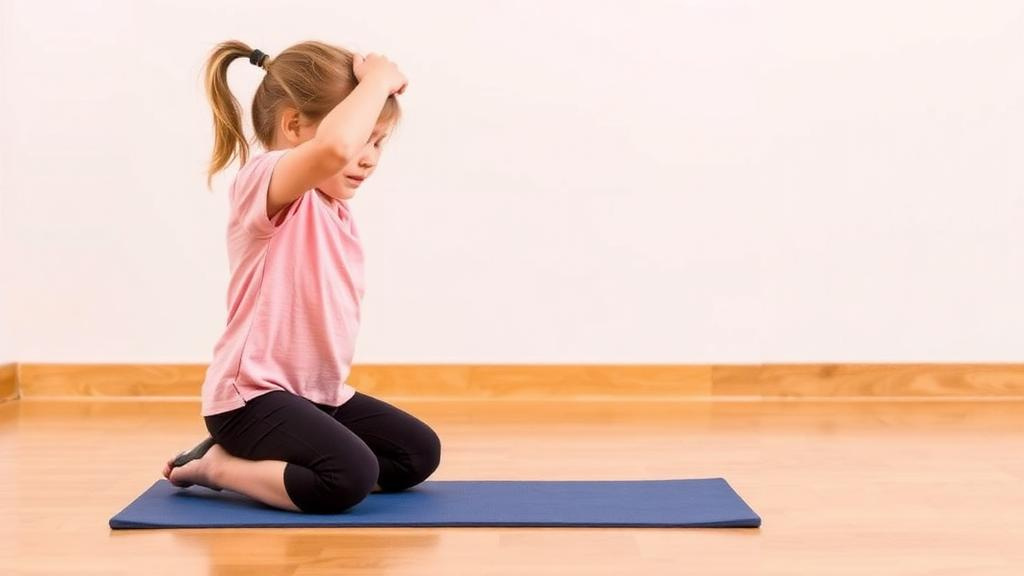
For millions of children worldwide living with cerebral palsy, the simple act of standing upright or walking across a room can demand enormous effort. Now, one of the most comprehensive syntheses of rehabilitation research to date offers fresh and encouraging answers about which forms of active therapy actually work. A systematic review and three-level meta-analysis published in BMC Pediatrics has pooled evidence from twenty-six randomized controlled trials to quantify how active motor rehabilitation affects gait, balance, and postural stability in children and adolescents with the condition. The headline finding is striking: across all intervention types and outcome measures, active rehabilitation produced a statistically significant overall benefit, with a pooled effect size of Hedges’ g equal to 0.511 and a 95 percent confidence interval running from 0.299 to 0.724, a result the authors report as highly significant at p less than 0.001.
Cerebral palsy is the most common developmental motor disorder of childhood, arising from injury or malformation of the developing brain and producing a wide spectrum of movement and postural difficulties. Gait abnormalities and impaired balance are among the core problems that limit a child’s ability to participate in everyday activities, from playground games to classroom transitions. Because no two children present identically, clinicians have long debated which rehabilitation modalities deserve priority. Active motor rehabilitation, which requires the child to generate movement rather than receive passive treatment, has been widely adopted in clinics around the world, yet rigorous head-to-head comparisons of its different forms have been lacking. The new analysis, led by Huixia Yang of Chizhou University with colleagues from Tongji University, Chengdu Sport University, Nanjing Sports Institute, Huangshan Health Vocational College, and Southwest University, set out to close that evidence gap.
The research team searched four major biomedical databases, PubMed, Embase, Web of Science, and the Cochrane Library, from their inception through June 19, 2026, and included only randomized controlled trials evaluating active motor rehabilitation in children and adolescents with cerebral palsy. The trials covered participants whose reported mean ages ranged from 6.2 to 15.9 years, spanning the crucial school-age and adolescent window in which motor habits consolidate and independence grows. The study was prospectively registered on PROSPERO under registration number CRD420261459915, and the authors followed PRISMA reporting guidelines, applying the Cochrane Risk of Bias Tool version 2 to assess methodological quality. Rather than collapsing all results into a single average, the team employed a three-level random-effects model, a statistical architecture that acknowledges three distinct sources of variation: differences between participants within a study, differences between effect sizes within the same study, and differences between studies.
That three-level structure matters because a single trial often reports multiple outcomes, such as walking speed, balance scores, and postural sway, all measured in the same children. Traditional meta-analytic approaches either discard some of this information or risk treating correlated outcomes as independent. By modeling the nested structure of the data, the researchers preserved fifty-eight effect sizes drawn from the twenty-six trials while appropriately accounting for their dependence. The heterogeneity statistics told an interesting story: the level-two component, reflecting variation among effect sizes within studies, accounted for 65.9 percent of the total variance, while the level-three component, reflecting variation between studies, contributed just 7.9 percent. The 95 percent prediction interval stretched from minus 0.774 to 1.796, a reminder that individual children and individual trials may respond quite differently even when the average effect is clearly positive.
When the analysis was broken down by outcome category, two domains stood out. Balance function showed a pooled effect size of 0.554, significant at p equal to 0.008, while postural stability produced an even larger estimate of 0.889, significant at p equal to 0.043. Postural stability, typically measured through instruments that track the body’s center of pressure as a child attempts to hold still or reach, represents one of the most fundamental building blocks of motor function, since every voluntary movement is layered atop the constant, largely unconscious work of staying upright. The finding that active rehabilitation meaningfully improves this foundation suggests that the benefits of therapy may cascade upward into more visible skills such as walking and running. Gait outcomes, while included in the broad cross-domain estimate, did not reach significance as a separate subgroup, hinting that walking improvements may be harder to achieve or harder to measure consistently across trials.
Among the intervention modalities compared, balance training emerged with the highest pooled point estimate, g equal to 1.038 with p equal to 0.046, a large effect by conventional benchmarks in rehabilitation science. However, the formal test of differences between modalities was not statistically significant, with p equal to 0.214, meaning the data cannot yet declare one type of therapy definitively superior to another. Similarly, between-subgroup tests for outcome category, cerebral palsy topography, and age group all fell short of significance. The authors interpret this cautiously: although the point estimates point toward clearer benefits for balance and postural control, the evidence base is not yet strong enough to make categorical claims about which children benefit most from which intervention. What the analysis does support is the conclusion that active motor rehabilitation, taken as a whole, is an effective component of individualized motor-function management for this population.
The practical implications for therapists and families are nonetheless concrete. The authors suggest that structured balance training may be considered when balance function or postural control is the specific treatment target. This aligns with a broader shift in pediatric rehabilitation toward task-specific, goal-directed training, in which the nervous system is challenged to solve the exact problems the child faces in daily life. Balance training programs in the included trials encompassed approaches designed to destabilize and re-stabilize the body, forcing continuous recalibration of the sensory and motor systems that govern posture. Tools familiar to clinicians appear throughout the evidence base, including the Pediatric Balance Scale, the Timed Up and Go test, the Functional Reach Test, and laboratory measures of limits of stability, while walking capacity was tracked with instruments such as the 10-Meter Walk Test, the 2-Minute Walk Test, the 6-Minute Walk Test, and the Gross Motor Function Measure.
Robustness was addressed through a leave-one-study-out sensitivity analysis, in which the pooled estimate was recalculated twenty-six times, each time omitting a different trial. This procedure guards against the possibility that a single unusually large or unusual study is driving the overall result. The fact that the broad estimate remained significant across these iterations lends weight to the central conclusion. Still, the authors are careful about the limits of the evidence. The prediction interval’s wide range, dipping below zero at its lower bound, indicates that some future trials could plausibly find null or even negative effects in specific contexts. Subgroup tests that fail to reach significance should not be read as proof that all interventions are equivalent; they more likely reflect limited statistical power given the number of trials available in each category.
For the research community, the study also highlights methodological lessons. The dominance of within-study heterogeneity, at 65.9 percent, suggests that a single trial can produce markedly different effect sizes depending on the outcome measured, reinforcing the value of multi-outcome designs and of statistical models that respect that structure. The modest between-study heterogeneity is itself notable, implying that the trials were more consistent with one another than many rehabilitation syntheses have been. The analysis examined training dosage as well, though dosage-related subgroup tests did not yield significant differences, leaving open the question of how much therapy is enough and whether more is better.
What emerges from this work is a measured but genuinely hopeful message. Active motor rehabilitation works, on average, for children and adolescents with cerebral palsy, and the largest signal appears in the domains of balance and postural control, with balance training posting the single highest pooled estimate among the modalities examined. For clinicians designing individualized care plans, the evidence supports placing structured balance work at the center of treatment when postural control is the goal, while continuing to view gait outcomes as part of a longer developmental arc. For families, the findings underscore that the effort children invest in active therapy, the sweat and repetition of moving their own bodies through challenging tasks, is not in vain. And for researchers, the study maps the terrain of what remains unknown: which children, at which ages, with which patterns of motor impairment, stand to gain the most, and how the dose and duration of training should be tuned. Those questions will shape the next generation of trials, but the foundation they will build upon has just become considerably firmer.
Subject of Research: Effects of active motor rehabilitation on gait, balance, and postural stability in children and adolescents with cerebral palsy
Article Title: Effects of active rehabilitation on gait, balance and postural stability in children and adolescents with cerebral palsy: a systematic review and three-level meta-analysis
Article References: Effects of active rehabilitation on gait, balance and postural stability in children and adolescents with cerebral palsy: a systematic review and three-level meta-analysis. (n.d.). https://doi.org/10.1186/s12887-026-07862-8
Image Credits: AI Generated
DOI: 10.1186/s12887-026-07862-8
Keywords: cerebral palsy, active rehabilitation, balance training, postural stability, gait, meta-analysis, pediatric rehabilitation, randomized controlled trials, motor function, physical therapy, children, adolescents
News Source: Ophelia Keating. (October 14, 2026). Active Rehabilitation Boosts Balance and Stability in Children with Cerebral Palsy, Landmark Analysis Finds. Scienmag.