• HOME
  • NEWS
  • EXPLORE
    • CAREER
      • Companies
      • Jobs
    • EVENTS
    • iGEM
      • News
      • Team
    • PHOTOS
    • VIDEO
    • WIKI
  • BLOG
  • COMMUNITY
    • FACEBOOK
    • INSTAGRAM
    • TWITTER
Friday, November 20, 2026
BIOENGINEER.ORG
No Result
View All Result
  • Login
  • HOME
  • NEWS
  • EXPLORE
    • CAREER
      • Companies
      • Jobs
        • Lecturer
        • PhD Studentship
        • Postdoc
        • Research Assistant
    • EVENTS
    • iGEM
      • News
      • Team
    • PHOTOS
    • VIDEO
    • WIKI
  • BLOG
  • COMMUNITY
    • FACEBOOK
    • INSTAGRAM
    • TWITTER
No Result
View All Result
Bioengineer.org
No Result
View All Result
Home NEWS Science News Chemistry

Acetone Phase Separation Recovers Lithium Bromide and Yields Tunable Silk Ionogels

by
November 8, 2026
in Chemistry
Reading Time: 2 mins read
0
Acetone Phase Separation Recovers Lithium Bromide and Yields Tunable Silk Ionogels

Acetone Phase Separation Recovers Lithium Bromide and Yields Tunable Silk Ionogels

Share on FacebookShare on TwitterShare on LinkedinShare on RedditShare on Telegram

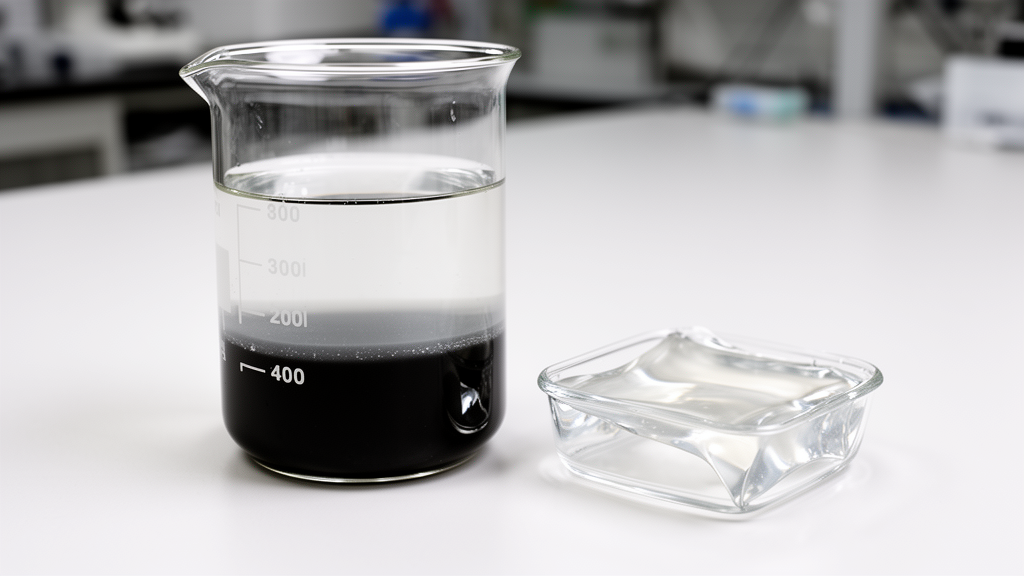
An acetone-assisted phase separation strategy combines lithium bromide recovery with the functional transformation of silk fibroin to produce ionogels with tunable mechanical properties while reducing downstream dialysis burdens. Lithium bromide is widely used to dissolve silk fibroin, but conventional dialysis desalination remains time-consuming, water-intensive, and prone to salt loss.

Adjusting the volume ratio of the silk fibroin-lithium bromide solution to acetone drives the spatial redistribution of salt, water, and protein throughout the mixture. Under an optimal volume ratio of 1:6, the recovery rates for lithium bromide and acetone reach 71.34 percent and 77.55 percent, respectively. Simultaneously, the recovery rate of regenerated silk fibroin reaches 98.88 ± 0.63 percent, demonstrating high material retention alongside solvent and salt separation.

The acetone-assisted pretreatment substantially lessens the early-stage ion-removal burden during subsequent dialysis desalination. Experiments showed that the treated system achieved the designated conductivity threshold of approximately 100 µS cm⁻¹ in roughly one-third of the duration required by the untreated control group. Both the treated and untreated systems ultimately reached their final stable conductivity plateaus at comparable time points.

Structural and material characterization confirmed that the phase separation procedure preserved the integrity of the regenerated protein. Fourier-transform infrared spectroscopy, X-ray diffraction, Zeta potential measurements, and tensile testing indicated that the acetone treatment caused no noticeable adverse effects on the secondary structure, aggregation state, surface charge, or macro-scale mechanical properties of the regenerated silk fibroin under the tested experimental conditions.

Building upon the recovered material, researchers introduced 1,4-butanediol diglycidyl ether to stabilize the concentrated silk fibroin-lithium bromide mixture and fabricate functional ionogels designated as SL-B gels. This chemical crosslinking step converts the salt-rich silk fibroin phase into a cohesive gel network, integrating resource recovery and functional conversion into a single processing framework.

Varying the crosslinker content provided direct control over the mechanical and conformational profile of the resulting ionogels. Elevating the 1,4-butanediol diglycidyl ether dosage from 12.5 to 25 µL g⁻¹ increased the tensile strength from 94.08 to 218.76 kPa, whereas increasing the concentration to 50 µL g⁻¹ caused strength to plateau and reduced elongation at break from 40.65 to 19.66 percent. Infrared spectroscopy linked these mechanical shifts to a decline in relative β-sheet content alongside an increase in random-coil structures, and the hydrated ionogels demonstrated high resistance to sustained burning.

Subject of Research: Acetone-assisted lithium bromide recovery and silk fibroin ionogel fabrication

Article Title: Acetone-assisted phase separation enables LiBr recovery and functional conversion of silk fibroin into mechanically tunable ionogels

Article References: Chen, F., Shi, Z., Yao, Y., Yu, X., & Wang, X. (2027). Acetone-assisted phase separation enables LiBr recovery and functional conversion of silk fibroin into mechanically tunable ionogels. Polymer Bulletin, 84(1), Article 16. https://doi.org/10.1007/s00289-026-06774-y

Image Credits: AI Generated

DOI: 10.1007/s00289-026-06774-y

Keywords: silk fibroin, lithium bromide, phase separation, ionogels, acetone, BDDE, polymer chemistry, biomaterials, Acetone-assisted, phase, separation, enables

News Source: Bethany Barker. (November 8, 2026). Acetone Phase Separation Recovers Lithium Bromide and Yields Tunable Silk Ionogels. Scienmag.

Tags: acetoneAcetone-assistedBDDEbiomaterialsEnablesionogelslithium bromidephasephase separationPolymer Chemistryseparationsilk fibroin
Share12Tweet7Share2ShareShareShare1

Related Posts

Microelectronic Telemetry Chips Monitor Chemical Reactions Wirelessly Inside Test Tubes

Microelectronic Telemetry Chips Monitor Chemical Reactions Wirelessly Inside Test Tubes

November 20, 2026
Activated Banana Peel Carbon Delivers 360 Farads per Gram for Supercapacitors

Activated Banana Peel Carbon Delivers 360 Farads per Gram for Supercapacitors

November 20, 2026

Analytical Chemistry Guides Tunable Solvents for Biomethane Gas Purification

November 20, 2026

Pyrrolysine Inhibits Zinc Acid Corrosion Reaching 93.82 Percent Protection Efficiency

November 20, 2026

POPULAR NEWS

  • Biased Bubble Chain Navigation Helps Indoor Mobile Robots Accommodate Approaching Pedestrians

    Biased Bubble Chain Navigation Helps Indoor Mobile Robots Accommodate Approaching Pedestrians

    29 shares
    Share 12 Tweet 7
  • Thermophilic Fungus Engineered for High-Yield Bacterial Dipeptidyl Peptidase 4 Secretion

    29 shares
    Share 12 Tweet 7
  • Anterior Talar Osteotomy Corrects Equinus Deformity While Preserving Joint Congruence

    29 shares
    Share 12 Tweet 7
  • Biosensor Mouse Shows Mammary Defects Reversed by Estrogen and Genetic Crossing

    29 shares
    Share 12 Tweet 7

About

We bring you the latest biotechnology news from best research centers and universities around the world. Check our website.

Follow us

Recent News

Analog Neural Resampling Cleans Wireless Noise to Restore Motor Decoder Accuracy

Modified Genomic-Tip Protocol Yields High-Molecular-Weight DNA from Darkly Pigmented Fungi

Perspective Proposes Protected Information Continuity for Newborn Relinquishment Pathways

Subscribe to Blog via Email

Enter your email address to subscribe to this blog and receive notifications of new posts by email.

Join 89 other subscribers
  • Contact Us

Bioengineer.org © Copyright 2023 All Rights Reserved.

Welcome Back!

Login to your account below

Forgotten Password?

Retrieve your password

Please enter your username or email address to reset your password.

Log In
No Result
View All Result
  • Homepages
    • Home Page 1
    • Home Page 2
  • News
  • National
  • Business
  • Health
  • Lifestyle
  • Science

Bioengineer.org © Copyright 2023 All Rights Reserved.