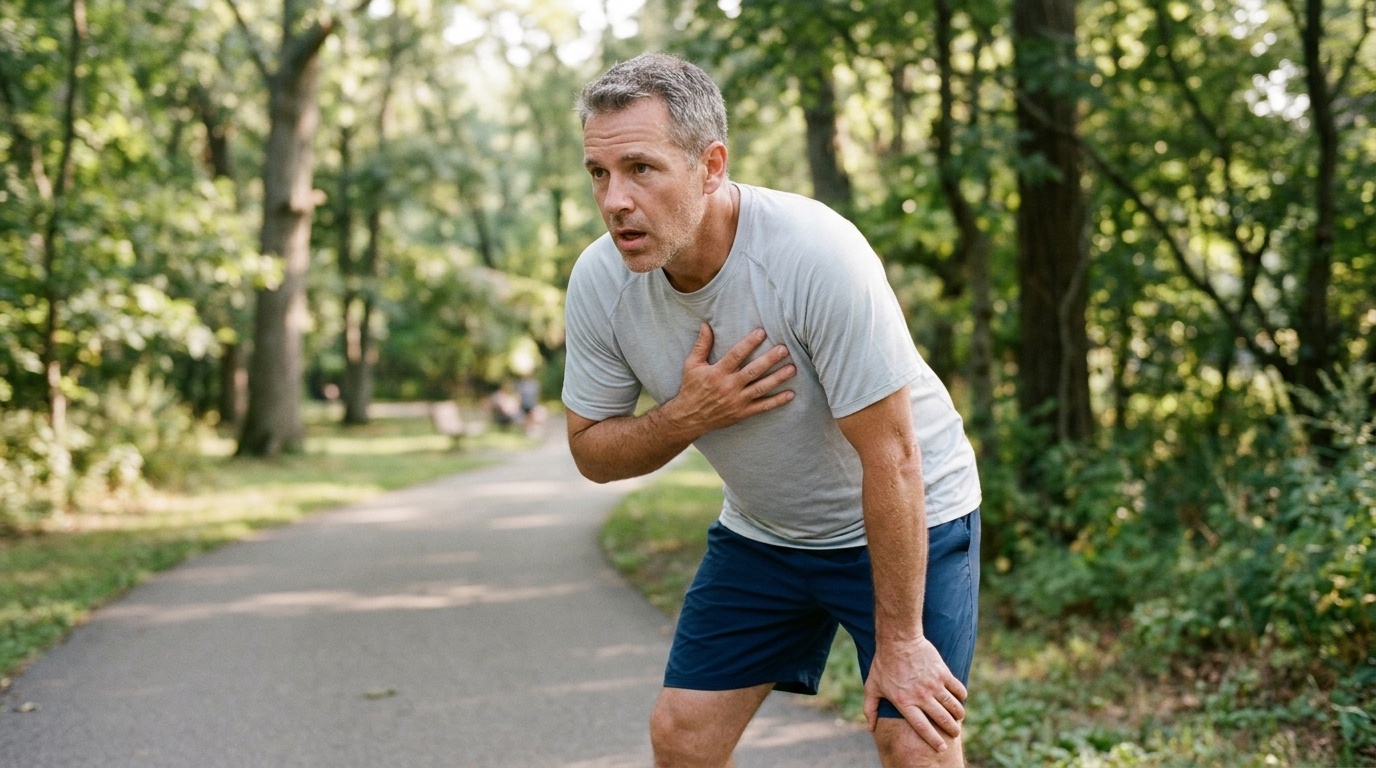
In a cross-sectional study from the PROTECTION trial, researchers found that 16.5 percent of adults with non-insulin-dependent type 2 diabetes experienced abnormal exertional dyspnea during maximal exercise testing. The findings, published in Cardiovascular Diabetology, identified the prevalence, physiological characteristics, and independent predictors of excessive breathlessness in this patient population.
The study cohort consisted of 97 adults with well-controlled, non-insulin-dependent type 2 diabetes. Participants underwent a comprehensive set of baseline clinical evaluations, including spirometry, cardiopulmonary exercise echocardiography, assessments of physical activity, body composition, blood pressure, standard bloodwork, and handgrip strength measurements.
Exercise capacity and symptoms were evaluated during a maximal upright cardiopulmonary exercise test, where participants reported perceived breathlessness using the Borg 0 to 10 dyspnea rating scale. The investigators classified dyspnea ratings falling above the 95th percentile of predicted values as abnormal, identifying approximately one in six individuals with excessive exertional breathlessness.
Comparative analyses revealed multiple physiological differences between individuals with abnormal exertional dyspnea and those without it. Patients experiencing abnormal breathlessness demonstrated significantly lower lung function, decreased peak oxygen uptake, and a higher semisupine left atrial volume index at rest compared to their counterparts (p < 0.05).
Cardiovascular assessments also showed that individuals with abnormal dyspnea exhibited higher semisupine estimated left ventricle filling pressures alongside lower biventricular systolic indices at rest and during low-intensity exercise (p < 0.05). Baseline between-group comparisons were evaluated using ANOVA, Mann-Whitney U, or chi-square tests.
To identify the key factors contributing to abnormal exertional breathlessness, the researchers conducted an exploratory analysis across 19 potential predictive variables and developed a multivariable binary logistic regression model. The final model retained resting E/e′avgrest and FEV1(%predicted), accounting for 15 to 26 percent of the variance in abnormal dyspnea (Nagelkerke R² = 0.255).
According to the multivariable model, each unit increase in resting E/e′avgrest raised the odds of abnormal dyspnea by 44 percent (odds ratio 1.44, 95% confidence interval 1.10 to 1.90, p = 0.009). In contrast, each one percent increase in FEV1(%predicted) was associated with a 5 percent reduction in the odds of abnormal dyspnea (odds ratio 0.95, 95% confidence interval 0.91 to 0.99, p = 0.023).
The authors concluded that abnormal exertional dyspnea in well-controlled, non-insulin-dependent type 2 diabetes is linked to reduced forced expiratory volume and elevated indices of estimated left ventricular filling pressures. They highlighted that rating dyspnea on the Borg 0 to 10 scale during exercise provides a simple, low-cost screening approach to detect individuals who may benefit from targeted cardiac and pulmonary evaluations in the context of the PROTECTION trial (NCT05023538).
Subject of Research: Abnormal exertional dyspnea in adults with non-insulin-dependent type 2 diabetes
Article Title: Prevalence and predictors of abnormal dyspnea during exercise in persons with type 2 diabetes: a cross-sectional study (PROTECTION trial)
Article References: Gojevic, T., Bekhuis, Y., Claessen, G., Cornelissen, V., De Craemer, M., Dendale, P., Falter, M., Ferreira, S. M., Herbots, L., Hoedemakers, S., L’Hoyes, W., Michielsen, M., Milani, M., Van Beveren, J., Pauwels, R., Verwerft, J., Hansen, D., & Machado, F. V. C. (2026). Prevalence and predictors of abnormal dyspnea during exercise in persons with type 2 diabetes: a cross-sectional study (PROTECTION trial). Cardiovascular Diabetology. https://doi.org/10.1186/s12933-026-03398-4
Image Credits: AI Generated
DOI: 10.1186/s12933-026-03398-4
Keywords: type 2 diabetes, exertional dyspnea, PROTECTION trial, cardiopulmonary exercise testing, FEV1, echocardiography, Borg scale, exercise physiology, Prevalence, predictors, abnormal, dyspnea
News Source: Ophelia Keating. (November 8, 2026). Abnormal Exercise Breathlessness Affects One in Six Adults With Type 2 Diabetes. Scienmag.