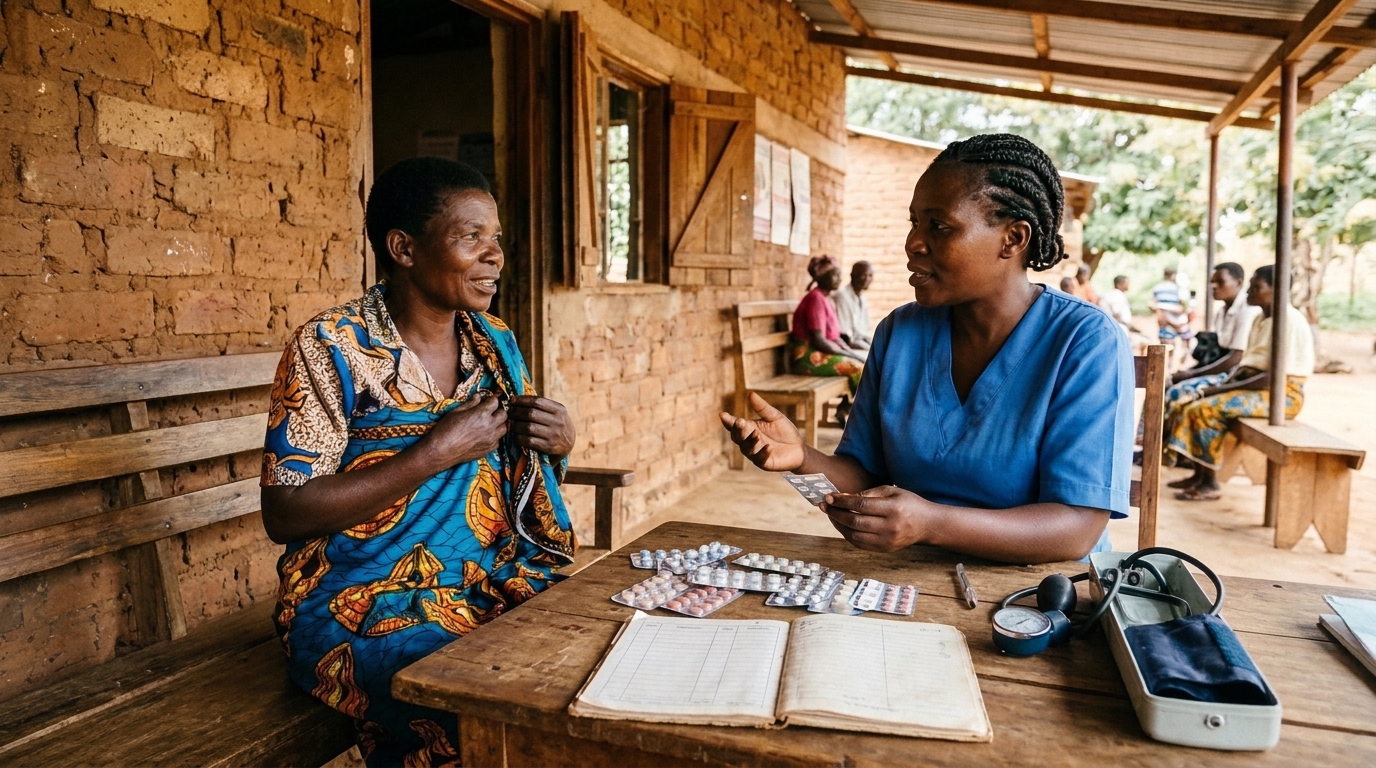
A new qualitative study conducted in Malawi has illuminated the complex, gendered intersectional experiences of individuals living with multimorbidity, revealing how social positions—such as gender, age, and household power dynamics—deeply influence health management and care-seeking behaviors. Published in PLOS Global Public Health, this research investigates the lived experiences of patients navigating two or more chronic conditions, specifically focusing on the interplay between diabetes, HIV, hypertension, and chronic kidney disease. While existing literature has increasingly recognized the rising burden of multimorbidity in sub-Saharan Africa, this study shifts the analytical focus away from aggregated, single-axis gender comparisons toward a more nuanced, intersectional framework. By examining how these multiple chronic diseases interact with social identities, the researchers provide evidence-based insights into why standard, one-size-fits-all healthcare interventions often fail to address the specific needs of diverse patient populations in low-resource settings.
The study was designed as a cross-sectional qualitative investigation nested within a broader program of multimorbidity research known as Multilink. Researchers recruited 94 participants from Queen Elizabeth Central Hospital, a large public referral facility in Blantyre, and Chiradzulu District Hospital, a smaller secondary facility. The cohort consisted of individuals diagnosed with at least two conditions among diabetes, HIV, hypertension, and chronic kidney disease. Using a combination of 32 in-depth interviews and 8 focus group discussions, the team aimed to capture both individual perspectives and collective understandings of illness. Data collection was supplemented by follow-up interviews conducted 90 days after hospital discharge to explore how these experiences evolved, capturing longitudinal shifts in self-management and healthcare engagement rather than static, snapshot data.
Applying an intersectionality framework—originally articulated by Kimberlé Crenshaw—the analysis focused on how various social identities and structural positions interact rather than operating in isolation. This lens allowed the research team to interpret the data by moving beyond simple biological or demographic differences. The study examined how household power dynamics, socio-economic status, and culturally defined roles influenced the participants’ agency. By applying this critical theory, the researchers were able to explain how the lived experience of living with multiple chronic conditions reshapes an individual’s social position over time, demonstrating that illness management is an dynamic process influenced by the environment, rather than a fixed attribute determined solely by the clinical diagnosis.
For the women in the study, the management of multimorbidity was frequently defined by the dual pressures of personal illness and deep-seated caregiving responsibilities. Many participants described a balancing act, where the demands of their own health—frequently complicated by hypertension or diabetes—were placed in competition with domestic labor, income-generating work, and the care of other family members. The data indicated that older and economically constrained women were particularly vulnerable, often delaying their own care-seeking to prioritize the needs of others or because of limited control over household financial resources. This systemic constraint illustrates how intersectionality manifests in everyday life: being a woman in a low-resource setting involves navigating not only the physical toll of chronic disease but also the structural expectations of gendered labor.
Conversely, the experiences of male participants were distinctly shaped by the pressure to maintain socially expected provider roles and the visibility of their physical decline. Younger men, in particular, reported significant psychological strain stemming from their reduced capacity to work and provide for their families. The research highlighted that diseases such as diabetes often carried added weight for these men, as they were perceived to interfere with strength, physical labor, and sexual health. This disruption of masculinity norms led to unique experiences of stress that were often distinct from those of their female counterparts, highlighting how disease characteristics intersect with socially constructed gender roles to create specific psychological and social vulnerabilities that are often overlooked in standard clinical care.
A critical theme identified in the study was the practice of medical pluralism, defined as the engagement with both formal biomedical care and traditional or herbal remedies. The research found that participants across all demographics utilized traditional medicine, but the motivations for doing so varied significantly based on gender, age, and disease type. Contrary to the assumption that this choice reflects a lack of faith in biomedical treatment, the evidence suggests that it is often a pragmatic response to structural barriers, such as excessive transport costs, the physical distance to health facilities, and frequent drug stock-outs. While women used these remedies as part of established caregiving and household knowledge traditions, younger men were more likely to adopt them in a search for immediate symptom relief or a perceived “boost,” illustrating how gendered social pressures dictate different strategies for navigating a fragmented healthcare environment.
The study also highlighted a pervasive but rarely addressed phenomenon termed “unspoken depression.” While participants did not typically use clinical labels such as “depression” to describe their mental health, they frequently expressed profound emotional distress through narratives of exhaustion, hopelessness, and uncertainty. This distress was experienced differently across genders: women more openly verbalized their psychological burden, whereas men often internalized these emotions, expressing them indirectly through complaints of physical limitation or loss of status. The under-recognition of this psychological suffering within chronic care settings is a significant limitation of current health systems, which often lack the diagnostic capacity or the mental health integration necessary to treat the whole person, leaving many patients to manage their emotional distress in silence.
Social support structures were another domain where gendered differences emerged. The research revealed that women were significantly more likely to engage with formal peer support structures, such as facility-based support groups, which provided a space for shared learning and emotional reassurance. In contrast, men, particularly older male participants, reported that their social support was often limited to the home environment, with little to no community-based interaction. This suggests that the availability and adoption of peer support are not merely a matter of individual preference but are shaped by the intersection of gender norms, local social contexts, and the institutional availability of programs at different types of healthcare facilities, such as district versus tertiary hospitals.
The findings further underscored how health-seeking decisions were structured by household hierarchies and power relations. Access to medical care was often mediated by family seniority, where older women frequently required permission from husbands or other family leaders before accessing treatment. Younger women, conversely, demonstrated slightly higher degrees of autonomy, yet the overall trend indicated that clinical engagement is rarely an entirely independent choice. This demonstrates that interventions aimed at improving health outcomes cannot rely solely on the patient-provider interaction but must also account for the structural power dynamics within the home, as these factors directly dictate the frequency and timeliness of care-seeking interventions for those with multiple long-term conditions.
In the 90-day follow-up period, the research observed how adaptation strategies changed over time. While baseline accounts focused on the acute pressures of illness and initial diagnosis, later reflections revealed deliberate, day-to-day adjustments. Women increasingly relied on their peer networks to navigate the ongoing burden of treatment, whereas men showed a different trajectory: younger men often gained confidence in biomedical treatment and symptom management over time, while older married men frequently expressed a sense of resignation, tending to tolerate persistent discomfort rather than seeking new or altered forms of care. This temporal evolution confirms that multimorbidity management is a process of ongoing adaptation, heavily influenced by the patient’s changing social and physical capacity.
The study acknowledges several limitations, most notably the recruitment of patients from hospital settings, which may not capture the experiences of the broader community. Furthermore, the binary gender assignment used by the research team may have overlooked non-binary or transgender identities, which are not formally recognized in the Malawian context and whose experiences were therefore excluded. Despite these limitations, the authors emphasize that their findings provide actionable evidence for other low-resource settings in sub-Saharan Africa. The methodological rigor, supported by data triangulation and collaborative analysis with a multidisciplinary team, ensures that these observations remain a robust basis for rethinking how healthcare providers interact with PLWMM.
In conclusion, the researchers argue that the burden of multimorbidity is not experienced uniformly, but emerges through the intersection of gendered expectations, age, and material resources. To improve the well-being of patients living with multiple chronic conditions, health systems must adopt intersectionality-informed, gender-responsive approaches. This includes fostering open, culturally sensitive communication between patients and providers, integrating mental health training into existing NCD services, and supporting peer-led initiatives that account for gendered support networks. By moving beyond traditional clinical silos, these strategies can help mitigate the structural inequalities that shape the lived experience of multimorbidity in Malawi, ultimately moving toward more equitable and effective healthcare delivery.
Subject of Research: Qualitative analysis of gendered intersectional experiences of living with multimorbidity in Malawi.
Article Title: Gendered experiences of living with multimorbidity in Malawi
Article References: Salimu, S. N., Anthony Spencer, S., Banda, T., Chawani, M., Choko, A., Dark, P., Hertz, J., Mmbaga, B., Mfinanga, J., Mijumbi, R., Sinjani Muula, A., Nyirenda, M., Sakita, F., Salima, C., Sawe, H., Simiyu, I., Taegtmeyer, M., Urasa, S., Mmeta Yongolo, N., … MultiLink Consortium (2026). Gendered experiences of living with multimorbidity in Malawi. PLOS Global Public Health, 6(11), e0004613. https://doi.org/10.1371/journal.pgph.0004613
Image Credits: AI Generated
DOI: 10.1371/journal.pgph.0004613
Keywords: Multimorbidity, Gender Roles, Malawi, Intersectionality, Healthcare Access, Chronic Conditions, HIV, Hypertension, Diabetes, Chronic Kidney Disease, Public Health, Medical Pluralism, Caregiving, Qualitative Research, Health-Seeking Behavior, Gender-Responsive Care, Mental Health, Socio-economic Status
News Source: Ophelia Keating. (November 16, 2026). Gendered Experiences Shape Multimorbidity Management and Care-Seeking in Malawi. Scienmag.