• HOME
  • NEWS
  • EXPLORE
    • CAREER
      • Companies
      • Jobs
    • EVENTS
    • iGEM
      • News
      • Team
    • PHOTOS
    • VIDEO
    • WIKI
  • BLOG
  • COMMUNITY
    • FACEBOOK
    • INSTAGRAM
    • TWITTER
Wednesday, May 20, 2026
BIOENGINEER.ORG
No Result
View All Result
  • Login
  • HOME
  • NEWS
  • EXPLORE
    • CAREER
      • Companies
      • Jobs
        • Lecturer
        • PhD Studentship
        • Postdoc
        • Research Assistant
    • EVENTS
    • iGEM
      • News
      • Team
    • PHOTOS
    • VIDEO
    • WIKI
  • BLOG
  • COMMUNITY
    • FACEBOOK
    • INSTAGRAM
    • TWITTER
  • HOME
  • NEWS
  • EXPLORE
    • CAREER
      • Companies
      • Jobs
        • Lecturer
        • PhD Studentship
        • Postdoc
        • Research Assistant
    • EVENTS
    • iGEM
      • News
      • Team
    • PHOTOS
    • VIDEO
    • WIKI
  • BLOG
  • COMMUNITY
    • FACEBOOK
    • INSTAGRAM
    • TWITTER
No Result
View All Result
Bioengineer.org
No Result
View All Result
Home NEWS Science News Biology

A twist in the tail: Flying fish give clues to ‘tandem wing’ airplane design

Bioengineer by Bioengineer
July 5, 2017
in Biology
Reading Time: 2 mins read
0
Share on FacebookShare on TwitterShare on LinkedinShare on RedditShare on Telegram
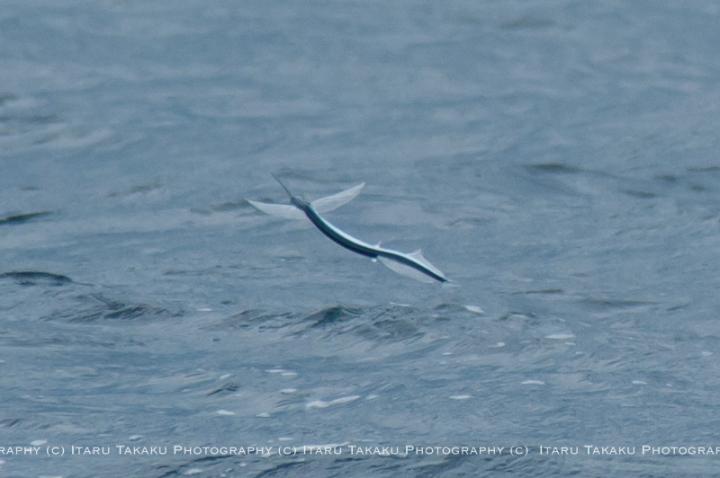
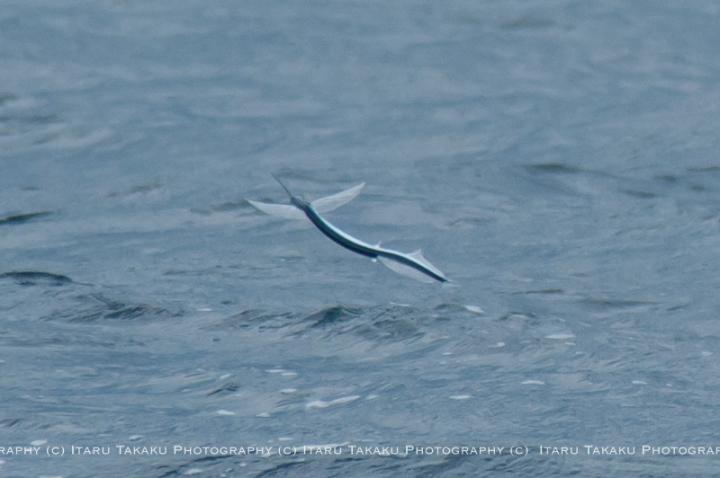
IMAGE

Credit: Mr Itaru Takaku.

Ribbon halfbeak are a species of fish with the ability to fly above the sea surface – but unlike true 'flying fish', they lack the necessary hind wing fins. So how do they fly? Dr Yoshinobu Inada from Tokai University, Japan says, "Investigating the design of ribbon halfbeak could provide useful information for the optimal design of tandem wing airplanes."

'Tandem wing' airplanes are the man-made equivalents of these flying fish. They fly more efficiently than conventional airplanes, but downwash from the main wing onto the hind wing can be a significant problem. Dr Inada and his research team present new research on how these fish twist their bodies in order to take flight.

"Ribbon halfbeak fly above the water surface to evade large carnivorous fish and dolphins," explains Dr Inada, "water is about a thousand times denser than air, so flying through the air is a really practical way to evade predators".

Not much was previously known about the flying behaviour of ribbon halfbeak, but this research provides new insights into their ability able to glide above the sea surface.

"Other flying fish, including the Japanese flying fish, have large pectoral fins that act as wings during flight and large pelvic fins that are used as horizontal tail wings, like those on airplanes," says Dr Inada, "however, the ribbon halfbeak lacks these large pelvic tail wings."

"Amazingly, they solve this problem by rotating their rear body by 90 degrees and use their wide dorsal and anal fins as a horizontal tail wing," adds Dr Inada.

"Other related fish species are also able to jump and fly over the sea surface, but only halfbeak twist their bodies for flight," says Dr Inada, "this is a really unique behaviour."

As well as twisting their bodies to create horizontal tail wings and fly, Dr Inada also found that these fish are likely to lift their rear body above the main pectoral wings to reduce the effect of downwash on the tail wings. According to Dr Inada's results, he says that "this has a positive effect on improving the lift and flight performance of the fish".

To get these results, Dr Inada 3D printed a physical model based closely on real ribbon halfbeak and analysed its flight performance with different tail wing positions in a wind tunnel.

Mr Junji Yonezawa, a collaborator in the study, believes that this interesting behaviour may be the result of different evolutionary selective pressures to those faced by other flying fish, leading to unique adaptations: "It has the largest number of vertebrae among Japanese halfbeaks, which means that it is able to twist the rear half of its body by a whole quarter-turn."

###

Media Contact

Alex Evans
[email protected]
44-752-775-4615

http://www.sebiology.org

############

Story Source: Materials provided by Scienmag

Share12Tweet8Share2ShareShareShare2

Related Posts

Thousands of UK Beekeepers Contribute Honey to Advance Environmental Science — Biology

Thousands of UK Beekeepers Contribute Honey to Advance Environmental Science

May 20, 2026
New Fossil Finds in Northwest Canada Transform Understanding of Early Animal Evolution — Biology

New Fossil Finds in Northwest Canada Transform Understanding of Early Animal Evolution

May 20, 2026

Cows Can Recognize Familiar Human Faces, New Study Reveals

May 20, 2026

Scientists Harness Quantum Mathematics to Unlock the Secrets of the Emotional Mind

May 20, 2026
Please login to join discussion

POPULAR NEWS

  • blank

    New Study Reveals Plants Can Detect the Sound of Rain

    733 shares
    Share 292 Tweet 183
  • Research Indicates Potential Connection Between Prenatal Medication Exposure and Elevated Autism Risk

    846 shares
    Share 338 Tweet 212
  • ESMO 2025: mRNA COVID Vaccines Enhance Efficacy of Cancer Immunotherapy

    299 shares
    Share 120 Tweet 75
  • Breastmilk Balances E. coli and Beneficial Bacteria in Infant Gut Microbiomes

    58 shares
    Share 23 Tweet 15

About

We bring you the latest biotechnology news from best research centers and universities around the world. Check our website.

Follow us

Recent News

AI and Single-Cell Insights into Endometriosis

CCHFV GP38 and GP85 Bind Cell-Surface Glycosaminoglycans

Machine Learning Reveals Drivers of Elderly Care Use

Subscribe to Blog via Email

Enter your email address to subscribe to this blog and receive notifications of new posts by email.

Join 82 other subscribers
  • Contact Us

Bioengineer.org © Copyright 2023 All Rights Reserved.

Welcome Back!

Login to your account below

Forgotten Password?

Retrieve your password

Please enter your username or email address to reset your password.

Log In
No Result
View All Result
  • Homepages
    • Home Page 1
    • Home Page 2
  • News
  • National
  • Business
  • Health
  • Lifestyle
  • Science

Bioengineer.org © Copyright 2023 All Rights Reserved.