Skin coloration does not correlate with fertility, as previously thought
Credit: Kyoto University/Lucie Rigaill
Japan — From peacocks to butterflies and betta fish, mother nature never disappoints when it colors the males of a species. Which makes sense, in species with traditional sex roles, males are more involved in competing for mates, leading females to be choosier in their selection. As a result, males evolve to display even flashier and attractive ornaments.
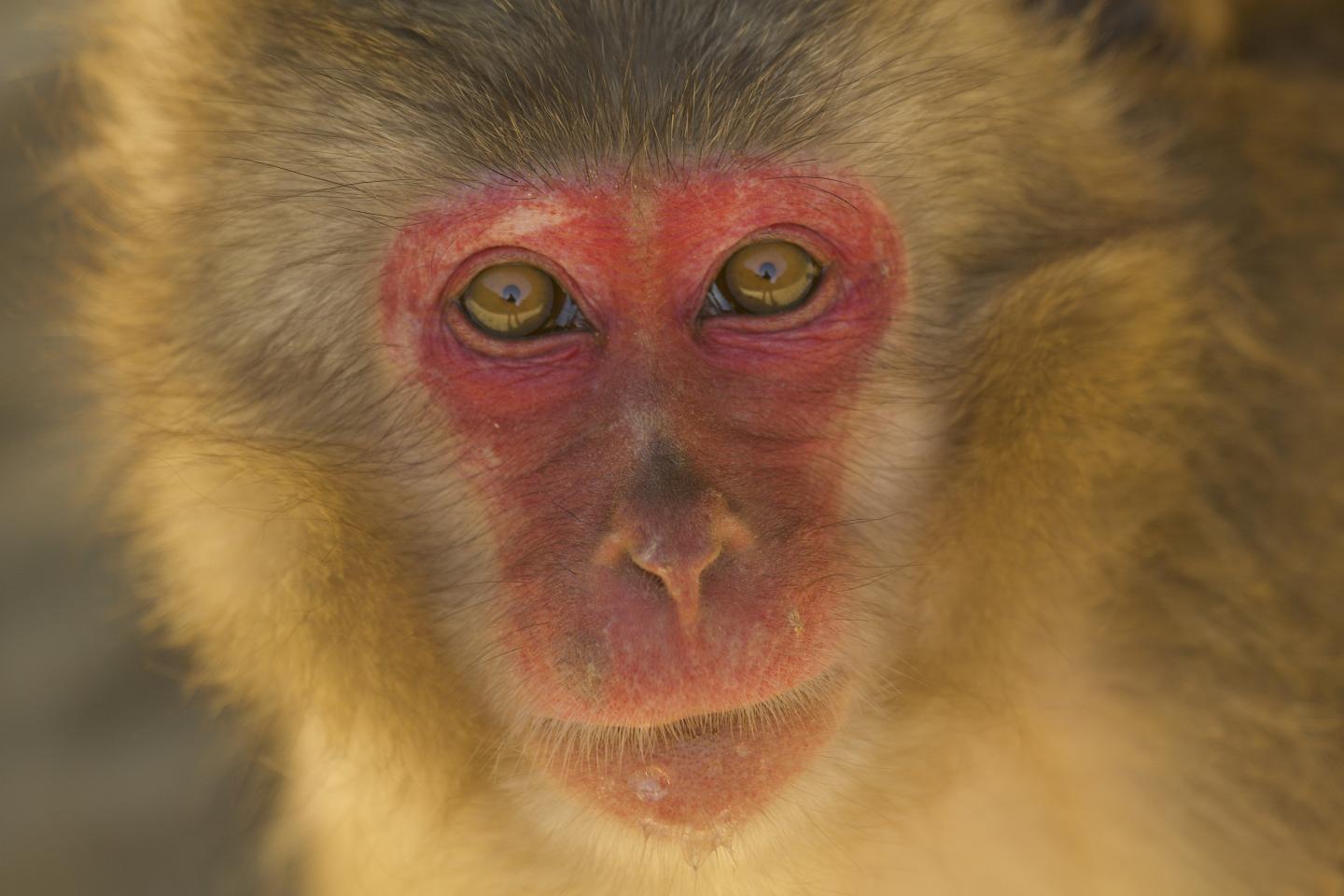
These color changes also happen in many primates. For example, both male and female Japanese macaques display changing red skin coloration. But in new research published in Behavioral Ecology and Sociobiology a team from Kyoto University’s Primate Research Institute propose that female red skin color acts as a ‘badge’ of their social status and not — as previously thought — of fertility.
First author Lucie Rigaill explains that though female primates also display colorful traits, little is actually known about their role in mating.
Previous studies in other primates such as rhesus macaques and mandrills have shown a link between red skin color variation and ovulation or fertility. Female Japanese macaques have also been observed to acquire ‘redder faces’, linked to variation in sex hormone levels, leading researchers to assume that darker/redder faces are a sign of mating availability in the species.
“Our research is about better understating human sexuality by studying the evolutionary and biological roots of primate sexual communication,” explains Rigaill.
To determine if changes in skin color actually signals ovulation timing or probability of conception, the team collected face and hindquarters coloration data along with the hormone levels of selected female macaques during the winter mating season.
“We were astonished to find that, contrary to what we originally thought, changes in female skin color did not actually indicate the ovulation period! Skin color was not correlated to fertility either,” continues Rigaill. “It even gets more surprising! Females of higher-social status had darker/redder hindquarters, something only reported in male primate populations until now.”
Altogether, female red skin color may play a more complex role in Japanese macaques than previously thought, and in fact possibly more involved in signaling social attributes than fertility.
“We suggest that female red skin coloration acts as a ‘badge’ of social rank, where higher ranked females have darker/redder hindquarters,” Rigaill explains. “Intriguingly, females don’t show precise behavioral or coloration changes until the beginning of pregnancy, outlining a larger picture of the sexual signaling in this species: females seem to conceal ovulation but signal pregnancy.”
The team is excited to have more evidence that mate choice, sexual competition, and mating strategies are dynamic and is expressed by both sexes, and are looking to expand their understanding of the evolution of sexual communication in other primate species.
###
The paper “The redder the better? Information content of red skin coloration in female Japanese macaques” appeared on 2nd July 2019 in the Behavioral Ecology and Sociobiology with doi: 10.1007/s00265-019-2712-x
About Kyoto University
Kyoto University is one of Japan and Asia’s premier research institutions, founded in 1897 and responsible for producing numerous Nobel laureates and winners of other prestigious international prizes. A broad curriculum across the arts and sciences at both undergraduate and graduate levels is complemented by numerous research centers, as well as facilities and offices around Japan and the world. For more information please see: http://www.
Media Contact
Raymond Kunikane Terhune
[email protected]
Related Journal Article
http://dx.