• HOME
  • NEWS
  • EXPLORE
    • CAREER
      • Companies
      • Jobs
    • EVENTS
    • iGEM
      • News
      • Team
    • PHOTOS
    • VIDEO
    • WIKI
  • BLOG
  • COMMUNITY
    • FACEBOOK
    • INSTAGRAM
    • TWITTER
Wednesday, May 27, 2026
BIOENGINEER.ORG
No Result
View All Result
  • Login
  • HOME
  • NEWS
  • EXPLORE
    • CAREER
      • Companies
      • Jobs
        • Lecturer
        • PhD Studentship
        • Postdoc
        • Research Assistant
    • EVENTS
    • iGEM
      • News
      • Team
    • PHOTOS
    • VIDEO
    • WIKI
  • BLOG
  • COMMUNITY
    • FACEBOOK
    • INSTAGRAM
    • TWITTER
  • HOME
  • NEWS
  • EXPLORE
    • CAREER
      • Companies
      • Jobs
        • Lecturer
        • PhD Studentship
        • Postdoc
        • Research Assistant
    • EVENTS
    • iGEM
      • News
      • Team
    • PHOTOS
    • VIDEO
    • WIKI
  • BLOG
  • COMMUNITY
    • FACEBOOK
    • INSTAGRAM
    • TWITTER
No Result
View All Result
Bioengineer.org
No Result
View All Result
Home NEWS Science News Biology

A new take on fighting multi-drug resistant bacteria

Bioengineer by Bioengineer
August 29, 2018
in Biology
Reading Time: 2 mins read
0
Share on FacebookShare on TwitterShare on LinkedinShare on RedditShare on Telegram
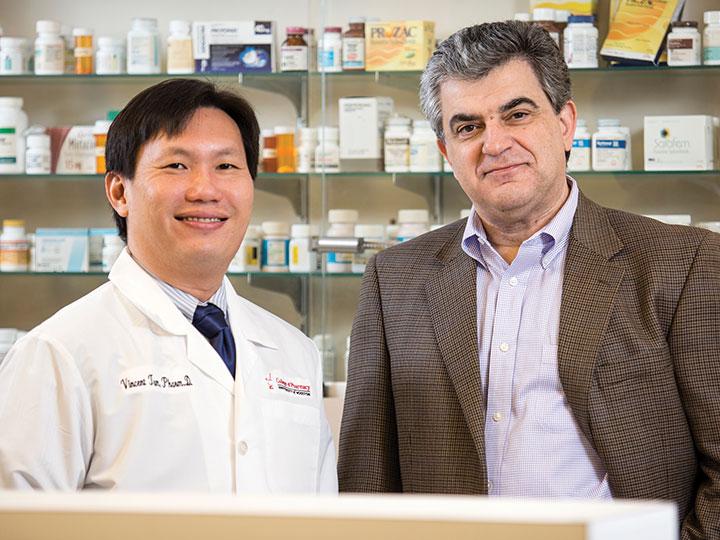
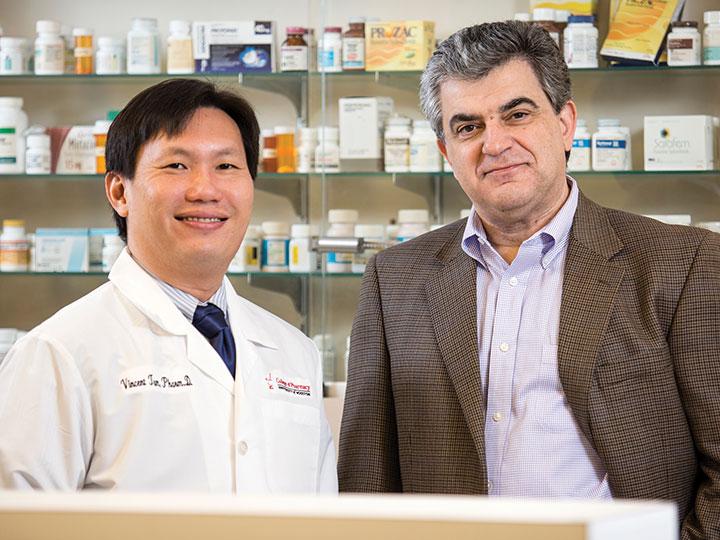
IMAGE

Credit: University of Houston

Two UH researchers have won a five-year, $3.5 million grant from the National Institute of Allergy and Infectious Diseases to develop technology that will quickly suggest the most promising combinations of antibiotics to kill certain resistant bacteria. According to the Centers for Disease Control, "Antibiotic resistance is one of the most urgent threats to the public's health."

"People are dying, there's no question about that. And it's because bacteria – time and again – have come up with ways to fight back against the antibiotics we are throwing at them and survive," said College of Pharmacy professor Vincent Tam who, along with Michael Nikolaou, professor of chemical and biomolecular engineering, intends to even the score with bacteria by optimizing clinical use of antibiotic combinations to combat resistance.

"In the war of people versus bacteria, bacteria are winning," said Tam. It's not just because they reproduce every 20 minutes and outnumber all of us (estimates propose five million trillion-trillion bacteria), they also have become more sophisticated and resistant. Thirty years ago, the chances of bacteria being resistant to ampicillin, a common antibiotic, was 5 percent. Today it is more than 50 percent.

Combining antibiotics has emerged as a typical practice to treat infections caused by virulent strains of bacteria resistant to a single antibiotic. But quickly choosing the correct combination is tricky. For instance, the antibiotic prescribed for a wound infection is not the same one prescribed for strep throat or a myriad of other infections.

"A robust method to guide rational selection of effective antibiotic combinations is crucial to help prevent returning to the pre-antibiotic era of untreatable infections," said Tam. The team is working with an external company, BacterioScan, to develop a rapid diagnostic device that will test bacterial responses to several drug combinations. Clinicians will place bacteria samples in the device, a box, which will monitor bacterial growth in the presence of different antibiotics and will automatically process collected data to spit out predictions of the best combinations in short order.

"I don't have the time and luxury to take days, if not weeks, to figure this out when a patient is dying. The device we are developing will only take hours," said Tam, who envisions these monitors in every hospital lab. The box will deliver a raw signal, or string of numbers, that Nikolaou's algorithms will interpret to deliver a predicted ranking system of the best combinations.

Initial testing will include bacteria P. aeruginosa, which cause pneumonia, A. baumannii which cause urinary tract infections and meningitis, and the superbug Klebsiella pneumoniae, which can cause all three illnesses and others. They will test different structural classes of antibiotics to hit the bugs at different sites.

Since bacteria are different from person-to-person, this approach is a personalized solution to a problem that cannot be solved with a one-size-fits all prescription.

"It is tailor made and customized to deliver results for a specific bacterium for a specific patient," said Tam.

###

Media Contact

Laurie Fickman
[email protected]
713-743-8454
@UH_News

http://www.uh.edu/news-events

Original Source

http://www.uh.edu/news-events/stories/2018/august-2018/082918-drug-resistant-bacteria.php
Share12Tweet8Share2ShareShareShare2

Related Posts

Study Finds Archaic DNA Could Reduce Immunity to Common DNA Viruses in Modern Humans — Biology

Study Finds Archaic DNA Could Reduce Immunity to Common DNA Viruses in Modern Humans

May 27, 2026
Scientists Achieve Unprecedented Precision in Mapping How Genes Influence Metabolism — Biology

Scientists Achieve Unprecedented Precision in Mapping How Genes Influence Metabolism

May 27, 2026

New Protein Discovery Sheds Light on Male Reproductive Aging

May 27, 2026

Ancient Bird Species from Liaoning, China Exhibits Extra-Long Tail Feathers for Elaborate Courtship – Insights from University of Chicago PhD Candidate Alexander D. Clark

May 27, 2026
Please login to join discussion

POPULAR NEWS

  • ESMO 2025: mRNA COVID Vaccines Enhance Efficacy of Cancer Immunotherapy

    318 shares
    Share 127 Tweet 80
  • New Study Reveals Plants Can Detect the Sound of Rain

    735 shares
    Share 293 Tweet 183
  • Common Food Preservatives Associated with Elevated Blood Pressure and Increased Heart Disease Risk

    56 shares
    Share 22 Tweet 14
  • AI-Powered Atlas Uncovers Extensive Whole-Body Damage Linked to Obesity

    53 shares
    Share 21 Tweet 13

About

We bring you the latest biotechnology news from best research centers and universities around the world. Check our website.

Follow us

Recent News

Study Finds Archaic DNA Could Reduce Immunity to Common DNA Viruses in Modern Humans

Scientists Achieve Unprecedented Precision in Mapping How Genes Influence Metabolism

αKG Boosts DNA Repair Through Histone Acetylation

Subscribe to Blog via Email

Enter your email address to subscribe to this blog and receive notifications of new posts by email.

Join 82 other subscribers
  • Contact Us

Bioengineer.org © Copyright 2023 All Rights Reserved.

Welcome Back!

Login to your account below

Forgotten Password?

Retrieve your password

Please enter your username or email address to reset your password.

Log In
No Result
View All Result
  • Homepages
    • Home Page 1
    • Home Page 2
  • News
  • National
  • Business
  • Health
  • Lifestyle
  • Science

Bioengineer.org © Copyright 2023 All Rights Reserved.