• HOME
  • NEWS
  • EXPLORE
    • CAREER
      • Companies
      • Jobs
    • EVENTS
    • iGEM
      • News
      • Team
    • PHOTOS
    • VIDEO
    • WIKI
  • BLOG
  • COMMUNITY
    • FACEBOOK
    • INSTAGRAM
    • TWITTER
Sunday, May 10, 2026
BIOENGINEER.ORG
No Result
View All Result
  • Login
  • HOME
  • NEWS
  • EXPLORE
    • CAREER
      • Companies
      • Jobs
        • Lecturer
        • PhD Studentship
        • Postdoc
        • Research Assistant
    • EVENTS
    • iGEM
      • News
      • Team
    • PHOTOS
    • VIDEO
    • WIKI
  • BLOG
  • COMMUNITY
    • FACEBOOK
    • INSTAGRAM
    • TWITTER
  • HOME
  • NEWS
  • EXPLORE
    • CAREER
      • Companies
      • Jobs
        • Lecturer
        • PhD Studentship
        • Postdoc
        • Research Assistant
    • EVENTS
    • iGEM
      • News
      • Team
    • PHOTOS
    • VIDEO
    • WIKI
  • BLOG
  • COMMUNITY
    • FACEBOOK
    • INSTAGRAM
    • TWITTER
No Result
View All Result
Bioengineer.org
No Result
View All Result
Home NEWS Science News Health

A new protocol for Hepatitis A vaccination to prevent a vaccine-resistant virus

Bioengineer by Bioengineer
February 8, 2019
in Health
Reading Time: 3 mins read
0
IMAGE
Share on FacebookShare on TwitterShare on LinkedinShare on RedditShare on Telegram

Vaccination policies against the disease
IMAGE

Credit: University of Barcelona


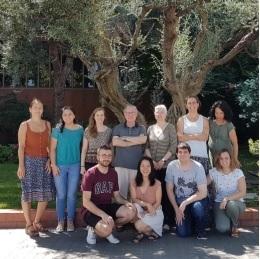
Researchers of the University of Barcelona (UB) have analysed, with massive sequencing techniques for the first time, the evolution of the Hepatitis A virus with samples from patients. The results, published in the journal EBioMedicine, show the presence of variants of the virus that could escape the effects of the vaccine. The study, led by the Research Group on Enteric Viruses of the UB, in collaboration with Vall d’Hebron Research Institute (VHIR) and the Public Health Agency of Barcelona (ASPB), can have implications in the vaccination policies against the disease.

The article counts on the participation of the lecturers Aurora Sabrià, Albert Bosch, Susana Guix and Rosa Maria Pintó, from the Department of Genetics, Microbiology and Statistics of the Faculty of Biology of the UB.

Hepatitis A virus antigenic variants

Hepatitis A is a liver inflammation caused by a virus. Its symptomatology is quite light and can disappear after the first weeks, but in some cases the disease can last for months. Among the most affected groups are men who have risky sexual behaviours with other men (MSM).

This study analysed samples from MSM patients, both vaccinated and non-vaccinated, who caught the virus during an outbreak of Hepatitis A in Barcelona (2016-2018). The objective was to study the evolution of the virus and check whether there are emerging variants that can escape the effects of the vaccine. “We identified antigenic variants in vaccinated and non-vaccinated patients, but only the former increase in number, which suggests the positive selection”, says Rosa Maria Pintó.

The appearance of the Hepatitis A virus antigenic variants could become a threat to public health and could have consequences in the future uses of the current available vaccines. “If we select a variant which escapes the vaccine, this one would stop being effective. The study shows that, in cases such as the occurred one due the lack of vaccines, this can happen”, notes the researcher.

Reviewing vaccination practice

In some countries, controlling recent outbreaks of Hepatitis A has been blocked by the low coverage of vaccination and lack of vaccines, which made administrations apply restrictions in the doses.

During the outbreak, these restrictions affected especially people in the MSM group. “If a few doses of vaccination are given, or if the common doses were given long ago, or the vaccine is given to patients who caught the virus weeks ago, those variants of the virus that avoid the effects of the vaccine can be selected. This is especially relevant in the MSM group, since the virus dose through risky sexual practises is very high, and circulating antibodies are not enough to neutralize the inoculum or the first produced viruses”, says Rosa Maria Pintó.

In this sense, researchers recommend giving two doses of the vaccine and, in some situations stated in the publication, they suggest giving additional booster doses.

Apart from specifying the vaccination protocol, the expert states they should “work in order to have easier-to-get vaccines so there are no vaccine shortages and doses do not have to be reduced”.

###

Media Contact
Rosa Martínez
[email protected]
34-934-031-335

Related Journal Article

http://dx.doi.org/10.1016/j.ebiom.2018.11.023

Tags: Disease in the Developing WorldEpidemiologyImmunology/Allergies/AsthmaMedicine/HealthPharmaceutical ChemistryPharmaceutical SciencePharmaceutical SciencesPublic HealthVaccinesVirology
Share12Tweet8Share2ShareShareShare2

Related Posts

Evaluating Digoxin Use in Patients with Symptomatic Rheumatic Heart Disease

May 10, 2026

Evaluating the Effectiveness and Safety of Digitalis Glycosides in Treating Heart Failure

May 10, 2026

Urdu Fall Risk Questionnaire Adapted for Elderly

May 10, 2026

Key Pharmacological Markers for HIV Prevention in MSM

May 10, 2026
Please login to join discussion

POPULAR NEWS

  • Research Indicates Potential Connection Between Prenatal Medication Exposure and Elevated Autism Risk

    840 shares
    Share 336 Tweet 210
  • New Study Reveals Plants Can Detect the Sound of Rain

    727 shares
    Share 290 Tweet 181
  • Scientists Investigate Possible Connection Between COVID-19 and Increased Lung Cancer Risk

    68 shares
    Share 27 Tweet 17
  • Salmonella Haem Blocks Macrophages, Boosts Infection

    61 shares
    Share 24 Tweet 15

About

We bring you the latest biotechnology news from best research centers and universities around the world. Check our website.

Follow us

Recent News

Evaluating Digoxin Use in Patients with Symptomatic Rheumatic Heart Disease

Evaluating the Effectiveness and Safety of Digitalis Glycosides in Treating Heart Failure

Urdu Fall Risk Questionnaire Adapted for Elderly

Subscribe to Blog via Email

Enter your email address to subscribe to this blog and receive notifications of new posts by email.

Join 82 other subscribers
  • Contact Us

Bioengineer.org © Copyright 2023 All Rights Reserved.

Welcome Back!

Login to your account below

Forgotten Password?

Retrieve your password

Please enter your username or email address to reset your password.

Log In
No Result
View All Result
  • Homepages
    • Home Page 1
    • Home Page 2
  • News
  • National
  • Business
  • Health
  • Lifestyle
  • Science

Bioengineer.org © Copyright 2023 All Rights Reserved.