

• HOME
  • NEWS
  • EXPLORE
    • CAREER
      • Companies
      • Jobs
    • EVENTS
    • iGEM
      • News
      • Team
    • PHOTOS
    • VIDEO
    • WIKI
  • BLOG
  • COMMUNITY
    • FACEBOOK
    • INSTAGRAM
    • TWITTER
Friday, May 15, 2026
BIOENGINEER.ORG
No Result
View All Result
  • Login
  • HOME
  • NEWS
  • EXPLORE
    • CAREER
      • Companies
      • Jobs
        • Lecturer
        • PhD Studentship
        • Postdoc
        • Research Assistant
    • EVENTS
    • iGEM
      • News
      • Team
    • PHOTOS
    • VIDEO
    • WIKI
  • BLOG
  • COMMUNITY
    • FACEBOOK
    • INSTAGRAM
    • TWITTER
  • HOME
  • NEWS
  • EXPLORE
    • CAREER
      • Companies
      • Jobs
        • Lecturer
        • PhD Studentship
        • Postdoc
        • Research Assistant
    • EVENTS
    • iGEM
      • News
      • Team
    • PHOTOS
    • VIDEO
    • WIKI
  • BLOG
  • COMMUNITY
    • FACEBOOK
    • INSTAGRAM
    • TWITTER
No Result
View All Result
Bioengineer.org
No Result
View All Result
Home NEWS Science News Biology

A-maze-ing pheasants have two ways of navigating

Bioengineer by Bioengineer
February 25, 2021
in Biology
Reading Time: 2 mins read
0
IMAGE
Share on FacebookShare on TwitterShare on LinkedinShare on RedditShare on Telegram

IMAGE

Credit: Pip Laker

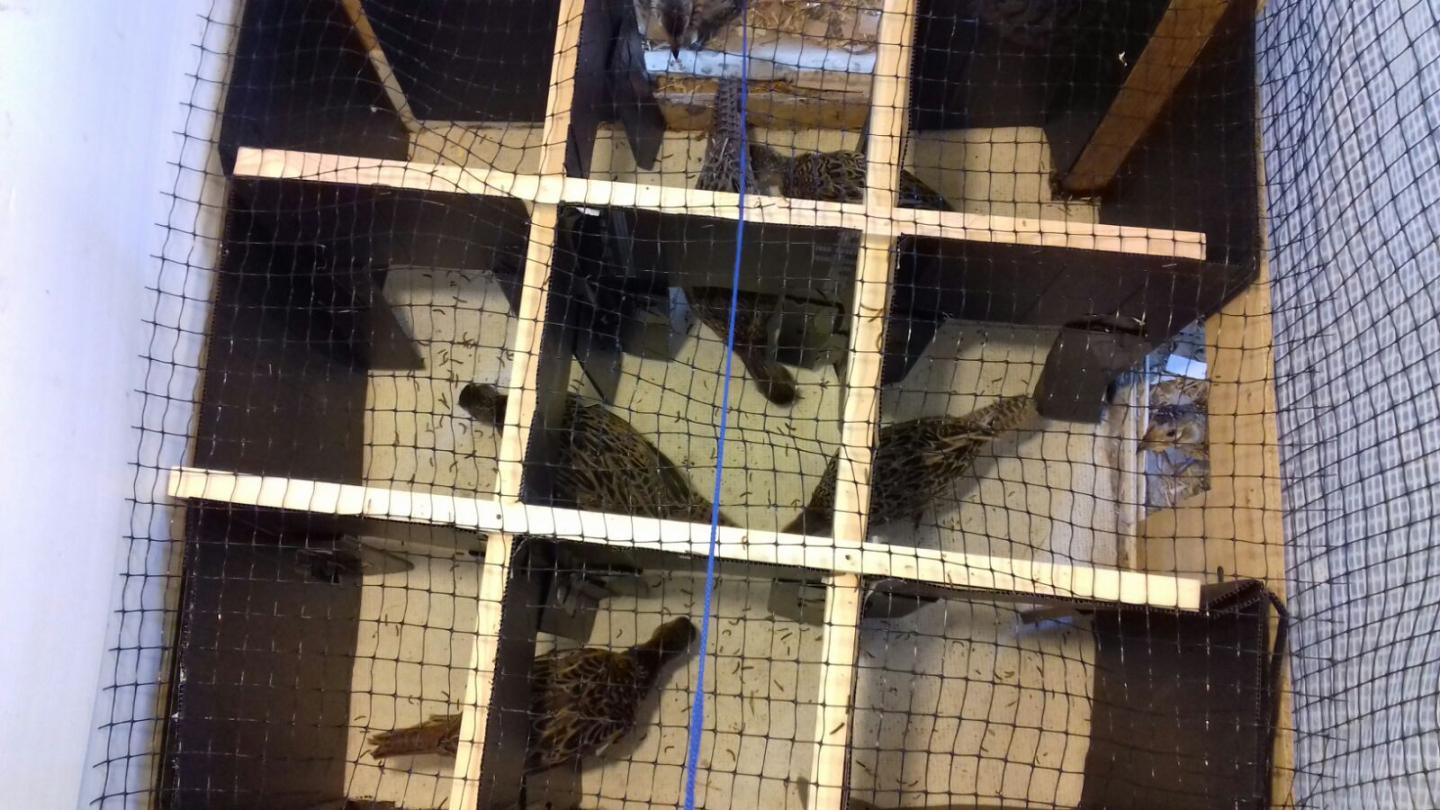
Pheasants fall into two groups in terms of how they find their way around – and the different types prefer slightly different habitats, new research shows.

University of Exeter scientists tested whether individual pheasants used landmarks (allocentric) or their own position (egocentric) to learn the way through a maze.

The captive-bred pheasants were later released into the wild, and their choice of habitat was observed.

All pheasants favoured woodland, but allocentric navigators spent more time out in the open, where their landmark-based style is more useful.

“Humans tend to use both of these navigational tactics and quite frequently combine them, but when animals are tested, they often seem to rely more on one or the other,” said Dr Christine Beardsworth.

“It is assumed that species favour whichever strategy suits their habitat, rather than using habitats which suit their strategy.

“Pheasants generally favour woodland, where an allocentric strategy is difficult because there are lots of trees close together, so it is hard to pick out landmarks.

“So, we might expect most pheasants to use an egocentric strategy – turning left, turning right or moving forward based on their own position and previous movements.

“However, in our study about half of pheasants reared in identical conditions used an allocentric strategy, while the other half used an egocentric or mixed strategy.”

In the experiments, 20 pheasants first learned how to navigate through a simple maze, then faced a rotated version.

By altering the orientation of the maze but keeping the placement of “landmarks” the same, including the position of a human observer, the scientists were able to establish the preferred navigation strategy of each pheasant.

The discovery of individual variation suggest pheasants are either born with an “inherent cognitive bias”, or develop one early in life.

Resulting differences in habitat selection may indicate that these biases help them to navigate more effectively in particular environments, perhaps outperforming other pheasants in relocating resources. However, it is not yet clear whether this is the case.

###

The research team included the Hebrew University of Jerusalem and Tel-Aviv University.

The work was funded by an ERC consolidators grant awarded to Dr Joah Madden.

The paper, published in the journal Ecology Letters, is entitled: “Is habitat selection in the wild shaped by individual-level cognitive biases in orientation strategy?”

Media Contact
Alex Morrison
[email protected]

Related Journal Article

http://dx.doi.org/10.1111/ele.13694

Tags: BiodiversityBiologyDevelopmental/Reproductive BiologyEcology/EnvironmentEvolutionGeneticsZoology/Veterinary Science
Share13Tweet8Share2ShareShareShare2

Related Posts

New Astrobiology Special Collection Highlights Emerging Evidence Supporting Land-Based Origins of Life — Biology

New Astrobiology Special Collection Highlights Emerging Evidence Supporting Land-Based Origins of Life

May 14, 2026
Revolutionizing Textiles: Engineered Protein Fibers Pave the Way for Sustainable, Recyclable Fabrics — Biology

Revolutionizing Textiles: Engineered Protein Fibers Pave the Way for Sustainable, Recyclable Fabrics

May 14, 2026

URI Master’s Student Emilio Pedroza Lopez Awarded Prestigious NSF Graduate Research Fellowship

May 14, 2026

Enhancing Disease Surveillance Through SARS-CoV-2 Diversity Analysis in Wastewater

May 14, 2026
Please login to join discussion

POPULAR NEWS

  • Research Indicates Potential Connection Between Prenatal Medication Exposure and Elevated Autism Risk

    843 shares
    Share 337 Tweet 211
  • New Study Reveals Plants Can Detect the Sound of Rain

    729 shares
    Share 291 Tweet 182
  • Salmonella Haem Blocks Macrophages, Boosts Infection

    62 shares
    Share 25 Tweet 16
  • Breastmilk Balances E. coli and Beneficial Bacteria in Infant Gut Microbiomes

    58 shares
    Share 23 Tweet 15

About

We bring you the latest biotechnology news from best research centers and universities around the world. Check our website.

Follow us

Recent News

Unseen Hazards: How AI Agents’ Routine Tasks Can Spiral into Digital Disasters

Could Sea Squirts’ Nano-Packaging Unlock a New Era in Sea Forest Restoration?

Comprehensive Study Finds No Clear Association Between Common Antidepressant Use During Pregnancy and Autism or ADHD in Children

Subscribe to Blog via Email

Enter your email address to subscribe to this blog and receive notifications of new posts by email.

Join 82 other subscribers
  • Contact Us

Bioengineer.org © Copyright 2023 All Rights Reserved.

Welcome Back!

Login to your account below

Forgotten Password?

Retrieve your password

Please enter your username or email address to reset your password.

Log In
No Result
View All Result
  • Homepages
    • Home Page 1
    • Home Page 2
  • News
  • National
  • Business
  • Health
  • Lifestyle
  • Science

Bioengineer.org © Copyright 2023 All Rights Reserved.

