• HOME
  • NEWS
  • EXPLORE
    • CAREER
      • Companies
      • Jobs
    • EVENTS
    • iGEM
      • News
      • Team
    • PHOTOS
    • VIDEO
    • WIKI
  • BLOG
  • COMMUNITY
    • FACEBOOK
    • INSTAGRAM
    • TWITTER
Sunday, May 10, 2026
BIOENGINEER.ORG
No Result
View All Result
  • Login
  • HOME
  • NEWS
  • EXPLORE
    • CAREER
      • Companies
      • Jobs
        • Lecturer
        • PhD Studentship
        • Postdoc
        • Research Assistant
    • EVENTS
    • iGEM
      • News
      • Team
    • PHOTOS
    • VIDEO
    • WIKI
  • BLOG
  • COMMUNITY
    • FACEBOOK
    • INSTAGRAM
    • TWITTER
  • HOME
  • NEWS
  • EXPLORE
    • CAREER
      • Companies
      • Jobs
        • Lecturer
        • PhD Studentship
        • Postdoc
        • Research Assistant
    • EVENTS
    • iGEM
      • News
      • Team
    • PHOTOS
    • VIDEO
    • WIKI
  • BLOG
  • COMMUNITY
    • FACEBOOK
    • INSTAGRAM
    • TWITTER
No Result
View All Result
Bioengineer.org
No Result
View All Result
Home NEWS Science News Chemistry

A fascinating phase transition: From one liquid state to another

Bioengineer by Bioengineer
March 25, 2019
in Chemistry
Reading Time: 3 mins read
0
IMAGE
Share on FacebookShare on TwitterShare on LinkedinShare on RedditShare on Telegram

IMAGE

Credit: 2019 Hajime Tanaka, Institute of Industrial Science, The University of Tokyo

Tokyo, Japan – A team at The University of Tokyo described in unprecedented detail the rare phenomenon called “liquid-to-liquid phase transitions” in a pure substance. By showing how a liquid made of just one type of molecule can switch between liquid and glassy states, this research may lead to a novel way to control the transport properties of a liquid.

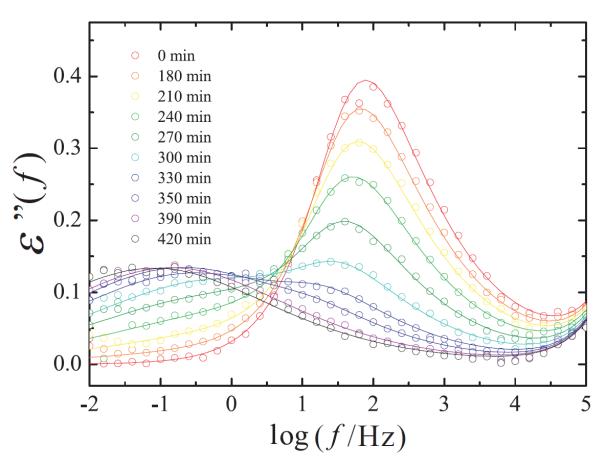
Phase transitions are a familiar part of daily life. Whenever you see ice melting (solid to liquid), or steam coming from a teakettle (liquid to gas), you’ve just experienced a phase transition. However, the study of how one arrangement of molecules changes into another reveals complex details about the strength of their interactions. In conventional phase transitions, as with an iron bar melting into molten metal, added heat causes the atoms to vibrate so violently that they break free of their solid lattice arrangement and assume a liquid form. The team at The University of Tokyo studied a much rarer type of phase transition: from one liquid state to another. In this research, they found that, even without changing temperature, relatively free-flowing triphenyl phosphite could gradually vitrify into a glassy state, in which the molecules remain disordered but are much less mobile. The different phases were identifiable experimentally based on how quickly the molecules could relax after being perturbed.

“Contrary to intuition, there has been a growing body of experimental and theoretical evidence that even a single-component substance may have multiple liquid states,” says lead author Hajime Tanaka. They found that the phase transition can occur in two very different ways. The first is called “nucleation and growth,” a slow process that requires the emergence of one phase in the other overcoming a barrier to get started. The other type is spinodal decomposition, in which the transition can smoothly proceed without any barrier. The researchers also discovered a critical temperature, above which only nucleated growth could occur, but below this temperature, spinodal decomposition was possible.

“From the viewpoint of practicality, triphenyl phosphite may be one of the best systems for studying liquid-to-liquid transitions, since the transformation takes place at ambient pressure and moderate temperatures,” says first author Ken-ichiro Murata. “Phase transitions, particularly those that involve a change from a liquid to a glassy state, are often used in the manufacturing of polymers. This research may greatly enhance our ability to optimize and control these processes.”

###

The article, “Link between molecular mobility and order parameter during liquid-liquid transition of a molecular liquid,” was published in the Proceedings of the National Academy of Sciences at: DOI:10.1073/pnas.1822016116.

About Institute of Industrial Science (IIS), the University of Tokyo

Institute of Industrial Science (IIS), the University of Tokyo is one of the largest university-attached research institutes in Japan.

More than 120 research laboratories, each headed by a faculty member, comprise IIS, with more than 1,000 members including approximately 300 staff and 700 students actively engaged in education and research. Our activities cover almost all the areas of engineering disciplines. Since its foundation in 1949, IIS has worked to bridge the huge gaps that exist between academic disciplines and real-world applications.

Media Contact
Hajime Tanaka
[email protected]

Original Source

https://www.iis.u-tokyo.ac.jp/en/news/3069/

Related Journal Article

http://dx.doi.org/10.1073/pnas.1822016116

Tags: Atomic PhysicsAtomic/Molecular/Particle PhysicsBiochemistryChemistry/Physics/Materials SciencesIndustrial Engineering/ChemistryMaterialsMolecular PhysicsPolymer ChemistryTemperature-Dependent Phenomena
Share12Tweet8Share2ShareShareShare2

Related Posts

Miniature Sensor Uses Light to Detect Touch — Chemistry

Miniature Sensor Uses Light to Detect Touch

May 8, 2026
Iron Minerals Determine Whether Dissolved Organic Matter Fuels Microbes or Becomes Long-Term Carbon Storage — Chemistry

Iron Minerals Determine Whether Dissolved Organic Matter Fuels Microbes or Becomes Long-Term Carbon Storage

May 8, 2026

Kate Evans Appointed Associate Lab Director for Biological and Environmental Systems Science at ORNL

May 8, 2026

Advancing Multiscale Modeling and Overcoming Operational Challenges in Autothermal COâ‚‚-to-Methanol Reactors

May 8, 2026
Please login to join discussion

POPULAR NEWS

  • Research Indicates Potential Connection Between Prenatal Medication Exposure and Elevated Autism Risk

    840 shares
    Share 336 Tweet 210
  • New Study Reveals Plants Can Detect the Sound of Rain

    727 shares
    Share 290 Tweet 181
  • Scientists Investigate Possible Connection Between COVID-19 and Increased Lung Cancer Risk

    68 shares
    Share 27 Tweet 17
  • Salmonella Haem Blocks Macrophages, Boosts Infection

    61 shares
    Share 24 Tweet 15

About

We bring you the latest biotechnology news from best research centers and universities around the world. Check our website.

Follow us

Recent News

Evaluating Digoxin Use in Patients with Symptomatic Rheumatic Heart Disease

Evaluating the Effectiveness and Safety of Digitalis Glycosides in Treating Heart Failure

Urdu Fall Risk Questionnaire Adapted for Elderly

Subscribe to Blog via Email

Success! An email was just sent to confirm your subscription. Please find the email now and click 'Confirm' to start subscribing.

Join 82 other subscribers
  • Contact Us

Bioengineer.org © Copyright 2023 All Rights Reserved.

Welcome Back!

Login to your account below

Forgotten Password?

Retrieve your password

Please enter your username or email address to reset your password.

Log In
No Result
View All Result
  • Homepages
    • Home Page 1
    • Home Page 2
  • News
  • National
  • Business
  • Health
  • Lifestyle
  • Science

Bioengineer.org © Copyright 2023 All Rights Reserved.