• HOME
  • NEWS
  • EXPLORE
    • CAREER
      • Companies
      • Jobs
    • EVENTS
    • iGEM
      • News
      • Team
    • PHOTOS
    • VIDEO
    • WIKI
  • BLOG
  • COMMUNITY
    • FACEBOOK
    • INSTAGRAM
    • TWITTER
Monday, May 18, 2026
BIOENGINEER.ORG
No Result
View All Result
  • Login
  • HOME
  • NEWS
  • EXPLORE
    • CAREER
      • Companies
      • Jobs
        • Lecturer
        • PhD Studentship
        • Postdoc
        • Research Assistant
    • EVENTS
    • iGEM
      • News
      • Team
    • PHOTOS
    • VIDEO
    • WIKI
  • BLOG
  • COMMUNITY
    • FACEBOOK
    • INSTAGRAM
    • TWITTER
  • HOME
  • NEWS
  • EXPLORE
    • CAREER
      • Companies
      • Jobs
        • Lecturer
        • PhD Studentship
        • Postdoc
        • Research Assistant
    • EVENTS
    • iGEM
      • News
      • Team
    • PHOTOS
    • VIDEO
    • WIKI
  • BLOG
  • COMMUNITY
    • FACEBOOK
    • INSTAGRAM
    • TWITTER
No Result
View All Result
Bioengineer.org
No Result
View All Result
Home NEWS Science News Biology

A changing climate affects plankton populations

Bioengineer by Bioengineer
June 12, 2017
in Biology
Reading Time: 2 mins read
0
Share on FacebookShare on TwitterShare on LinkedinShare on RedditShare on Telegram
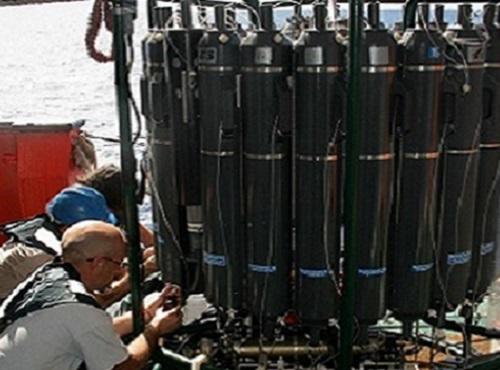
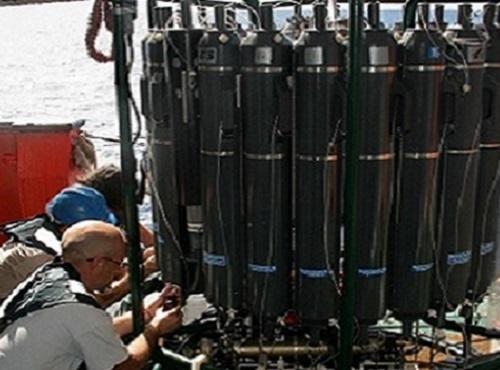
IMAGE

Credit: © 2016 J.M. Gasol

Bacterial and archaeal plankton, as the most abundant form of life in the oceans, profoundly influence the global environment. Based on a broad survey of the seas, researchers from KAUST have developed a model that predicts how climate change might affect these microbial populations1.

Temperature, nutrient availability and mortality rates are three primary factors that can strongly influence the numbers of these simple organisms known as heterotrophic planktonic prokaryotes. "I have long been intrigued about possible relationships between these three primary controls and whether or not there are systematic patterns," said KAUST Associate Professor of Marine Science Xosé Anxelu Morán, who led the research.

Although Morán had previously investigated these factors at some oceanic sites, the Malaspina 2010 Global Circumnavigation Expedition gave him the opportunity to extend this analysis worldwide.

During this expedition, which was led by Morán's collaborator and KAUST colleague, Carlos Duarte, the researchers analyzed samples from 109 different sites in the Atlantic, Indian and Pacific Oceans. At each site, they quantified the mass of heterotrophic planktonic prokaryotes and the extent to which these organisms were reproducing. These data allowed them to determine the relative effects of temperature and nutrient availability on microbial populations.

Morán's team also measured the number of viruses and larger microbes that can kill or consume these plankton.

By analyzing the contributions of these three factors, a coherent picture began to emerge. "If either the availability of food or the rates of predation or viral attack are limiting the growth of planktonic bacteria, then temperature plays only a minor role," explained Morán. "Conversely, if bacteria are freed from these two controls, then temperature becomes the predominant factor."

However, the researchers also found that there were important geographic factors governing the effect of temperature: the impact of warming is predicted to be greater moving toward the poles than in waters nearer to the equator.

Oceanic ecosystems may draw excess carbon out of the atmosphere, but Morán points out that proliferation of planktonic prokaryotes at the expense of larger organisms can undermine this carbon sequestration. Thus, understanding where and how much these populations are affected by warming will have important implications for the environment.

Morán is now putting his team's model to the test by examining how environmental changes affect growth behavior of surface-dwelling plankton from Red Sea waters near KAUST. "We want to prove it experimentally in the Red Sea, the hottest deep marine basin in the world," he said.

###

Media Contact

Michelle D'Antoni
[email protected]

http://kaust.edu.sa/

Original Source

https://discovery.kaust.edu.sa/en/article/366/a-changing-climate-affects-plankton-populations http://dx.doi.org/10.1111/gcb.13730

############

Story Source: Materials provided by Scienmag

Share12Tweet8Share2ShareShareShare2

Related Posts

In-Depth Analysis Reveals Advances in Multiple Sclerosis Research Models — Biology

In-Depth Analysis Reveals Advances in Multiple Sclerosis Research Models

May 18, 2026
Uncovering C. elegans Immunity via Genetic Screens — Biology

Uncovering C. elegans Immunity via Genetic Screens

May 16, 2026

Single mother must adapt swiftly — the survival of her colony depends on it

May 15, 2026

Why Are Nearly Everyone Right-Handed? It Might Be Linked to How We Learned to Walk

May 15, 2026
Please login to join discussion

POPULAR NEWS

  • Research Indicates Potential Connection Between Prenatal Medication Exposure and Elevated Autism Risk

    845 shares
    Share 338 Tweet 211
  • New Study Reveals Plants Can Detect the Sound of Rain

    731 shares
    Share 292 Tweet 182
  • Salmonella Haem Blocks Macrophages, Boosts Infection

    62 shares
    Share 25 Tweet 16
  • Breastmilk Balances E. coli and Beneficial Bacteria in Infant Gut Microbiomes

    58 shares
    Share 23 Tweet 15

About

We bring you the latest biotechnology news from best research centers and universities around the world. Check our website.

Follow us

Recent News

Mpi Controls Mucin Glycosylation and Gut Health

Dimethyl Fumarate Eases Experimental Bronchopulmonary Dysplasia

ESTRO: Certain Breast Cancer Patients Could Avoid Surgery After Ablative Radiation, Study Suggests

Subscribe to Blog via Email

Enter your email address to subscribe to this blog and receive notifications of new posts by email.

Join 82 other subscribers
  • Contact Us

Bioengineer.org © Copyright 2023 All Rights Reserved.

Welcome Back!

Login to your account below

Forgotten Password?

Retrieve your password

Please enter your username or email address to reset your password.

Log In
No Result
View All Result
  • Homepages
    • Home Page 1
    • Home Page 2
  • News
  • National
  • Business
  • Health
  • Lifestyle
  • Science

Bioengineer.org © Copyright 2023 All Rights Reserved.