Credit: Copyright: ICRISAT
Plant diversity and adaptation to different climatic conditions — especially important in the era of global climate change — is synonymous for the concept of natural and genetic diversity. Research tackling this natural genetic variation and the corresponding biodiversity provides one of the largest treasures of mankind. Exactly this genetic variation of plant families, plant genera and even within one plant species is the key to cope with global climate change and dramatic consequences for agriculture. For the purpose of sustainable research, breeding and protecting genetic diversity especially of crop plants many public non-profit research organization have formed under the umbrella of CGIAR and are active in research and building non-profit biobanks. ICRISAT is the Indian pendant of the famous CIMMYT which started in the 60ies to distribute disease resistant wheat varieties under the poor farmers in the developing countries.
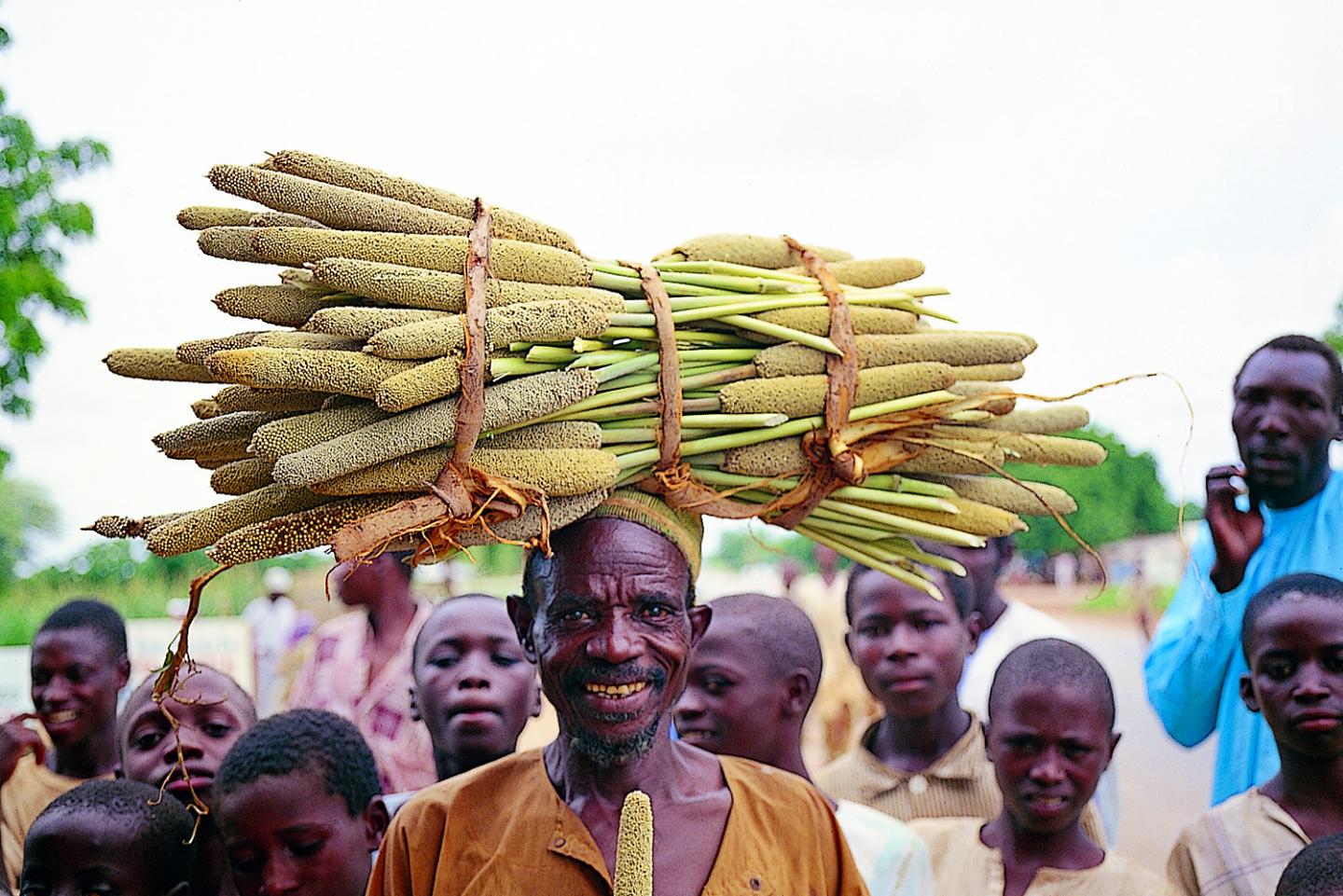
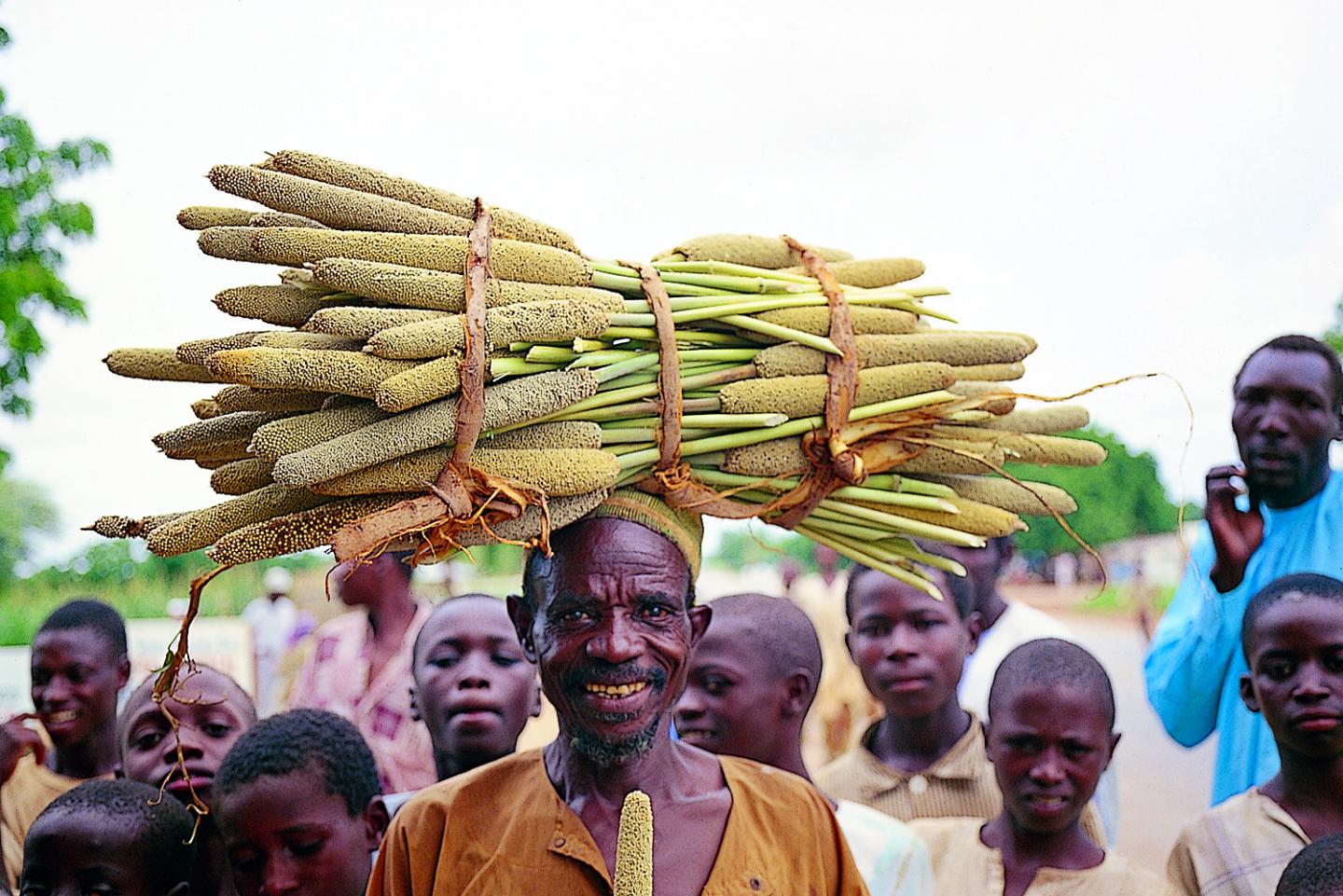
Pearl millet (Cenchrus americanus 72 (L.) Morrone synonymous for Pennisetum glaucum) is a staple food plant in aride and semi-aride regions of Africa, India and Asia. This so-called C4 plant shows high resistance against drought stress but molecular mechanisms behind this are rather unknown. "The first steps to elucidate molecular mechanisms in any organism from plants to animals to microbes is to sequence and analyze their genome, proteome and metabolome", says the systems biologist Wolfram Weckwerth, head of the Department of Ecogenomics and Systems Biology and Chair of the Vienna Metabolomics Center of the University of Vienna. An international consortium with participation of the University of Vienna sequenced now the genome of pearl millet and additionally 994 further breeding lines and wildtypes to reveal molecular properties hinting to drought resistance mechanisms on a genome basis. "Furthermore this study provides the basis for marker-selected breeding studies", says the coordinator of the genome project Rajeev Varshney.
In a related study Arindam Ghatak, Palak Chaturvedi, Wolfram Weckwerth and further team members investigated the drought resistance of pearl millet with respect to metabolism and proteome changes. From these studies the first molecular-physiological hypotheses are derived how the plant can adapt to water deficiency and heat and at the same time keep a reasonable harvest index. The initial genomic information of pearl millet was essential for these studies.
###
ICRISAT: http://www.icrisat.org/
CGIAR: http://www.cgiar.org/
VIME (Vienna Metabolomics Center): http://metabolomics.univie.ac.at/
Publication in "Nature Biotechnology"
International Pearl millet genome consortium (2017) Pearl millet genome sequence provides a resource to improve agronomic traits in arid environments
Nature Biotechnology
DOI: 10.1038/nbt.3943
Publication in "Journal of Proteomics"
Ghatak, A., Chaturvedi, P., Nagler, M., Roustan, V., Lyon, D., Bachmann, G., Postl, W., Schrofl, A., Desai, N., Varshney, R. K.,Weckwerth, W. (2016). Comprehensive tissue-specific proteome analysis of drought stress responses in Pennisetum glaucum (L.) R. Br. (Pearl millet). J Proteomics 143, 122-35.
DOI: 10.1016/j.jprot.2016.02.032
Media Contact
Wolfram Weckwerth
[email protected]
43-142-777-6550
@univienna
http://www.univie.ac.at/en/
Original Source
http://medienportal.univie.ac.at/presse/aktuelle-pressemeldungen/detailansicht/artikel/photo-download-zur-publikation-von-wolfram-weckwerth-in-nature-biotechnology/ http://dx.doi.org/10.1038/nbt.3943