“[…] we posit that the majority of results in biology of aging may be irrelevant to the fundamental aim of this field and must be acknowledged appropriately.”
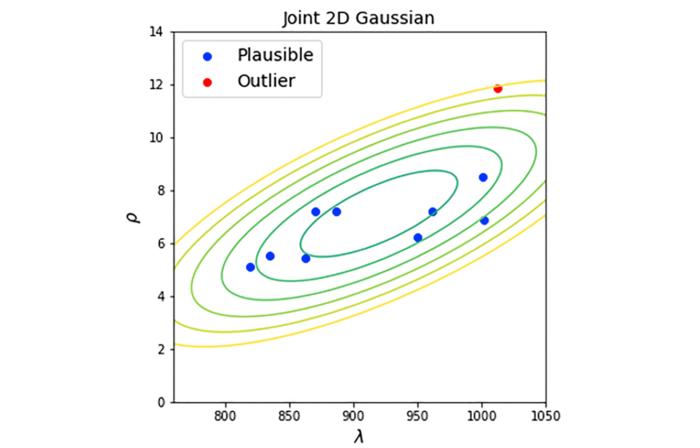
Credit: 2024 Spiridonova et al.
“[…] we posit that the majority of results in biology of aging may be irrelevant to the fundamental aim of this field and must be acknowledged appropriately.”
BUFFALO, NY- March 5, 2024 – A new research perspective was published in Aging (listed by MEDLINE/PubMed as “Aging (Albany NY)” and “Aging-US” by Web of Science) Volume 16, Issue 4, entitled, “On standardization of controls in lifespan studies.”
In this new paper, researchers Olga Spiridonova, Dmitrii Kriukov, Nikolai Nemirovich-Danchenko, and Leonid Peshkin from Harvard Medical School’s Department of Systems Biology discuss the burgeoning field of the search for interventions to slow down, and even reverse, aging. Currently available literature cites hundreds of supposedly beneficial pharmacological and genetic interventions in model organisms: mice, rats, flies, and worms, where research into physiology is routinely accompanied by lifespan data. However, when experimental animals from one article live as long as controls from another article, comparing the results of interventions across studies can yield misleading outcomes.
“Theoretically, all lifespan data are ripe for re-analysis: we could contrast the molecular targets and pathways across studies and help focus the further search for interventions.”
Alas, the results of most longevity studies are difficult to compare. This is in part because there are no clear, universally accepted standards for conducting such experiments or even for reporting such data. The situation is worsened by the fact that the authors often do not describe experimental conditions completely. As a result, works on longevity make up a set of precedents, each of which might be interesting in its own right, yet incoherent and incomparable at least for the reason that in a general context, it may indicate, for example, not prolonging the life of an average organism, but compensating for any genetic abnormalities of a particular sample or inappropriate living conditions.
“Here we point out specific issues and propose solutions for quality control by checking both inter- and intra-study consistency of lifespan data.”
Read the full paper: DOI: https://doi.org/10.18632/aging.205604
Corresponding Author: Leonid Peshkin
Corresponding Email: [email protected]
Keywords: animal disease models, survival modeling, aging, data standardization
Click here to sign up for free Altmetric alerts about this article.
About Aging:
Launched in 2009, Aging publishes papers of general interest and biological significance in all fields of aging research and age-related diseases, including cancer—and now, with a special focus on COVID-19 vulnerability as an age-dependent syndrome. Topics in Aging go beyond traditional gerontology, including, but not limited to, cellular and molecular biology, human age-related diseases, pathology in model organisms, signal transduction pathways (e.g., p53, sirtuins, and PI-3K/AKT/mTOR, among others), and approaches to modulating these signaling pathways.
Please visit our website at www.Aging-US.com and connect with us:
- X, formerly Twitter
- YouTube
- Spotify, and available wherever you listen to podcasts
Click here to subscribe to Aging publication updates.
For media inquiries, please contact [email protected].
Aging (Aging-US) Journal Office
6666 E. Quaker Str., Suite 1B
Orchard Park, NY 14127
Phone: 1-800-922-0957, option 1
###
Journal
Aging-US
DOI
10.18632/aging.205604
Method of Research
Literature review
Subject of Research
People
Article Title
On standardization of controls in lifespan studies
Article Publication Date
27-Feb-2024