• HOME
  • NEWS
  • EXPLORE
    • CAREER
      • Companies
      • Jobs
    • EVENTS
    • iGEM
      • News
      • Team
    • PHOTOS
    • VIDEO
    • WIKI
  • BLOG
  • COMMUNITY
    • FACEBOOK
    • INSTAGRAM
    • TWITTER
Saturday, March 28, 2026
BIOENGINEER.ORG
No Result
View All Result
  • Login
  • HOME
  • NEWS
  • EXPLORE
    • CAREER
      • Companies
      • Jobs
        • Lecturer
        • PhD Studentship
        • Postdoc
        • Research Assistant
    • EVENTS
    • iGEM
      • News
      • Team
    • PHOTOS
    • VIDEO
    • WIKI
  • BLOG
  • COMMUNITY
    • FACEBOOK
    • INSTAGRAM
    • TWITTER
  • HOME
  • NEWS
  • EXPLORE
    • CAREER
      • Companies
      • Jobs
        • Lecturer
        • PhD Studentship
        • Postdoc
        • Research Assistant
    • EVENTS
    • iGEM
      • News
      • Team
    • PHOTOS
    • VIDEO
    • WIKI
  • BLOG
  • COMMUNITY
    • FACEBOOK
    • INSTAGRAM
    • TWITTER
No Result
View All Result
Bioengineer.org
No Result
View All Result
Home NEWS Science News Biology

Study finds Tropical Cyclone Winston damaged fisheries as well as homes in Fiji

Bioengineer by Bioengineer
December 21, 2018
in Biology
Reading Time: 3 mins read
0
IMAGE
Share on FacebookShare on TwitterShare on LinkedinShare on RedditShare on Telegram

Survey of fishers finds impacts of 2016 cyclone resulted in fewer mud crabs and less local consumption of catch
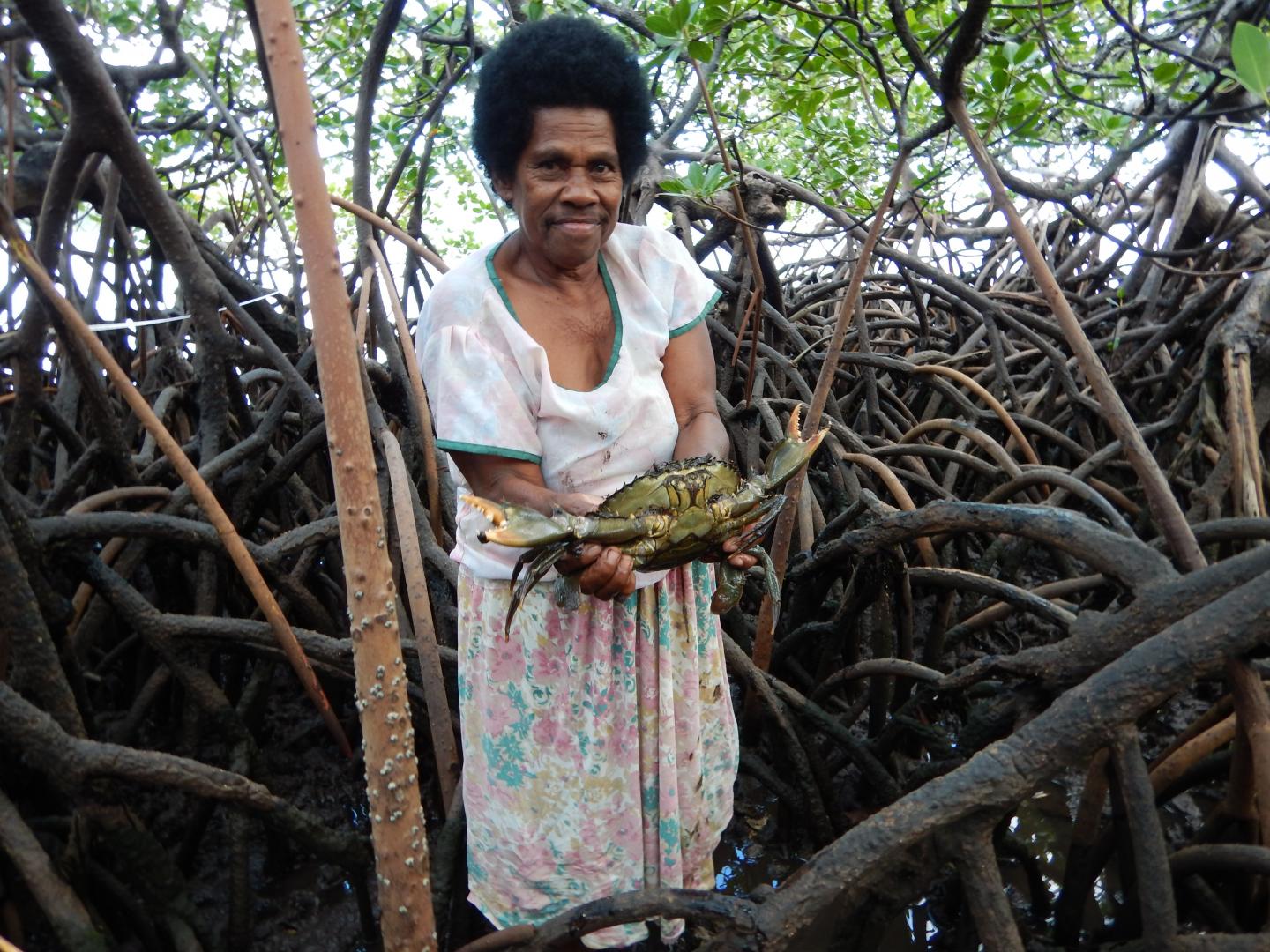
IMAGE

Credit: Yashika Nand-WCS


A newly published study by WCS (Wildlife Conservation Society) has found that impacts of Tropical Cyclone Winston on the coastal communities of Fiji went beyond the immediate loss of lives and infrastructure. The cyclone also had a lingering effect on the fisheries many communities depend on, particularly on the availability of commercially important crustaceans.

In the aftermath of the 2016 Category 5 cyclone that wrecked widespread havoc on the islands of Fiji, many women fishers stopped fishing for mud crabs altogether while they focused instead on repairing their homes. Fisherwomen who continued the harvest reported fewer and smaller crabs, and catches were sold mostly to local traders to raise money for home repair as opposed to being eaten by fishers.

The study titled “Impact of Tropical Cyclone Winston on women mud crab fishers in Fiji” appears in the latest version of the journal Climate and Development. The authors are: Alyssa S. Thomas, Sangeeta Mangubhai, Chloe Vandervord, Margaret Fox, and Yashika Nand of WCS.

“It’s important to realize that tropical cyclones can have immediate effects on food security and the economic well-being of small villages that depend on natural resources,” said Dr. Sangeeta Mangubhai, Country Director of WCS’s Fiji Program and a co-author on the study.

While many studies on the impact of cyclones on communities focus on the damage done to services and infrastructure, few quantify the impact on community fisheries or the fishers themselves. And even fewer look at the impact to women in the fisheries sector.

The research authors used on the mud crab (Scylla serrata) as a lens to better understand the cascading effects of Tropical Cyclone Winston on natural resource use in the coastal communities in the Bua Province of Vanua Levu, Fiji’s second largest island. The crab is an important source of food and income for fisherwomen due to the crustacean’s large size and delicate meat. The objectives of the study were to gauge the social and economic impact of Tropical Cyclone Winston two to three months after the story, and to formulate recommendations for the government based on the study’s findings.

The researchers conducted one-on-one surveys with mostly women (who make up the majority of mud crab fishers) in 16 villages located near mangroves, habitat where mud crabs are usually numerous and harvested with consistency. The same villages had participated in a previous survey (before the cyclone) focused on the mud crab fishery. The authors found that, after the cyclone, some 52 percent of the survey participants had stopped harvesting crabs for a number of reasons (i.e. the need to focus on home repair, the difficulty of accessing fishing locations and local traders after the story).

Mangubhai added: “The findings that mud crab fisheries are especially vulnerable is key to helping government agencies to design effective strategies to mitigate the effects of natural disasters.”

###

This work was supported by the Flora Family Foundation and The David and Lucile Packard Foundation.

Media Contact
John Delaney
[email protected]
718-220-3682

Related Journal Article

http://dx.doi.org/10.1080/17565529.2018.1547677

Tags: BiologyEcology/EnvironmentMarine/Freshwater Biology
Share12Tweet8Share2ShareShareShare2

Related Posts

How to sway group opinions: Encourage opponents to stay undecided

How to sway group opinions: Encourage opponents to stay undecided

March 23, 2026
Deep Learning Model Maps How Individual Cells Shape Disease Outcomes

Deep Learning Model Maps How Individual Cells Shape Disease Outcomes

March 20, 2026

Removing only 15 female sharks annually could endanger the entire population, scientists warn

March 20, 2026

Scientists Urge Fragrance Industry to Transition from Sustainability Talk to Active Funding of Plant Conservation

March 20, 2026
Please login to join discussion

POPULAR NEWS

  • blank

    Revolutionary AI Model Enhances Precision in Detecting Food Contamination

    96 shares
    Share 38 Tweet 24
  • Imagine a Social Media Feed That Challenges Your Views Instead of Reinforcing Them

    1004 shares
    Share 397 Tweet 248
  • Uncovering Functions of Cavernous Malformation Proteins in Organoids

    54 shares
    Share 22 Tweet 14
  • Promising Outcomes from First Clinical Trials of Gene Regulation in Epilepsy

    51 shares
    Share 20 Tweet 13

About

We bring you the latest biotechnology news from best research centers and universities around the world. Check our website.

Follow us

Recent News

In-Sensor Cryptography Links Physical Process to Digital Identity

Can Psychosocial Factors Influence Cancer Risk?

Depression Factors in Elderly: Pre vs. Post-COVID Analysis

Subscribe to Blog via Email

Enter your email address to subscribe to this blog and receive notifications of new posts by email.

Join 78 other subscribers
  • Contact Us

Bioengineer.org © Copyright 2023 All Rights Reserved.

Welcome Back!

Login to your account below

Forgotten Password?

Retrieve your password

Please enter your username or email address to reset your password.

Log In
No Result
View All Result
  • Homepages
    • Home Page 1
    • Home Page 2
  • News
  • National
  • Business
  • Health
  • Lifestyle
  • Science

Bioengineer.org © Copyright 2023 All Rights Reserved.