• HOME
  • NEWS
  • EXPLORE
    • CAREER
      • Companies
      • Jobs
    • EVENTS
    • iGEM
      • News
      • Team
    • PHOTOS
    • VIDEO
    • WIKI
  • BLOG
  • COMMUNITY
    • FACEBOOK
    • INSTAGRAM
    • TWITTER
Saturday, February 7, 2026
BIOENGINEER.ORG
No Result
View All Result
  • Login
  • HOME
  • NEWS
  • EXPLORE
    • CAREER
      • Companies
      • Jobs
        • Lecturer
        • PhD Studentship
        • Postdoc
        • Research Assistant
    • EVENTS
    • iGEM
      • News
      • Team
    • PHOTOS
    • VIDEO
    • WIKI
  • BLOG
  • COMMUNITY
    • FACEBOOK
    • INSTAGRAM
    • TWITTER
  • HOME
  • NEWS
  • EXPLORE
    • CAREER
      • Companies
      • Jobs
        • Lecturer
        • PhD Studentship
        • Postdoc
        • Research Assistant
    • EVENTS
    • iGEM
      • News
      • Team
    • PHOTOS
    • VIDEO
    • WIKI
  • BLOG
  • COMMUNITY
    • FACEBOOK
    • INSTAGRAM
    • TWITTER
No Result
View All Result
Bioengineer.org
No Result
View All Result
Home NEWS Science News Health

New data show barbershop blood pressure checks remain highly effective

Bioengineer by Bioengineer
December 17, 2018
in Health
Reading Time: 2 mins read
0
IMAGE
Share on FacebookShare on TwitterShare on LinkedinShare on RedditShare on Telegram

12-month follow-up research continues to show improvement in lowering hypertension
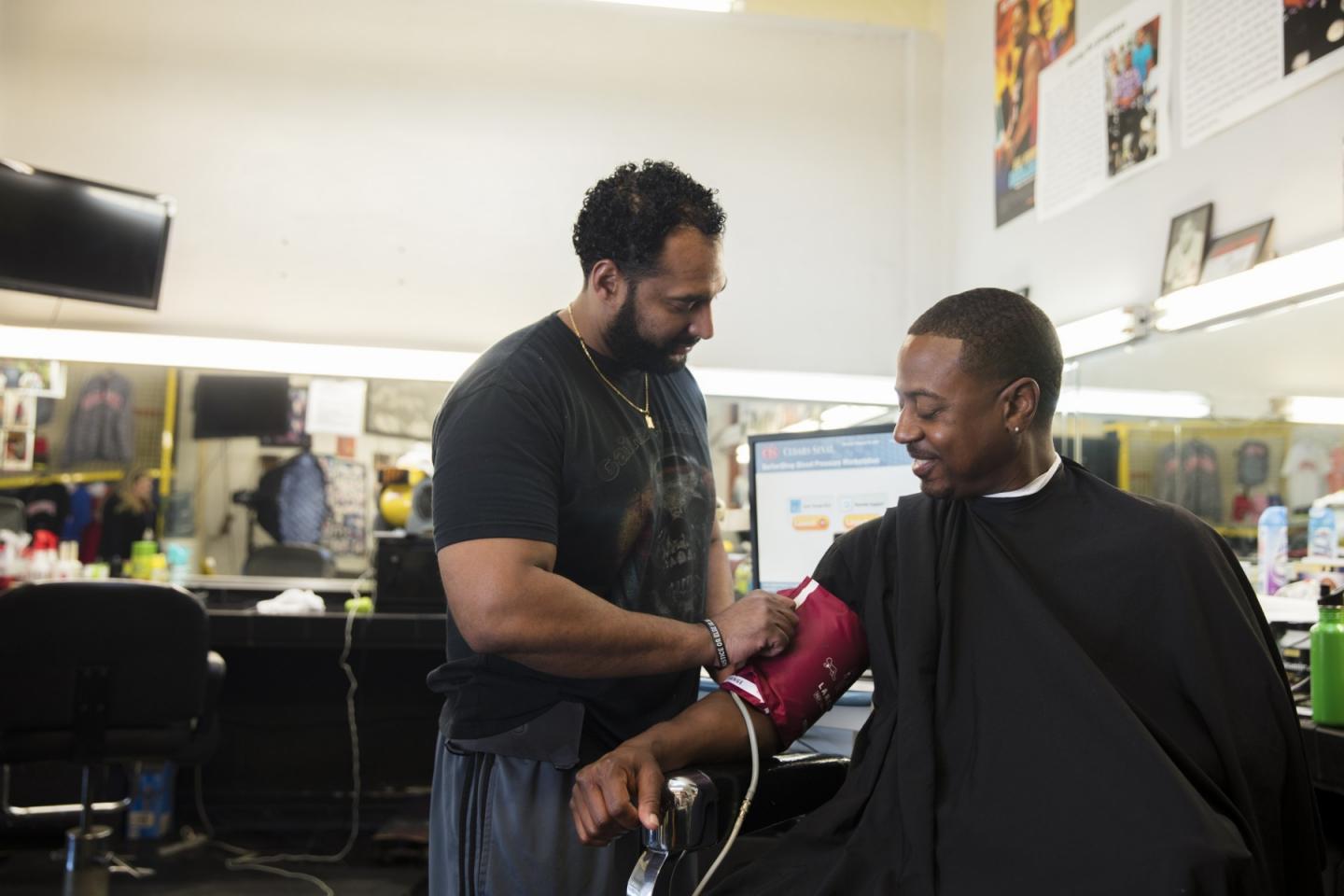
IMAGE

Credit: Cedars-Sinai

LOS ANGELES — Dec. 17, 2018 — New 12-month data from the Smidt Heart Institute at Cedars-Sinai backs up an earlier study proving that a pharmacist-led, barbershop-based medical intervention can successfully lower blood pressure in high-risk African-American men. The follow-up research was published today in the journal Circulation.

“Our initial six-month data showed a marked reduction of blood pressure in the intervention group,” said C. Adair Blyler, PharmD, CHC, an author on the study and one of two clinical pharmacists from the Smidt Heart Institute who traveled to black-owned barbershops to treat patients. “Now, our 12-month data show that this significant reduction in blood pressure can be sustained, and in some cases, even improved, despite fewer in-person visits with a pharmacist.”

The novel study involving 52 Los Angeles County barbershops stationed pharmacists in barbershops to prescribe, monitor and adjust blood pressure medication for patrons.

The study was led by the late Ronald G. Victor, MD, one of the world’s foremost experts on hypertension and community-based healthcare interventions. Victor was the first to study, and prove, that high-risk populations are more likely to be receptive to medical care in an environment where they’re most comfortable.

“This study will have lasting impact on one of our nation’s most at-risk populations when it comes to high blood pressure,” said Eduardo Marbán, MD, PhD, director of the Smidt Heart Institute. “As an institution, we are proud of these results and know Ron Victor would have been proud to see his vision produce such successful results that will have a positive effect on thousands of lives.”

Patients with hypertension have a blood pressure score above 130 over 80, although those with the first number above 120 are now considered to have elevated blood pressure. If left untreated, hypertension can lead to heart failure, stroke and kidney disease. It’s often considered a silent killer because patients typically don’t feel symptoms.

According to the research, at 12 months, the average systolic blood pressure – the top number in a blood pressure reading – fell by nearly 29 mmHg in the intervention group and by 7.2 mmHg in the control group – a difference of just over 21 mmHg.

With these positive results, Smidt Heart Institute researchers will now shift their focus to identifying cost-effective ways to broaden barbershop-based care and implement this novel model to other high-risk communities outside of Los Angeles County.

###

Media Contact
Cara Martinez
[email protected]
310-562-7821

Tags: CardiologyMedicine/Health
Share12Tweet8Share2ShareShareShare2

Related Posts

Decoding Prostate Cancer Origins via snFLARE-seq, mxFRIZNGRND

February 7, 2026

Digital Health Perspectives from Baltic Sea Experts

February 7, 2026

Exploring Decision-Making in Dementia Caregivers’ Mobility

February 7, 2026

Succinate Receptor 1 Limits Blood Cell Formation, Leukemia

February 7, 2026
Please login to join discussion

POPULAR NEWS

  • Robotic Ureteral Reconstruction: A Novel Approach

    Robotic Ureteral Reconstruction: A Novel Approach

    82 shares
    Share 33 Tweet 21
  • Digital Privacy: Health Data Control in Incarceration

    63 shares
    Share 25 Tweet 16
  • Study Reveals Lipid Accumulation in ME/CFS Cells

    57 shares
    Share 23 Tweet 14
  • Breakthrough in RNA Research Accelerates Medical Innovations Timeline

    53 shares
    Share 21 Tweet 13

About

We bring you the latest biotechnology news from best research centers and universities around the world. Check our website.

Follow us

Recent News

Decoding Prostate Cancer Origins via snFLARE-seq, mxFRIZNGRND

Digital Health Perspectives from Baltic Sea Experts

Florida Cane Toad: Complex Spread and Selective Evolution

Subscribe to Blog via Email

Enter your email address to subscribe to this blog and receive notifications of new posts by email.

Join 73 other subscribers
  • Contact Us

Bioengineer.org © Copyright 2023 All Rights Reserved.

Welcome Back!

Login to your account below

Forgotten Password?

Retrieve your password

Please enter your username or email address to reset your password.

Log In
No Result
View All Result
  • Homepages
    • Home Page 1
    • Home Page 2
  • News
  • National
  • Business
  • Health
  • Lifestyle
  • Science

Bioengineer.org © Copyright 2023 All Rights Reserved.