Credit: Mario Balzan
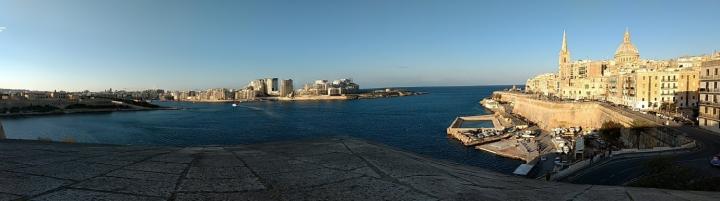
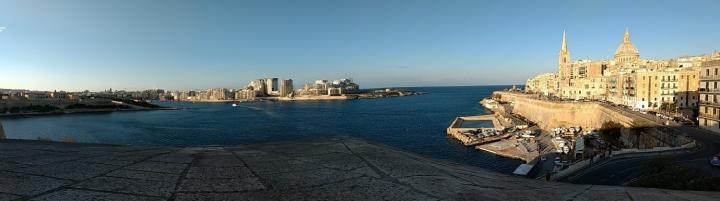
Malta – a country spread across just 316 km2 [1] and having a population of around 475,000 people [2]. Due to an increasing competition for space for urban and industrial development, the need to assess the availability to green infrastructure and to develop innovative land use solutions has become more pressing.
ReNature: Promoting research excellence in nature-based solutions for innovation, economic growth and human well-being in Malta, is a newly funded EU Horizon 2020 project which addresses this issue and aims to improve the capacity and to develop a living solutions research strategy in a pursuit of sustainable development, whilst at the same time improving human well-being and tackling environmental challenges.
Nature-based solutions, defined as living solutions that address societal challenges in a resource-efficient and adaptable manner are a priority for the European Union research and innovation agenda. Examples of nature-based solutions include different forms of green and blue infrastructure, green roofs and walls, rain gardens, sustainable urban drainage systems, natural water retention measures, hedgerows, salt marshes and dunes, floodplains, and urban green spaces.
The proposed activities within ReNature include various types of training and networking events aimed at building up the research capacity and at promoting research excellence in the field of nature-based solutions in Malta. Through capacity-building and knowledge synthesis about nature's benefits, and by developing a strong collaboration with policy and businesses, the ReNature researchers will foster a culture of evidence-based environmental decision-making and planning for human well-being.
"There is a strong need for land use planning to promote the use of nature-based solutions to develop the green infrastructure network in urban areas and, by doing so, to significantly contribute to supporting biodiversity and ecosystem services flows leading to benefits to society," comments coordinator Mario Balzan from the Malta College of Arts, Science and Technology (MCAST). "This ambitious project aims to make Malta a strong research and innovation player in the emerging field of nature-based solutions, thereby providing an opportunity to develop and test new technical and policy solutions in an urbanised island environment."
The 3-year collaboration is expected to increase the research capacity within this sector, link up with existing initiatives and projects led by, or receiving input from, the research-intensive institutions, develop a national research cluster with strong international collaborations, and provide practical solutions based on cutting-edge science and developed through international collaboration.
The research team is composed of three leading research intensive institutions within this rapidly developing field and one private entity; that is the Trinity College Dublin (Ireland); University of Trento (Italy); University of East Anglia (United Kingdom), and Pensoft Publishers (Bulgaria). The project team possesses multidisciplinary skills and complementary knowledge, essential for the establishment of new nature-based solutions for sustainable development.
ReNature holds its official kick-off meeting on 25 and 26 October at the Institute of Applied Sciences of the Malta College of Arts, Science and Technology in Malta, where project partners meet for the start of the three year research and innovation action. Stakeholders and the general public are welcome to join the stakeholders meeting for an open discussion about the project, its objectives and the development of a network of researchers, practitioners and interested members of the public.
###
This project has received funding from the European Union's Horizon 2020 research and innovation programme under grant agreement No 809988. The project has a duration of three years and brings together five partners from internationally leading research institutions in its consortium.
Sources:
1. First population estimates EU population up to nearly 513 million on 1 January 2018 Increase driven by migration. 115/2018 – 10 July 2018. Eurostat. News release, https://ec.europa.eu/eurostat/documents/2995521/9063738/3-10072018-BP-EN.pdf
2. Schembri P.J. Physical geography and ecology of the Maltese Islands: A brief overview. In :
Busuttil S. (ed.), Lerin F. (ed.), Mizzi L. (ed.). Malta: Food, agriculture, fisheries and the environment.
Montpellier : CIHEAM, 1993. p. 27-39 (Options Méditerranéennes : Série B. Etudes et Recherches; n.7)
Media Contact
Mario Balzan
[email protected]
@Pensoft
http://www.pensoft.net