

• HOME
  • NEWS
  • EXPLORE
    • CAREER
      • Companies
      • Jobs
    • EVENTS
    • iGEM
      • News
      • Team
    • PHOTOS
    • VIDEO
    • WIKI
  • BLOG
  • COMMUNITY
    • FACEBOOK
    • INSTAGRAM
    • TWITTER
Saturday, February 7, 2026
BIOENGINEER.ORG
No Result
View All Result
  • Login
  • HOME
  • NEWS
  • EXPLORE
    • CAREER
      • Companies
      • Jobs
        • Lecturer
        • PhD Studentship
        • Postdoc
        • Research Assistant
    • EVENTS
    • iGEM
      • News
      • Team
    • PHOTOS
    • VIDEO
    • WIKI
  • BLOG
  • COMMUNITY
    • FACEBOOK
    • INSTAGRAM
    • TWITTER
  • HOME
  • NEWS
  • EXPLORE
    • CAREER
      • Companies
      • Jobs
        • Lecturer
        • PhD Studentship
        • Postdoc
        • Research Assistant
    • EVENTS
    • iGEM
      • News
      • Team
    • PHOTOS
    • VIDEO
    • WIKI
  • BLOG
  • COMMUNITY
    • FACEBOOK
    • INSTAGRAM
    • TWITTER
No Result
View All Result
Bioengineer.org
No Result
View All Result
Home NEWS Science News Health

Blue crab baby sizes and shapes influence their survival

Bioengineer by Bioengineer
October 17, 2018
in Health
Reading Time: 2 mins read
0
Share on FacebookShare on TwitterShare on LinkedinShare on RedditShare on Telegram
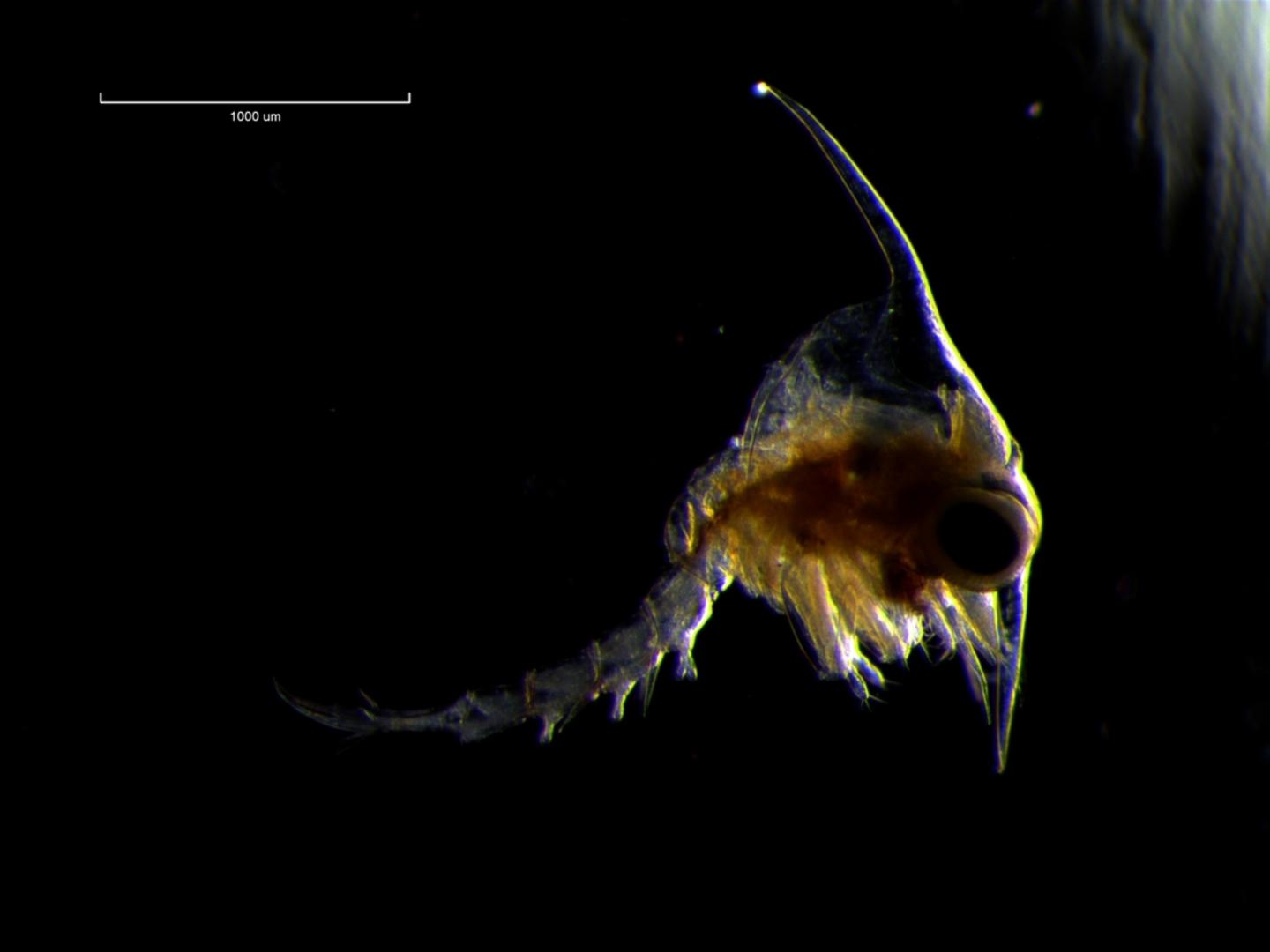
IMAGE

Credit: Joseph Caracappa/Rutgers University-New Brunswick

Like people, blue crabs aren't all the same sizes and shapes. Now Rutgers scientists have discovered substantial differences in the body structures of larval crab siblings and among larvae from different mothers. And that can mean the difference between an early death and survival into adulthood for this important commercial and recreational species.

Unlike other crab species, these larval differences aren't related to the size of their mothers, according to a study in Biological Bulletin. The differences can mean that babies from certain mothers may swim or feed more efficiently than others, giving them an advantage.

"Early larval stages of crabs can be challenging to work with in the lab, but they are key life stages to study in order to understand blue crab populations," said lead author Joseph Caracappa, a Rutgers University-New Brunswick doctoral student based at Rutgers' Haskin Shellfish Research Laboratory in Port Norris, New Jersey.

Blue crab larvae – the earliest life stage – look almost nothing like adult crabs and live in open water off the coast of New Jersey. Blue crabs support a substantial fishery in the Garden State and other eastern U.S. states, including Maryland. Scientists have been interested in the species for more than a century, yet much remains unknown about what happens to them early in life.

###

Caption: Blue crab larvae swimming during research on how body structures relate to swimming ability at Rutgers' Haskin Shellfish Research Laboratory. YouTube video by Joseph Caracappa/Rutgers University-New Brunswick.

The study by Caracappa and senior author Daphne Munroe, an associate professor based at the Haskin laboratory, looked at the offspring of 21 blue crabs. The researchers photographed the larvae and examined their defensive spines, swimming appendages and overall size and shape.

The researchers are now testing how differences in body type relate to swimming ability. Last summer, a high school student from Princeton Day School in New Jersey worked with Rutgers scientists to examine the swimming ability of larvae from different mothers and compared that with larval body structures.

Media Contact

Todd Bates
[email protected]
848-932-0550
@RutgersU

http://www.rutgers.edu

Original Source

https://news.rutgers.edu/blue-crab-baby-sizes-and-shapes-influence-their-survival/20181010#.W8COomhKi71 http://dx.doi.org/10.1086/699922
Share12Tweet8Share2ShareShareShare2

Related Posts

Evaluating Pediatric Emergency Care Quality in Ethiopia

February 7, 2026

TPMT Expression Predictions Linked to Azathioprine Side Effects

February 7, 2026

Improving Dementia Care with Enhanced Activity Kits

February 7, 2026

Decoding Prostate Cancer Origins via snFLARE-seq, mxFRIZNGRND

February 7, 2026
Please login to join discussion

POPULAR NEWS

  • Robotic Ureteral Reconstruction: A Novel Approach

    Robotic Ureteral Reconstruction: A Novel Approach

    82 shares
    Share 33 Tweet 21
  • Digital Privacy: Health Data Control in Incarceration

    63 shares
    Share 25 Tweet 16
  • Study Reveals Lipid Accumulation in ME/CFS Cells

    57 shares
    Share 23 Tweet 14
  • Breakthrough in RNA Research Accelerates Medical Innovations Timeline

    53 shares
    Share 21 Tweet 13

About

We bring you the latest biotechnology news from best research centers and universities around the world. Check our website.

Follow us

Recent News

Evaluating Pediatric Emergency Care Quality in Ethiopia

TPMT Expression Predictions Linked to Azathioprine Side Effects

Improving Dementia Care with Enhanced Activity Kits

Subscribe to Blog via Email

Enter your email address to subscribe to this blog and receive notifications of new posts by email.

Join 73 other subscribers
  • Contact Us

Bioengineer.org © Copyright 2023 All Rights Reserved.

Welcome Back!

Login to your account below

Forgotten Password?

Retrieve your password

Please enter your username or email address to reset your password.

Log In
No Result
View All Result
  • Homepages
    • Home Page 1
    • Home Page 2
  • News
  • National
  • Business
  • Health
  • Lifestyle
  • Science

Bioengineer.org © Copyright 2023 All Rights Reserved.
