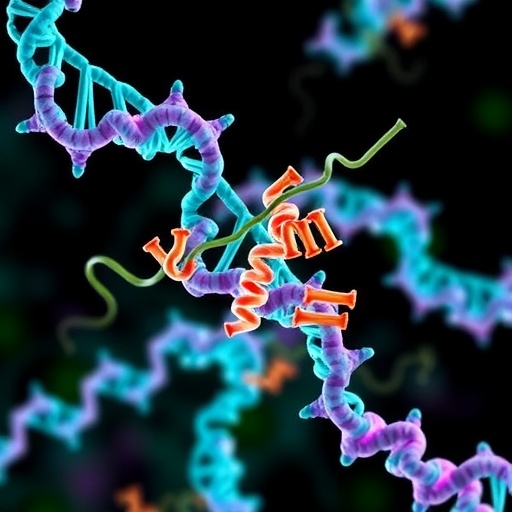
A groundbreaking methodological advancement from Baylor College of Medicine and its partners is rewriting the way scientists understand RNA functionality within living cells. Published in the high-impact journal Molecular Cell, this novel approach, known as multi-site DMS-MaP (msDMS-MaP), elegantly addresses longstanding challenges in probing RNA three-dimensional (3D) structures and their dynamic interactions with proteins in cellular contexts. This technological leap promises to illuminate the intricate landscape of RNA architecture with unprecedented precision and throughput, offering scientists a potent new tool for dissecting RNA’s multifaceted roles in biology.
RNA molecules defy their traditional characterization as mere intermediaries in gene expression, revealing themselves as versatile regulators orchestrating diverse cellular processes. By folding into complex, dynamic 3D structures, RNA molecules create unique topologies—comprising pockets, ridges, and knots—that enable highly specific molecular interactions. These structural motifs facilitate RNA’s capacity to bind proteins, small molecules, and other RNAs, modulating cellular functions ranging from gene regulation to signal transduction. Understanding the exact nature and dynamics of these folds has remained elusive, largely due to technical limitations inherent to prevailing biochemical probing methods.
The innovation of msDMS-MaP circumvents these barriers through a streamlined, one-step biochemical strategy that leverages dimethyl sulfate (DMS) probing combined with mutational profiling (MaP). By introducing targeted methylation at multiple accessible RNA sites in living cells, msDMS-MaP captures a snapshot of RNA’s structural state with remarkable granularity. This probing technique reveals the physical footprints of RNA-protein complexes and transient conformations that have hitherto evaded detection. Importantly, the method simplifies experimental workflows and utilizes cost-effective, widely-available reagents, democratizing access to high-resolution RNA structural data.
A compelling application of msDMS-MaP provided answers to a half-century old biochemical conundrum concerning ribosome biogenesis. Ribosomes, the cellular factories of protein synthesis, depend heavily on the orchestrated assembly of ribosomal proteins and their interaction with ribosomal RNAs (rRNAs). Using bacterial ribosomes as model systems, researchers demonstrated that rRNAs encode a constellation of independent, autonomously folding 3D structures. These structural domains precisely colocalize with protein binding sites critical for stepwise ribosome assembly. This discovery marks a major advance in elucidating the spatial-temporal choreography underlying ribosome formation and functionality, shedding light on molecular mechanisms conserved across evolution.
The msDMS-MaP method stands out for its versatility and scalability, attributes that sharply contrast with existing RNA probing techniques that often entail complex, multi-step procedures and limited cellular applicability. Its compatibility with high-throughput sequencing platforms means that thousands of distinct RNA molecules can be interrogated simultaneously within their native cellular milieu. By capturing real-time snapshots of RNA folding and interaction landscapes, msDMS-MaP empowers a systems-level understanding of post-transcriptional regulation that has been largely inaccessible until now.
Significantly, msDMS-MaP is adept at resolving higher-order RNA-protein complexes that underpin essential biological functions. These macromolecular assemblies often involve dynamic conformational transitions and transient interactions that are invisible to standard structural biology tools. By precisely mapping spatial proximities and modification footprints across multiple sites within the same RNA molecule, msDMS-MaP reveals the modular organization and allosteric communication pathways critical for RNA’s regulatory capacity.
The implications of unveiling such hidden layers of RNA architecture are profound. Many diseases—including cancer, neurodegeneration, and viral infections—feature dysregulated RNA-protein interactions. The ability to define pathological alterations in RNA structure and binding at nucleotide resolution could transform diagnostics and therapeutics. Moreover, insights gained through msDMS-MaP hold promise to accelerate the rational design of RNA-targeting drugs and optimize RNA-based vaccines, fields that have gained intense global interest in recent years.
Dr. Anthony M. Mustoe, the study’s corresponding author and assistant professor at Baylor’s Therapeutic Innovation Center, emphasizes the method’s transformative potential. According to Mustoe, the capacity to delineate RNA 3D structure and dynamics directly in living cells brings the promise of decoding myriad cellular processes that depend on RNA’s structural versatility. He notes that msDMS-MaP’s simplicity, cost-effectiveness, and scalability unlock new avenues for exploration that were previously stymied by technical hurdles and resource intensity.
Beyond its primary contribution to fundamental biology, msDMS-MaP provides a blueprint for next-generation RNA research pipelines. The integration of chemical probing with mutational profiling sets the stage for further methodological refinements that could incorporate additional chemical modifiers or be coupled with orthogonal biophysical approaches. Such hybrid methodologies would deepen structural insights and enhance the resolution of transient RNA conformations linked to functional states or pathogenic conditions.
This work was enriched by the participation of a multidisciplinary team spanning Baylor College of Medicine, the University of Iowa, and the University of Michigan Medical School. Their collaboration exemplifies the intersection of expertise in chemistry, molecular biology, computational analysis, and biochemistry necessary to drive such technological breakthroughs.
Financial support from the National Institutes of Health, the Cancer Prevention and Research Institute of Texas, and a Beckman Young Investigator award was critical in enabling this research. Collective efforts continue to build on msDMS-MaP’s foundation with aspirations to adapt and disseminate the technology broadly within the community, fostering new discoveries across cell biology, translational science, and RNA medicine.
In essence, multi-site DMS probing via msDMS-MaP ushers in a new era of RNA structural biology. It delivers an innovative, accessible, and high-throughput method to uncover the hidden architecture of RNA-protein complexes within living cells. This approach promises to reshape scientific understanding of RNA’s diverse roles while fueling advances in disease treatment strategies and RNA biotechnology. As researchers worldwide begin to adopt and expand upon msDMS-MaP, this pioneering technique is poised to become a cornerstone of molecular and cellular exploration for years to come.
Subject of Research: Cells
Article Title: Multi-site DMS probing reveals higher-order structure of RNA-protein complexes in living cells
News Publication Date: 21-Apr-2026
Web References: Molecular Cell article
Keywords: Research methods, Imaging, Laboratory procedures, Modeling, Spectroscopy
Tags: dimethyl sulfate RNA probing methodgene regulation by RNA structureshigh-throughput RNA structural analysisin vivo RNA structural studiesmulti-site DMS-MaP techniquemutational profiling in RNA researchRNA 3D structural probingRNA architecture mapping technologyRNA folding dynamics in living cellsRNA interaction with proteinsRNA molecular interaction mappingRNA-protein complex structure analysis