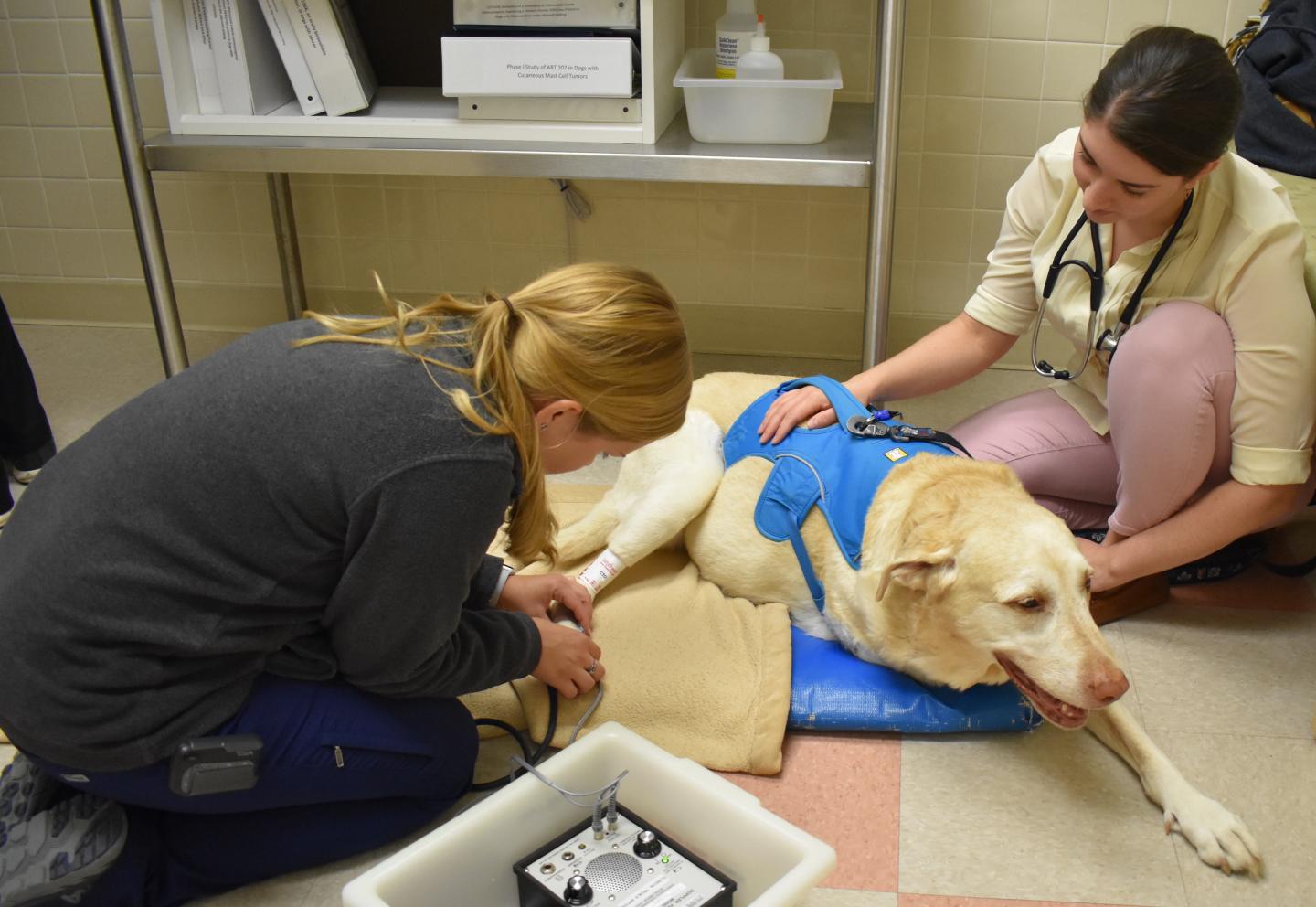
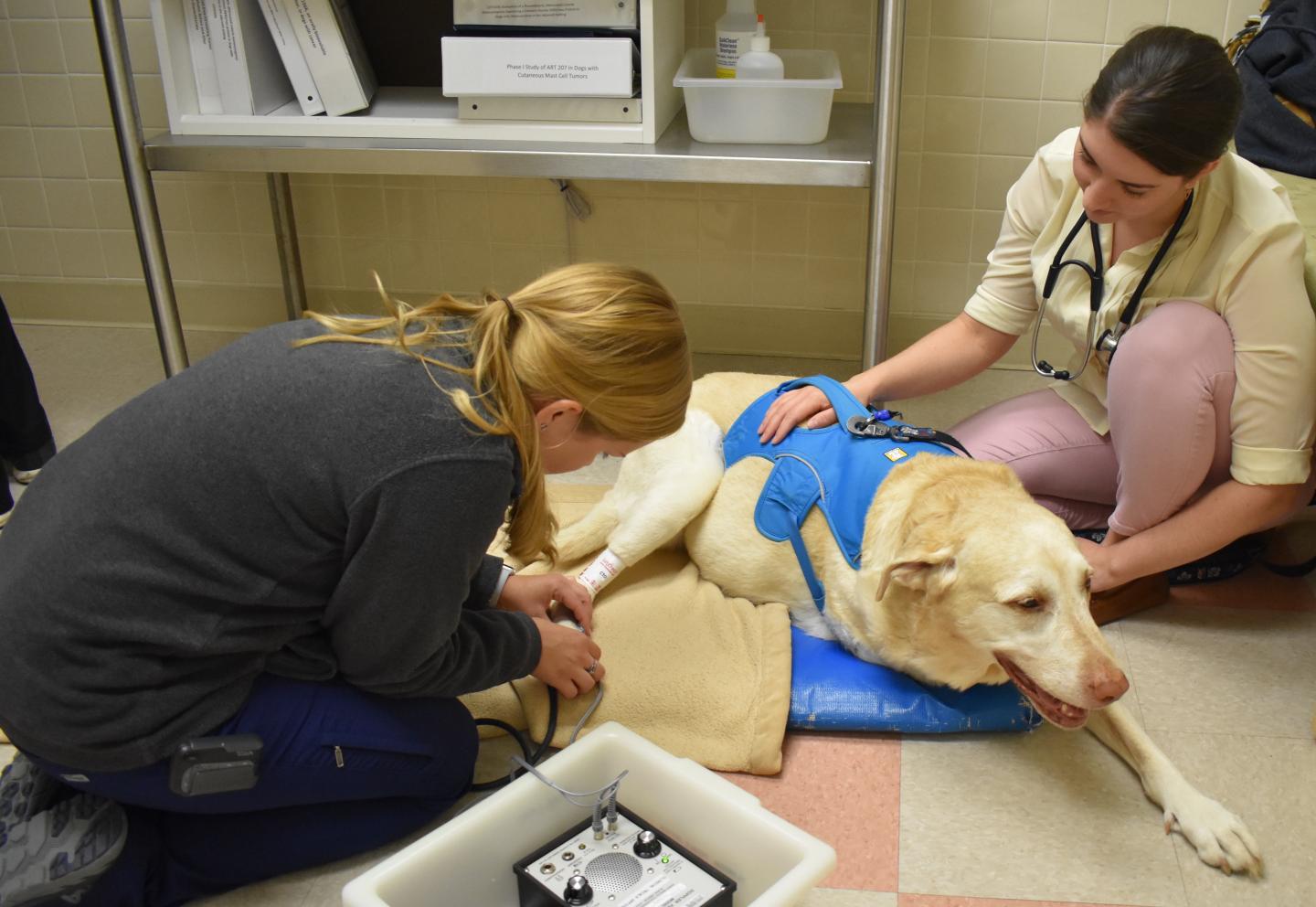
Credit: Photo courtesy of Tufts University
GRAFTON, Mass. (Oct. 11, 2018)–Two studies into deadly cancers in dogs are now underway, offered through the newly formed Clinical Trials Office at Cummings Veterinary Medical Center at Tufts University. Dogs with spontaneous osteosarcoma, as well as dogs with mast cell tumors and solid tumors, may be eligible for enrollment.
Each year, nearly 500 companion animals participate in voluntary clinical trials at Cummings Veterinary Medical Center, with 30-40 studies enrolling patients at a given time. While several of these trials serve to gather information and test therapies for diseases and conditions found specifically in animals, over a dozen current trials are focused on diseases that occur in both animals and humans.
"Dogs share many physiological similarities to humans, are exposed to the same environment and get many of the same diseases, like osteosarcoma, a malignant cancer of bone that occurs in both dogs and adolescents," said Cheryl London, DVM, Ph.D., ACVIM (Oncology), director of the Clinical Trials Office. "Studying these naturally-occurring diseases in dogs and other companion animals–a growing field known as comparative medicine–helps provide researchers and medical professionals with important information to potentially advance development of therapies for treatment in both species," added London, Anne Engen and Dusty Professor of Comparative Oncology at Cummings School of Veterinary Medicine at Tufts University.
With a greater than 80% percent failure rate for cancer drug trials in humans, the opportunity to learn more about effectiveness of treatments and possible side effects in companion animals could more quickly and cost-effectively advance human drugs to market, and help companion animals along the way, said London.
Participation in clinical trials at Cummings Veterinary Medical Center is voluntary for pet owners and typically includes coverage of all medical costs directly related to the trial.
More information on two of the trials in canine cancer is available below:
Canine Osteosarcoma
This clinical trial evaluates the effectiveness of new immunotherapy combinations for dogs with osteosarcoma that has spread to the lungs. The goal of this study is to find drug combinations that either stop the growth of tumor spread or that work to shrink the spread by stimulating the immune system to control the cancer. More information on the trial and eligibility is available online.
New Chemotherapy Treatment for Solid Tumors (ART 207)
This clinical trial evaluates the effectiveness of a new formulation of an old chemotherapy drug, paclitaxel, in dogs with a variety of different cancers including mast cell tumors, sarcomas and carcinomas. This new drug formulation is designed to selectively target the tumor cells and avoid normal tissues to hopefully reduce side effects while increasing chemotherapy delivery to the tumor. More information on the trial and eligibility is available online.
###
Pet owners interested in learning more about the clinical trials process and eligibility can visit the website or email [email protected].
Media interested in learning more, interviewing a current owner of an animal enrolled in a trial, or featuring a current patient in a news story may contact Tara Pettinato, [email protected], for more information. Select photos are also available.
The osteosarcoma trial is being supported by an award from the National Cancer Institute of the National Institutes of Health (CA224182). This work is a collaboration between Tufts University and Colorado State University, where additional osteosarcoma trials are being conducted at the Flint Animal Cancer Center.
About Cummings School of Veterinary Medicine at Tufts University
Founded in 1978 in North Grafton, Mass., Cummings School of Veterinary Medicine at Tufts University is internationally esteemed for academic programs that impact society and the practice of veterinary medicine; seven teaching hospitals and clinics that combined log more than 80,000 animal cases each year; and groundbreaking research that benefits animal, human, and environmental health.
Contact:
Kalimah Knight
617-627-4703
[email protected]
Tara Pettinato
508-839-7910
[email protected]
Media Contact
Kalimah Knight
[email protected]
617-627-4703
@TuftsUniversity
http://www.tufts.edu
Original Source
https://now.tufts.edu/news-releases/new-clinical-trials-seek-treatments-canine-cancers-may-offer-clues-human-cancers