• HOME
  • NEWS
  • EXPLORE
    • CAREER
      • Companies
      • Jobs
    • EVENTS
    • iGEM
      • News
      • Team
    • PHOTOS
    • VIDEO
    • WIKI
  • BLOG
  • COMMUNITY
    • FACEBOOK
    • INSTAGRAM
    • TWITTER
Saturday, February 7, 2026
BIOENGINEER.ORG
No Result
View All Result
  • Login
  • HOME
  • NEWS
  • EXPLORE
    • CAREER
      • Companies
      • Jobs
        • Lecturer
        • PhD Studentship
        • Postdoc
        • Research Assistant
    • EVENTS
    • iGEM
      • News
      • Team
    • PHOTOS
    • VIDEO
    • WIKI
  • BLOG
  • COMMUNITY
    • FACEBOOK
    • INSTAGRAM
    • TWITTER
  • HOME
  • NEWS
  • EXPLORE
    • CAREER
      • Companies
      • Jobs
        • Lecturer
        • PhD Studentship
        • Postdoc
        • Research Assistant
    • EVENTS
    • iGEM
      • News
      • Team
    • PHOTOS
    • VIDEO
    • WIKI
  • BLOG
  • COMMUNITY
    • FACEBOOK
    • INSTAGRAM
    • TWITTER
No Result
View All Result
Bioengineer.org
No Result
View All Result
Home NEWS Science News Health

Child Mind Institute researchers, colleagues release non-human primate brain imaging data

Bioengineer by Bioengineer
September 27, 2018
in Health
Reading Time: 2 mins read
0
Share on FacebookShare on TwitterShare on LinkedinShare on RedditShare on Telegram

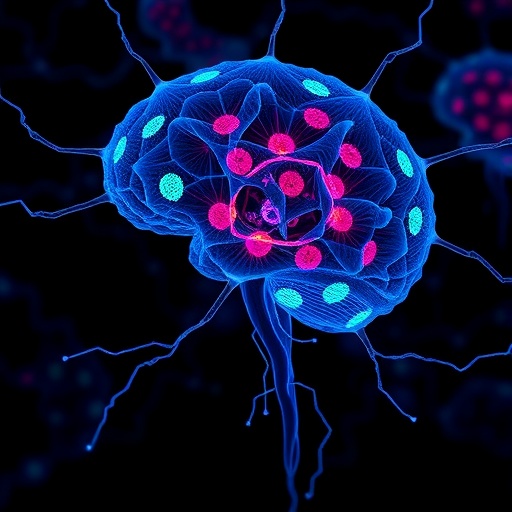
NEW YORK, NY (September 27, 2018) -An international team of researchers led by scientists at the Child Mind Institute has released the first open-source data sets of non-human primate brain imaging. In a new study, An Open Resource for Non-human Primate Imaging published in the journal Neuron, the researchers present details about the rationale, design, and procedures for the PRIMatE Data Exchange (PRIME-DE) consortium, an open science resource for the neuroimaging community that aims to aggregate and share anatomical, functional and diffusion MRI data sets from laboratories around the world. The goal is to accelerate the development of a map of the neural connections in the non-human primate brain — and, ultimately, the human brain — in an effort to develop biomarkers for mental health disorders and other brain disorders and diseases.

The consortium, led by Michael P. Milham, MD, PhD, the Phyllis Green and Randolph Cowen Scholar and vice president of research at the Child Mind Institute alongside Charles Schroeder (Columbia University) and Daniel Margulies (ICM and Max Planck Institute), presents details of 25 independent data collections aggregated across 22 sites. The study also outlines the unique pitfalls and challenges that should be considered in the analysis of the non-human primate MRI datasets, including providing automated quality assessment of the contributed datasets.

"This is a rapidly growing and extremely promising area of neuroscience research that suffers from a lack of data," said Dr. Milham. "The PRIMatE Data Exchange is an effort to encourage and enable the independent collection and sharing of brain imaging data through the International Neuroimaging Data-Sharing Initiative (INDI). The ultimate goal is to accelerate research that improves our understanding of how the human brain works and translates that understanding into enhanced methods for the diagnosis and treatment of a range of brain disorders."

###

About the Child Mind Institute

The Child Mind Institute is an independent, national nonprofit dedicated to transforming the lives of children and families struggling with mental health and learning disorders. Our teams work every day to deliver the highest standards of care, advance the science of the developing brain, and empower parents, professionals and policymakers to support children when and where they need it most. Together with our supporters, we're helping children reach their full potential in school and in life. We share all of our resources freely and do not accept any funding from the pharmaceutical industry. Learn more at childmind.org.

Media Contact

Adam Pockriss
[email protected]
212-843-8286

http://childmind.org

http://dx.doi.org/10.1016/j.neuron.2018.08.039
Share12Tweet8Share2ShareShareShare2

Related Posts

TPMT Expression Predictions Linked to Azathioprine Side Effects

February 7, 2026

Improving Dementia Care with Enhanced Activity Kits

February 7, 2026

Decoding Prostate Cancer Origins via snFLARE-seq, mxFRIZNGRND

February 7, 2026

Digital Health Perspectives from Baltic Sea Experts

February 7, 2026
Please login to join discussion

POPULAR NEWS

  • Robotic Ureteral Reconstruction: A Novel Approach

    Robotic Ureteral Reconstruction: A Novel Approach

    82 shares
    Share 33 Tweet 21
  • Digital Privacy: Health Data Control in Incarceration

    63 shares
    Share 25 Tweet 16
  • Study Reveals Lipid Accumulation in ME/CFS Cells

    57 shares
    Share 23 Tweet 14
  • Breakthrough in RNA Research Accelerates Medical Innovations Timeline

    53 shares
    Share 21 Tweet 13

About

We bring you the latest biotechnology news from best research centers and universities around the world. Check our website.

Follow us

Recent News

TPMT Expression Predictions Linked to Azathioprine Side Effects

Improving Dementia Care with Enhanced Activity Kits

Decoding Prostate Cancer Origins via snFLARE-seq, mxFRIZNGRND

Subscribe to Blog via Email

Enter your email address to subscribe to this blog and receive notifications of new posts by email.

Join 73 other subscribers
  • Contact Us

Bioengineer.org © Copyright 2023 All Rights Reserved.

Welcome Back!

Login to your account below

Forgotten Password?

Retrieve your password

Please enter your username or email address to reset your password.

Log In
No Result
View All Result
  • Homepages
    • Home Page 1
    • Home Page 2
  • News
  • National
  • Business
  • Health
  • Lifestyle
  • Science

Bioengineer.org © Copyright 2023 All Rights Reserved.