

• HOME
  • NEWS
  • EXPLORE
    • CAREER
      • Companies
      • Jobs
    • EVENTS
    • iGEM
      • News
      • Team
    • PHOTOS
    • VIDEO
    • WIKI
  • BLOG
  • COMMUNITY
    • FACEBOOK
    • INSTAGRAM
    • TWITTER
Saturday, February 7, 2026
BIOENGINEER.ORG
No Result
View All Result
  • Login
  • HOME
  • NEWS
  • EXPLORE
    • CAREER
      • Companies
      • Jobs
        • Lecturer
        • PhD Studentship
        • Postdoc
        • Research Assistant
    • EVENTS
    • iGEM
      • News
      • Team
    • PHOTOS
    • VIDEO
    • WIKI
  • BLOG
  • COMMUNITY
    • FACEBOOK
    • INSTAGRAM
    • TWITTER
  • HOME
  • NEWS
  • EXPLORE
    • CAREER
      • Companies
      • Jobs
        • Lecturer
        • PhD Studentship
        • Postdoc
        • Research Assistant
    • EVENTS
    • iGEM
      • News
      • Team
    • PHOTOS
    • VIDEO
    • WIKI
  • BLOG
  • COMMUNITY
    • FACEBOOK
    • INSTAGRAM
    • TWITTER
No Result
View All Result
Bioengineer.org
No Result
View All Result
Home NEWS Science News Cancer

Study finds that enzymes ‘partner up’ to accelerate cancer, aging diseases

Bioengineer by Bioengineer
September 25, 2018
in Cancer
Reading Time: 2 mins read
0
Share on FacebookShare on TwitterShare on LinkedinShare on RedditShare on Telegram
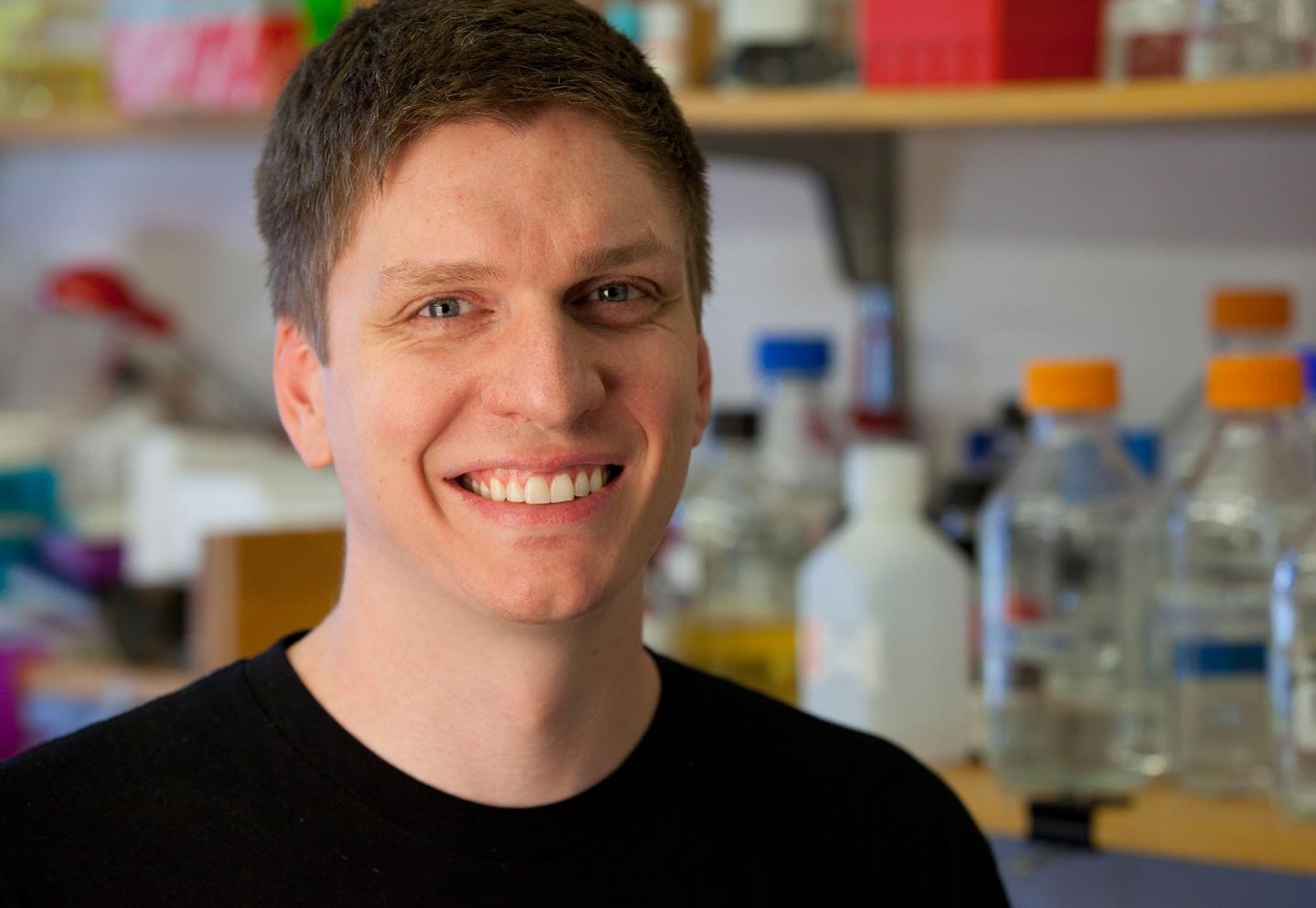
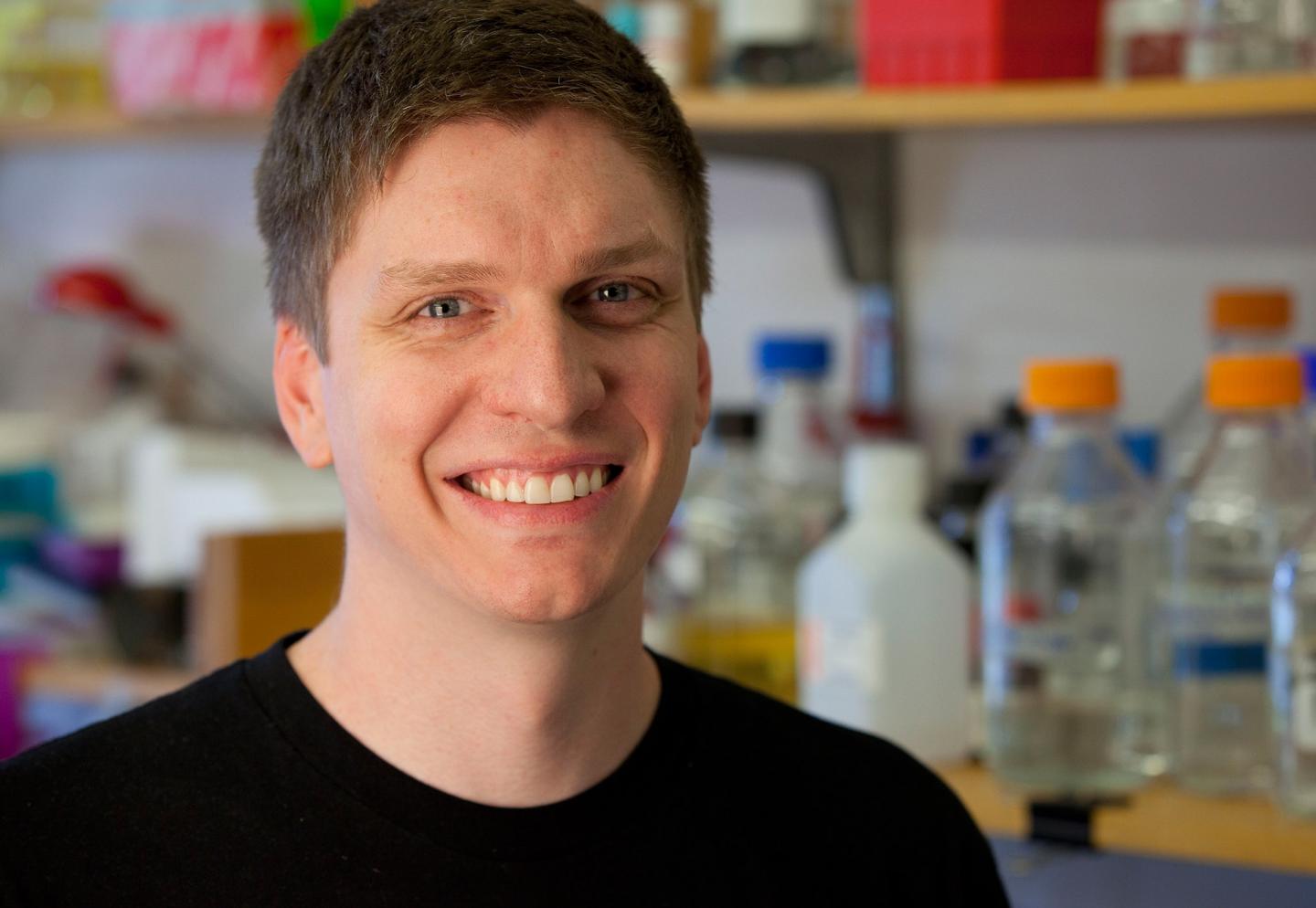
IMAGE

Credit: Zach Donnell

BLOOMINGTON, Ind. — A new study from molecular biologists at Indiana University has identified cellular processes that appear to supercharge both the growth and shrinkage of the chemical "caps" on chromosomes associated with aging, called telomeres.

The work, focused on two enzymes in yeast, could lead to new insights on stopping runaway cellular growth in cancer tumors, as well as the treatment of premature aging disorders such as progeria (aka "Benjamin Button disease"). The research is reported in the Journal of Biological Chemistry.

"This work confirms that two specific enzymes — called helicases — are involved in telomere maintenance, and demonstrates they're even stronger in combination," said Matthew Bochman, an associate professor in the IU Bloomington College of Arts and Sciences' Department of Molecular and Cellular Biochemistry, who is senior author on the study. "This is significant since dysfunction in telomere maintenance has been found in 100 percent of cancers. Literally, 100 percent. So, it's very likely they play a role in the disease."

Helicases are enzymes that unwind double-stranded DNA into a single stand for the purposes of replication, recombination and repair. In humans, the RecQ4 helicase functions similarly to the Hrq1 helicase in yeast. The Pif1 helicase is the same in both species.

In healthy people, telomeres shorten slowly over the lifespan as part of the natural aging process. In cancer cells, the brakes come off this process, so telomeres never grow shorter — resulting in uncontrolled cellular replication. In people with premature aging disorders, telomeres rapidly shrink, resulting in death from "old age" in the late teenage years.

Mutations of the Pif1 helicase have been linked to several types of cancer, including common forms such as breast, ovarian and colon cancer. Mutations in the RecQ4 helicase have been linked to three different diseases associated with predispositions for cancer.

The study specifically found that Hrq1 and Pif1 are a "dynamic duo" that combine to create a "super inhibitor" or, under certain specific conditions, a "super stimulator" of telomere growth.

"Now, we can now really start to pick apart more about how these enzymes work together or alone in cancer cells," Bochman said.

The work may help scientists better understand whether certain cancers involve errors in DNA recombination, DNA repair or telomere maintenance — or some other mechanistic problem. This, in turn, could lead to new ways to disrupt or harness these processes with drugs or other therapies.

###

Additional IU researchers on the study were first author David Nickens, a research assistant in Bochman's lab, and Cody Rogers, an IU Ph.D. student. The study was supported in part by the American Cancer Society.

Media Contact

Kevin Fryling
[email protected]
812-856-2988
@IUScienceNews

http://newsinfo.iu.edu

Original Source

https://news.iu.edu/stories/2018/09/iub/releases/25-study-finds-enzymes-partner-up-to-accelerate-cancer.html http://dx.doi.org/10.1074/jbc.RA118.004092


Share12Tweet7Share2ShareShareShare1

Related Posts

Deep Learning Uncovers Tetrahydrocarbazoles as Potent Broad-Spectrum Antitumor Agents with Click-Activated Targeted Cancer Therapy Approach

February 7, 2026

Newly Discovered Limonoid DHL-11 from Munronia henryi Targets IMPDH2 to Combat Triple-Negative Breast Cancer

February 7, 2026

New Discovery Reveals Why Ovarian Cancer Spreads Rapidly in the Abdomen

February 6, 2026

New Study Finds Americans Favor In-Clinic Screening Over At-Home Tests for Cervical Cancer

February 6, 2026
Please login to join discussion

POPULAR NEWS

  • Robotic Ureteral Reconstruction: A Novel Approach

    Robotic Ureteral Reconstruction: A Novel Approach

    82 shares
    Share 33 Tweet 21
  • Digital Privacy: Health Data Control in Incarceration

    63 shares
    Share 25 Tweet 16
  • Study Reveals Lipid Accumulation in ME/CFS Cells

    57 shares
    Share 23 Tweet 14
  • Breakthrough in RNA Research Accelerates Medical Innovations Timeline

    53 shares
    Share 21 Tweet 13

About

We bring you the latest biotechnology news from best research centers and universities around the world. Check our website.

Follow us

Recent News

Evaluating Pediatric Emergency Care Quality in Ethiopia

TPMT Expression Predictions Linked to Azathioprine Side Effects

Improving Dementia Care with Enhanced Activity Kits

Subscribe to Blog via Email

Success! An email was just sent to confirm your subscription. Please find the email now and click 'Confirm' to start subscribing.

Join 73 other subscribers
  • Contact Us

Bioengineer.org © Copyright 2023 All Rights Reserved.

Welcome Back!

Login to your account below

Forgotten Password?

Retrieve your password

Please enter your username or email address to reset your password.

Log In
No Result
View All Result
  • Homepages
    • Home Page 1
    • Home Page 2
  • News
  • National
  • Business
  • Health
  • Lifestyle
  • Science

Bioengineer.org © Copyright 2023 All Rights Reserved.
