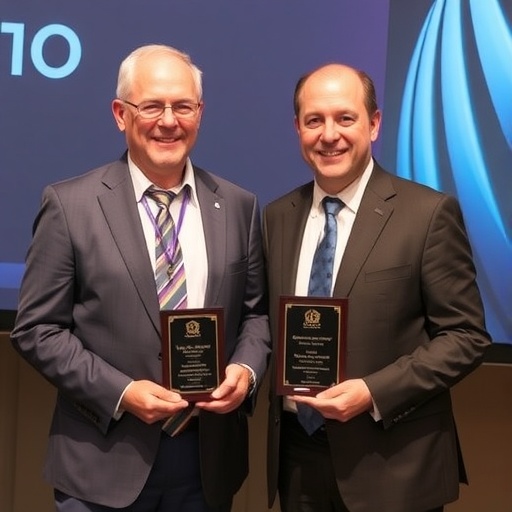
Credit: European Society of Cardiology
Munich, Germany – 28 Aug 2018: Taking vacations could prolong life. That's the finding of a 40-year study presented today at ESC Congress and accepted for publication in The Journal of Nutrition, Health & Aging.1,2
"Don't think having an otherwise healthy lifestyle will compensate for working too hard and not taking holidays," said Professor Timo Strandberg, of the University of Helsinki, Finland. "Vacations can be a good way to relieve stress."
The study included 1,222 middle-aged male executives born in 1919 to 1934 and recruited into the Helsinki Businessmen Study in 1974 and 1975. Participants had at least one risk factor for cardiovascular disease (smoking, high blood pressure, high cholesterol, elevated triglycerides, glucose intolerance, overweight).
Participants were randomised into a control group (610 men) or an intervention group (612 men) for five years. The intervention group received oral and written advice every four months to do aerobic physical activity, eat a healthy diet, achieve a healthy weight, and stop smoking. When health advice alone was not effective, men in the intervention group also received drugs recommended at that time to lower blood pressure (beta-blockers and diuretics) and lipids (clofibrate and probucol). Men in the control group received usual healthcare and were not seen by the investigators.
As previously reported, the risk of cardiovascular disease was reduced by 46% in the intervention group compared to the control group by the end of the trial.3 However, at the 15-year follow-up in 1989 there had been more deaths in the intervention group than in the control group.4,5
The analysis presented today extended the mortality follow-up to 40 years (2014) using national death registers and examined previously unreported baseline data on amounts of work, sleep, and vacation. The researchers found that the death rate was consistently higher in the intervention group compared to the control group until 2004. Death rates were the same in both groups between 2004 and 2014.
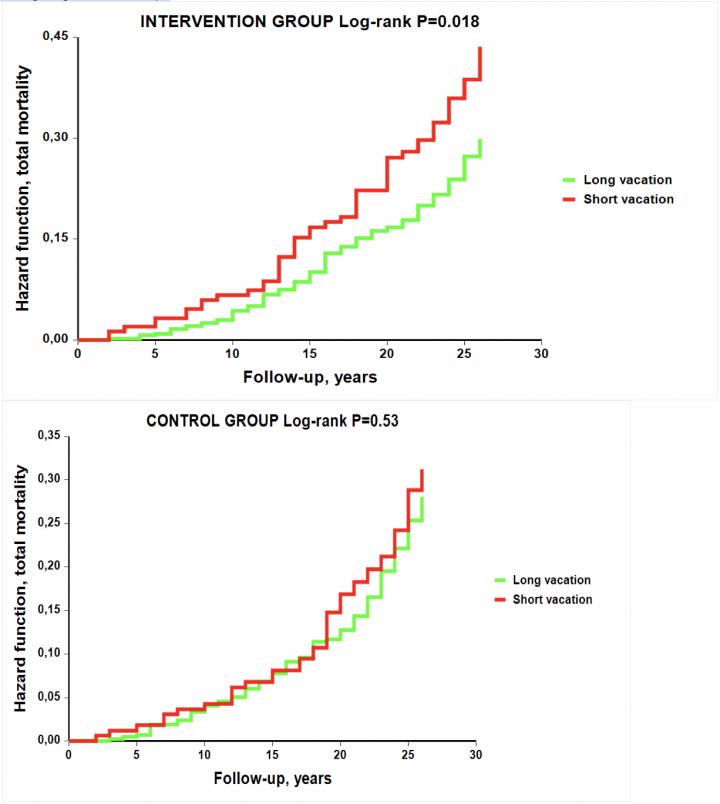
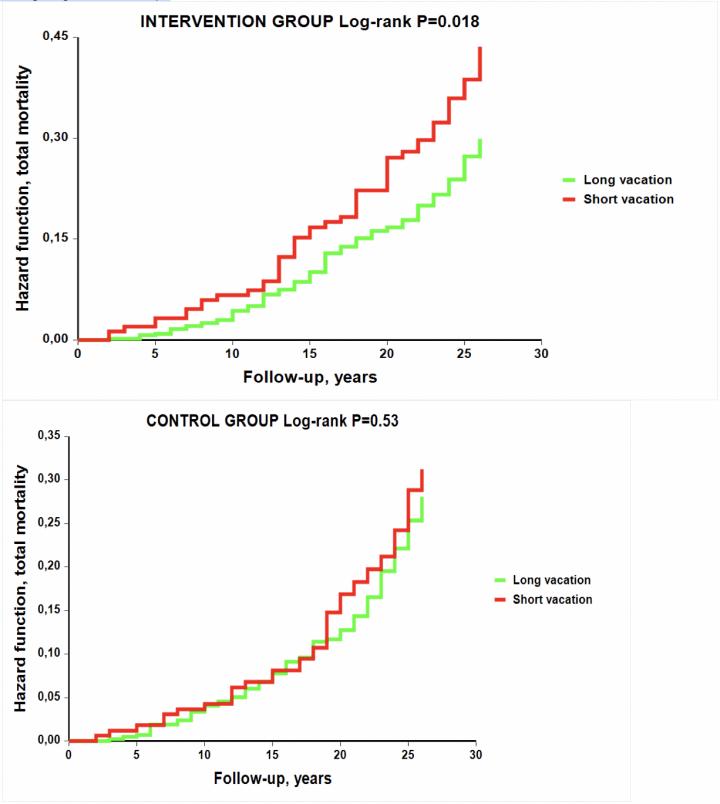
Shorter vacations were associated with excess deaths in the intervention group. In the intervention group, men who took three weeks or less annual vacation had a 37% greater chance of dying in 1974 to 2004 than those who took more than three weeks. Vacation time had no impact on risk of death in the control group. (see figures)
Professor Strandberg said: "The harm caused by the intensive lifestyle regime was concentrated in a subgroup of men with shorter yearly vacation time. In our study, men with shorter vacations worked more and slept less than those who took longer vacations. This stressful lifestyle may have overruled any benefit of the intervention. We think the intervention itself may also have had an adverse psychological effect on these men by adding stress to their lives."
Professor Strandberg noted that stress management was not part of preventive medicine in the 1970s but is now recommended for individuals with, or at risk of, cardiovascular disease.6 In addition, more effective drugs are now available to lower lipids (statins) and blood pressure (angiotensin-converting enzyme inhibitors, angiotensin receptor blockers, calcium channel blockers).
He concluded: "Our results do not indicate that health education is harmful. Rather, they suggest that stress reduction is an essential part of programmes aimed at reducing the risk of cardiovascular disease. Lifestyle advice should be wisely combined with modern drug treatment to prevent cardiovascular events in high-risk individuals."
###
Figures: Shorter vacations were associated with higher mortality in the intervention group but not in the control group during long-term follow-up
Media Contact
ESC Press Office
[email protected]
@escardio
http://www.escardio.org