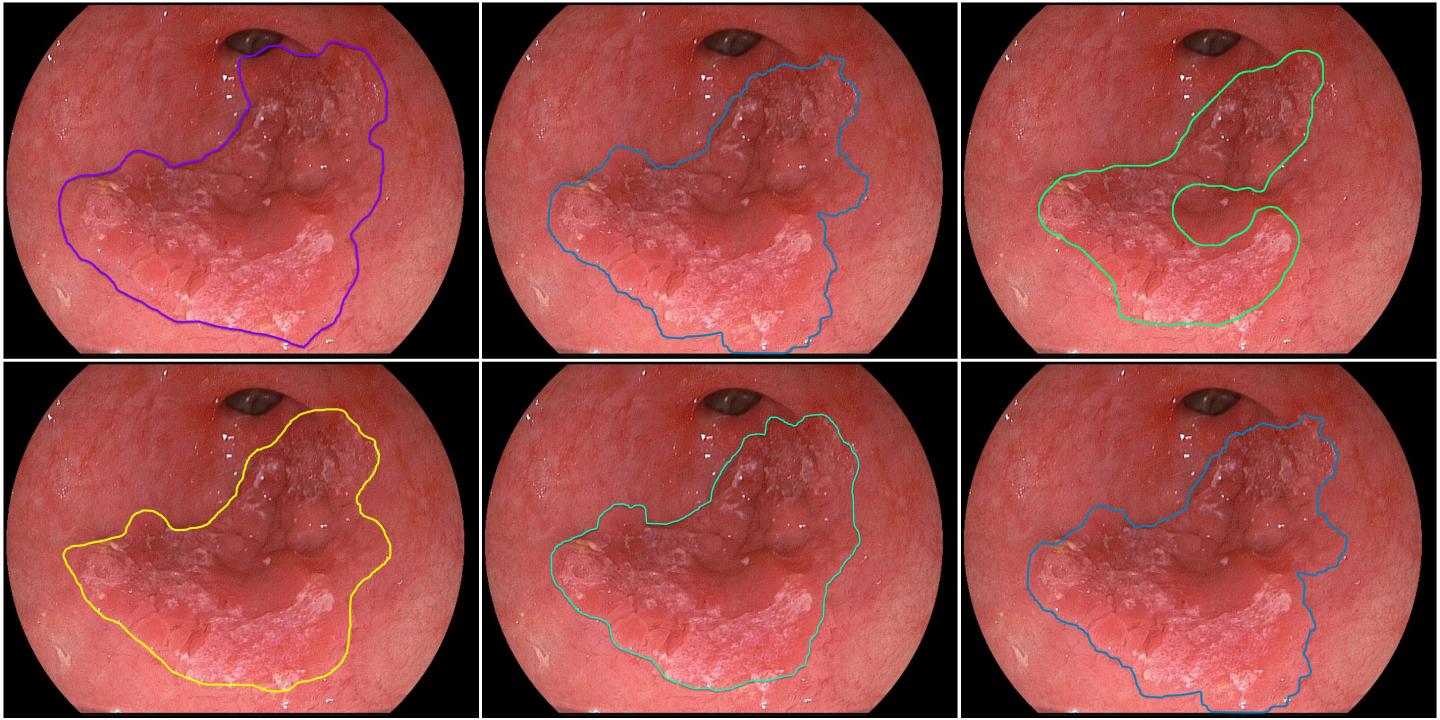
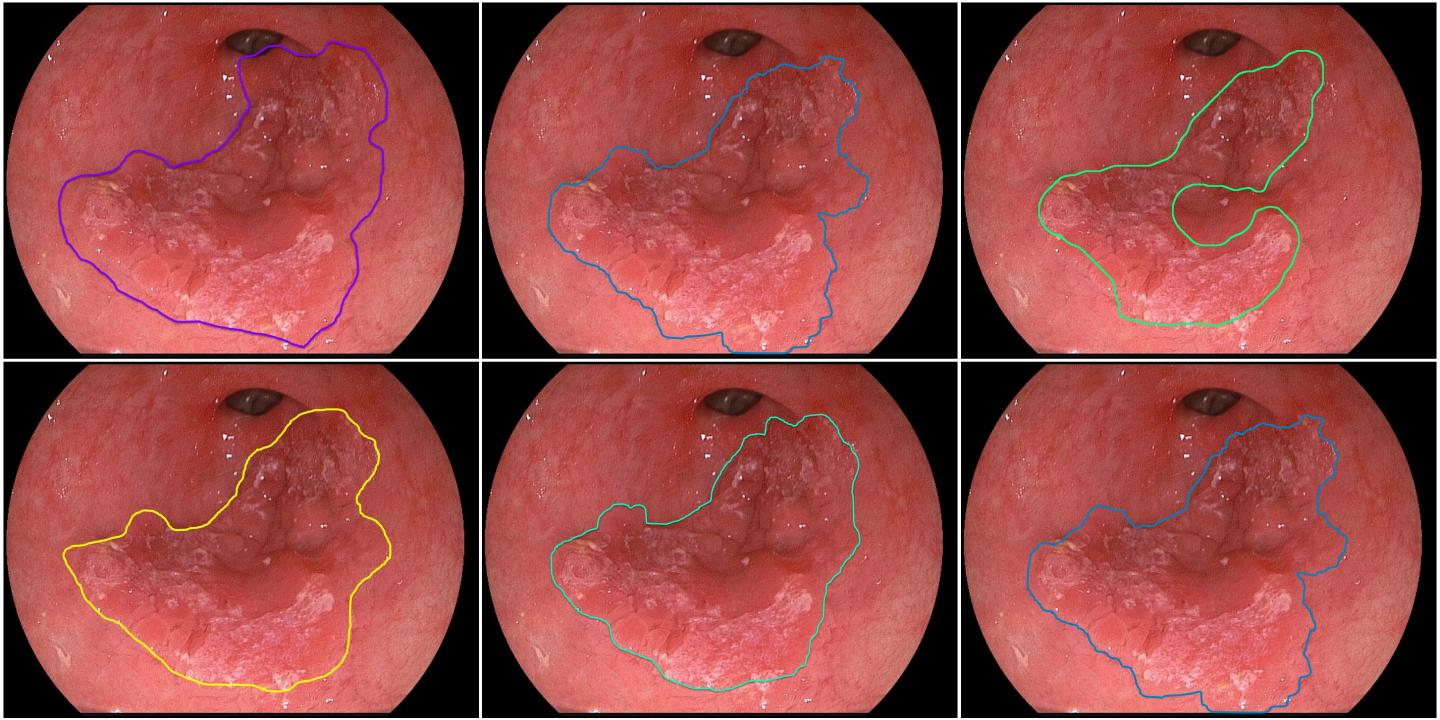
Recognizing the early stages of esophageal cancer is difficult because it can easily be missed. TU Eindhoven has therefore been working with the Catharina Hospital in Eindhoven to develop a method to enable a computer to scan esophagus images for signs of esophageal cancer. With exceptional results: the computer recognizes early cancer with almost as much accuracy as top specialists, of which there is only a handful. The results are published in the July issue of the scientific journal Endoscopy.
People with prolonged reflux tend to develop abnormal tissue in the esophagus due to gastric irritation. This so-called Barrett's esophagus is one of the major risk factors in the development of esophageal cancer in the Western world and, therefore, people with a Barrett's esophagus regularly undergo an endoscopic hospital check. The earliest stages of esophageal cancer are, however, very difficult to detect and only a handful of medical specialists in the Netherlands are experienced in this. Thus, when the cancer begins, and when it is easy to treat, it can be missed. Once the cancer reaches an advanced stage, the five-year survival rate is less than fifty percent. Each year there are around 2500 new patients with esophageal cancer in the Netherlands. This number is rising because reflux often occurs in overweight people, and the incidence of overweight is also increasing.
Spectacular
Therefore, four years ago Dr. Erik Schoon, gastroenterologist at the Catharina Hospital and top specialist in the area of the Barrett's esophagus, knocked on the door of the Video Coding and Architectures Research Group of TU/e, led by professor Peter de With. His group has many years of experience in image analysis methods in which the recognition of people and objects is central, for instance in smart cameras. TU/e PhD doctoral candidate Fons van der Sommen and dr. Sveta Zinger, both of the VCA, worked with Erik Schoon to develop new methods that can accurately investigate the first signs of cancer. These methods have already become as good as the recognition score of the best European specialists. "Spectacular," Schoon says of the results. "To recognize early forms of cancer in a Barrett's esophagus is one of the most difficult things to do in our field."
Much less invasive
The computer analysis should become available in every hospital over time to help gastroenterologists recognize the earliest stages of cancer and so pave the way for 100% recognition and treatment. That would save many patients having to undergo surgery that removes part of the esophagus, which is normally inevitable when the cancer is detected late on. The treatment of early cancer is much less invasive for patients and tends to comprise a microsurgical operation from within. It is also much cheaper. Additionally, doctors who are not Barrett specialists can use this method to learn to recognize abnormalities faster.
Real time
Before the new method can be employed, the software has to be improved and made suitable for analyzing real-time video frames. Then a number of extensive hospital tests will have to follow. It will probably take five to ten years before broad implementation occurs. Currently, there are various subsidy applications being submitted to fund this project further.
###
The study is being undertaken by TU Eindhoven in collaboration with the Catharina Hospital Eindhoven, the Leuven University Hospital, the Barmherzige Brüder Regensburg Hospital, the St. Antonius Hospital in Nieuwegein and the Academic Medical Center Amsterdam. The publication in the leading scientific journal Endoscopy, entitled 'Computer-aided detection of early neoplastic lesions in Barrett's esophagus' can be found: DOI number 10.1055/s-0042-105284.
Media Contact
Fons van der Sommen
[email protected]
31-652-457-838
@TUEindhoven
http://www.tue.nl/en
The post New detection method paves the way for 100 percent detection of esophageal cancer appeared first on Scienmag.