
Credit: Photo by Cori Kogan, Washington State University
SPOKANE, Wash. – Working night shifts or other nonstandard work schedules increases your risk of becoming obese and developing diabetes and other metabolic disorders, which ultimately also raises your risk of heart disease, stroke and cancer.
Exactly why this happens has been unclear, but a new study conducted at Washington State University (WSU) has brought scientists closer to finding the answer.
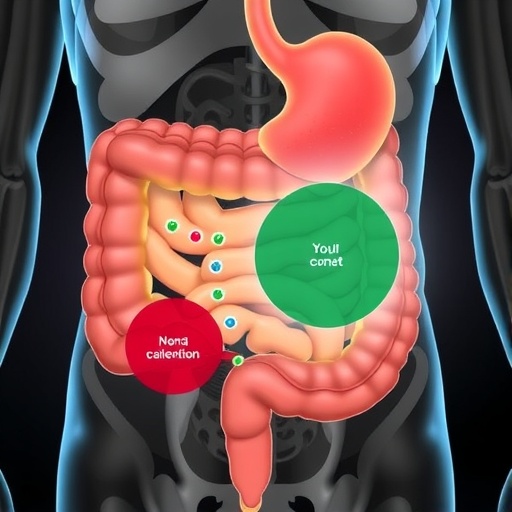
Published in this week's online edition of the Proceedings of the National Academy of Sciences, the study dispels the belief that the metabolic disruption in shift workers is driven primarily by the brain's master clock, which normally keeps our bodies on a day-night cycle and uses light cues to synchronize the rhythms of the body's organs and tissues. Instead, the study revealed that separate biological clocks (so-called peripheral oscillators) in the liver, gut and pancreas have a mind of their own.
Working with colleagues at the University of Surrey, the WSU team collected blood samples from healthy volunteers who had just completed either a simulated day shift schedule or a simulated night shift schedule. The investigators analyzed the blood samples for metabolites–products of chemical reactions involved in digestion, such as the breakdown and oxidization of food molecules, as well as in other metabolic processes in cells and organs. They found that, following the night shift schedule, 24-hour rhythms in metabolites related to the digestive system had shifted by a full 12 hours, even though the master biological clock in participants' brains had only moved by about 2 hours.
Biological clocks in digestive organs
"No one knew that biological clocks in people's digestive organs are so profoundly and quickly changed by shift work schedules, even though the brain's master clock barely adapts to such schedules," said co-senior author Hans Van Dongen, director of the WSU Sleep and Performance Research Center and a professor in the Elson S. Floyd College of Medicine. "As a result, some biological signals in shift workers' bodies are saying it's day while other signals are saying it's night, which causes disruption of metabolism."
Van Dongen said the next step is to find out whether the shifted metabolite rhythms are driven by the shift workers' altered sleep/wake schedules, the changed timing of their food intake, or both. Once that is known, scientists could try to pinpoint the underlying cellular and/or hormonal processes, which would support the development of new treatments to resynchronize shift workers' brain and body clocks to prevent negative long-term health consequences.
Long-term health consequences
The research team's work may also have implications for the study of other chronic diseases shift workers are more susceptible to, including chronic kidney disease and breast, prostate and skin cancer.
"We believe ours is the first study to suggest a mechanism for the connection between shift work and chronic kidney disease," said co-senior author Shobhan Gaddameedhi, an assistant professor in the WSU College of Pharmacy and Pharmaceutical Sciences. He noted that the simulated night shift group had altered rhythms in two metabolites commonly associated with chronic kidney disease — tryptophan and kynurenine.
However, as a cancer biologist, Gaddameedhi first and foremost wants to unravel the link between shift work and cancer.
"It's possible that changes in the metabolism of shift workers are associated with altered activity of cellular processes that may be involved in cancer development later in life," Gaddameedhi said. "Once we understand those cellular processes, we could potentially identify the genes involved and use that knowledge to find ways to prevent cancer in shift workers."
Metabolomics Used to Study Rhythms
The study included 14 participants who each spent seven days inside the sleep laboratory at the WSU Health Sciences Spokane campus. First, half of them completed a three-day simulated night shift schedule, while the rest were on a three-day simulated day shift schedule. Then, after completing their simulated shifts, all participants were kept in a constant routine protocol used to study humans' internally generated biological rhythms independent of any external influences.
During this protocol, they were kept awake for 24 hours in a semireclined posture. They received identical snacks every hour and were kept under constant light exposure and room temperature. Every three hours a blood sample was drawn.
The blood samples were analyzed at the University of Surrey's Metabolomics Core Facility for 132 different metabolites related to metabolism and the digestive system.
"Twenty-seven metabolites followed a 24-hour rhythm during both the simulated night and day shift schedules," said first author Debra Skene, professor of neuroendocrinology at the University of Surrey. "Of these, 24 displayed a dramatic 12-hour shift in rhythm following the simulated night shift schedule, which was not observed following the day shift schedule. This indicated that just three days of being on a night shift schedule has the potential to disrupt metabolism. Pinpointing the disrupted metabolic pathways will help unravel the mechanisms underlying shift work and metabolic disorders."
###
In addition to Skene, Van Dongen, and Gaddameedhi, co-authors include Elena Skornyakov, Rajendra Gajula, Brieann Satterfield, and Kenneth Porter of WSU and Namrata Chowdhury and Benita Middleton of the University of Surrey.
Support for the study came from internal funding from the WSU College of Pharmacy and Pharmaceutical Sciences, as well as grants awarded to WSU by the Congressionally Directed Medical Research Program and National Institutes of Health and to the University of Surrey by the UK Biotechnology and Biological Sciences Research Council and the European Union's Seventh Framework Programme.
Media Contact
Hans Van Dongen
[email protected]
509-358-7755
@WSUNews
Related Journal Article
http://dx.doi.org/10.1073/pnas.1801183115