Credit: UT Southwestern
DALLAS – July 3, 2018 – Using a new computational strategy, researchers at UT Southwestern Medical Center have identified 29 genetic changes that can contribute to rhabdomyosarcoma, an aggressive childhood cancer. The group used Bayesian analysis, a method for statistical inference, in conjunction with screening using CRISPR/Cas9, the much-heralded gene-editing tool, to confirm the statistical predictions.
Their work helps to explain "the engine" driving formation of rhabdomyosarcoma and suggests potential treatments. Furthermore, their research method can be used to identify genetic drivers of other cancers.
Nearly all genes occur in cells as pairs. This research focused on genes for which there was only one copy or for which there were three or more copies.
"We came up with the idea that the altered expression of key cancer genes may be driven by genomic copy-number amplifications or losses. We then developed a new computational algorithm called iExCN to predict cancer genes based on genomewide copy-number and gene expression data," said Dr. Stephen Skapek, Chief of the Division of Pediatric Hematology-Oncology and with the Harold C. Simmons Comprehensive Cancer Center.
The work also used several new experimental tools, including CRISPR/Cas9 screening technology, to verify the function of these predicted cancer genes in rhabdomyosarcoma.
"The iExCN algorithm was developed based on Bayesian statistics, which is fundamentally different from commonly used statistics methodologies, and usually provides more accurate estimation of statistical associations, though it involves more complicated computation and longer processing time," said Dr. Lin Xu, Instructor in the Departments of Clinical Sciences and Pediatrics and with the Quantitative Biomedical Research Center.
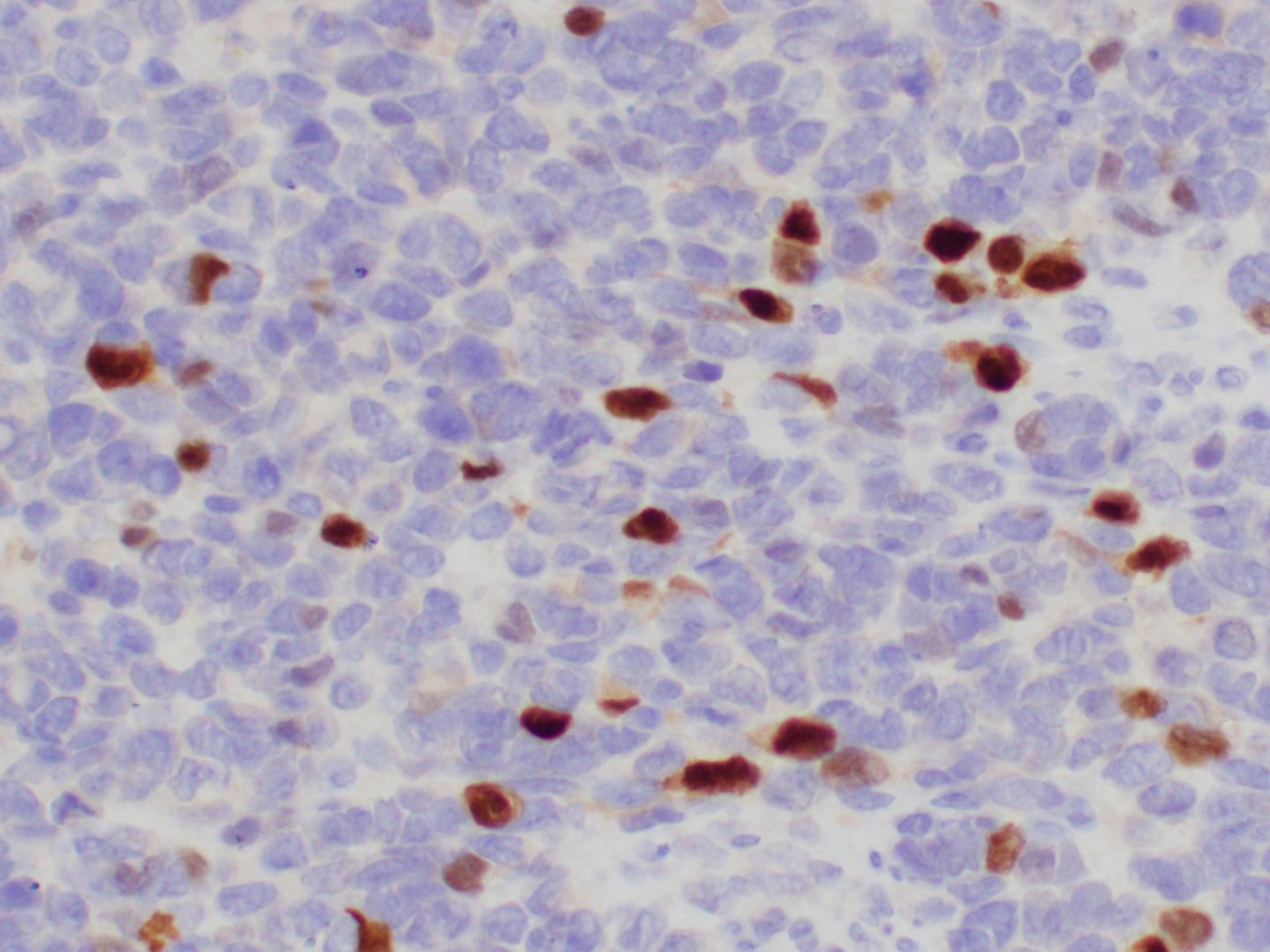
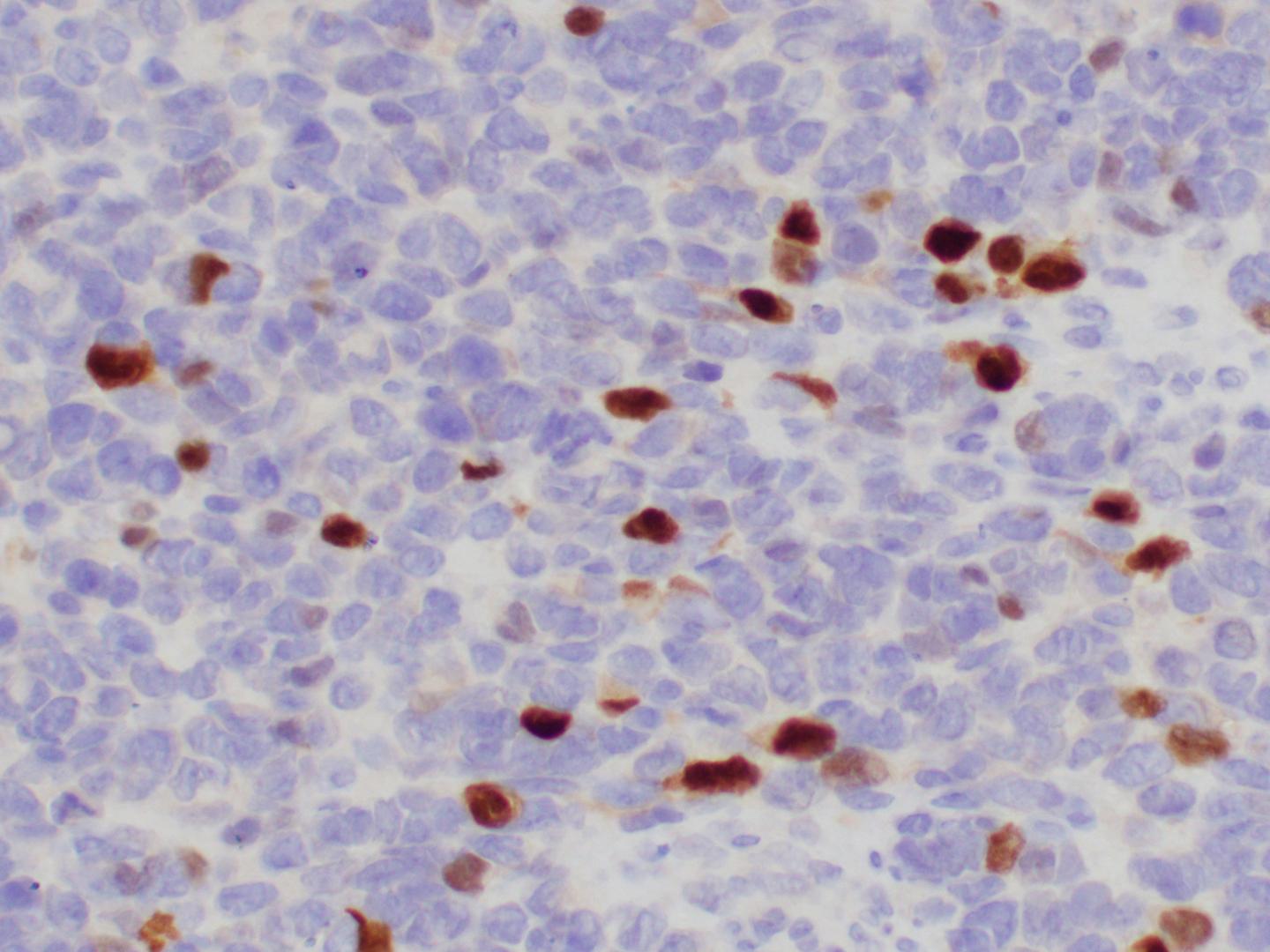
Rhabdomyosarcoma, a cancer of developing skeletal muscle, is the most common soft tissue cancer in children. Using the algorithm to analyze genomic data from 290 rhabdomyosarcoma tumors, the researchers identified 29 associated genes, many of which had not previously been linked to rhabdomyosarcoma.
Dr. Yanbin Zheng, Assistant Professor of Pediatrics, used customized CRISPR/Cas9-based screens to verify these statistically predicted genetic causes of rhabdomyosarcoma. "Among the validated rhabdomyosarcoma genes, EZH2, CDK6, and RIPK2 are particularly worthy of further investigation because there are already drugs that target these genes that are either FDA-approved or in clinical trials," Dr. Zheng said.
Dr. Skapek, who holds the Distinguished Chair in Pediatric Oncology Research, said the group need to further verify the cancer-causing role of the iExCN-identified genes, but that the research is exciting. "We are exploring new strategies for targeted therapies that zero in on these genes," he said. "More important, our study represents a general approach that can be applied to identify oncogenic drivers and tumor-suppressor genes in other cancer types for which we have previously failed to uncover targetable vulnerabilities."
The study appears in Cell Reports.
###
Other UT Southwestern researchers who contributed to this research include Dr. Ted Laetsch, Assistant Professor of Pediatrics; Dr. Dinesh Rakheja, Associate Professor of Pathology and Pediatrics; and Dr. James Amatruda, Associate Professor of Pediatrics, Internal Medicine, and Molecular Biology. Dr. Amatruda, a Horchow Family Scholar in Pediatrics, holds the Nearburg Family Professorship in Pediatric Oncology Research. Dr. Rakheja holds the John Lawrence and Patsy Louise Goforth Chair in Pathology.
Funding for this research was provided by Hyundai Hope on Wheels, Wipe Out Kids' Cancer, the Children's Cancer Fund, the Patrick and Beatrice Haggerty Foundation, the Children's Medical Center Foundation, the Andrew McDonough B+ Foundation, the National Cancer Institute, and the Cancer Prevention and Research Institute of Texas.
The Harold C. Simmons Comprehensive Cancer Center, one of 49 NCI-designated Comprehensive Cancer Centers in the U.S. and the only one in North Texas, is among just 30 U.S. cancer research centers to be designated by the NCI as a National Clinical Trials Network Lead Academic Participating Site.
About UT Southwestern Medical Center
UT Southwestern, one of the premier academic medical centers in the nation, integrates pioneering biomedical research with exceptional clinical care and education. The institution's faculty has received six Nobel Prizes, and includes 22 members of the National Academy of Sciences, 16 members of the National Academy of Medicine, and 15 Howard Hughes Medical Institute Investigators. The faculty of more than 2,700 is responsible for groundbreaking medical advances and is committed to translating science-driven research quickly to new clinical treatments. UT Southwestern physicians provide care in about 80 specialties to more than 100,000 hospitalized patients, 600,000 emergency room cases, and oversee approximately 2.2 million outpatient visits a year.
Media Contact
Jennifer Doren
[email protected]
@UTSWNews
http://www.swmed.edu