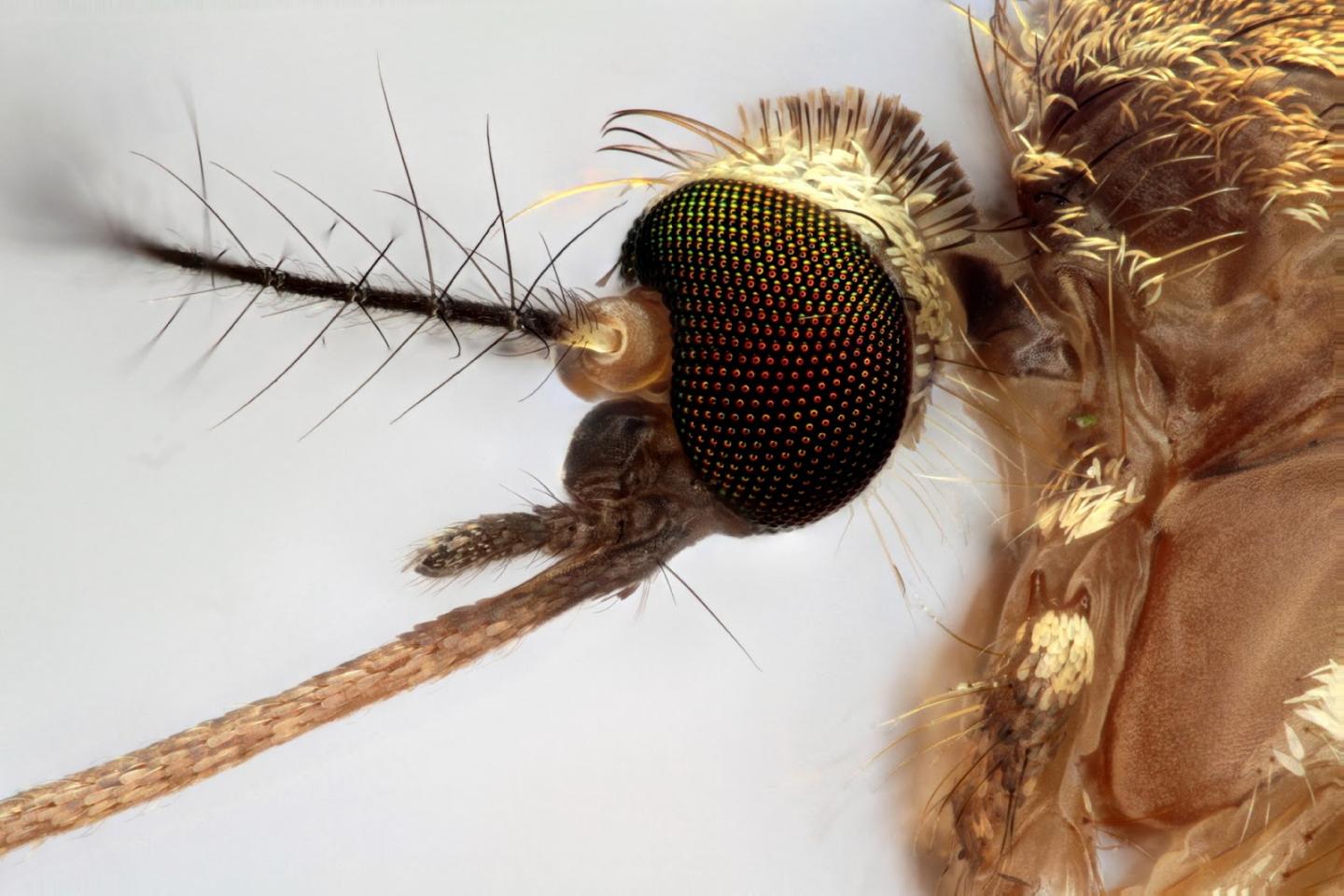
Credit: © F. Thiaucourt, CIRAD
In an article to be published in the journal Médecine/Sciences [1], researchers from INSERM, CIRAD, ANSES, the University of Montpellier and the Montpellier teaching hospital take stock of the emergence of Usutu virus in Europe, which has been characterized by episodes of increased bird deaths. The virus was suspected in a patient hospitalized in Montpellier in 2016, a diagnosis confirmed and published in May 2018 in the journal Emerging Infectious Diseases [2]. Two strains of the virus have been detected in mosquitoes in Camargue, one of which is assumed to have caused the human case in 2016 [3].
"This is a virus transmitted by mosquitoes that circulates between birds. It can attack the nervous system of certain birds, such as blackbirds, and cause significant mortality. It was first observed in southern Africa, in Swaziland, in 1959", says Serafin Gutierrez, a virology researcher with CIRAD'S ASTRE research unit. The virus, called Usutu, belongs to the genus Flavivirus, which includes dengue, yellow fever, Zika, Japanese encephalitis and West Nile fever. These last two diseases have been studied by CIRAD for several years: they are zoonotic arboviruses, in other words animal virus diseases that can be transmitted to humans via insect bites, in this case of Usutu by mosquitoes of the genus Culex.
"We came across Usutu virus when we were looking for viruses associated with mosquitoes in the Mediterranean, and decided to take a closer look." In Camargue, researchers from CIRAD detected it in mosquitoes of the species Culex pipiens , which also carry other arboviruses. "We showed that the virus was circulating actively within this mosquito species in Camargue in 2015, since we repeatedly observed it at several sites between June and September", Serafin Gutierrez adds. Two strains of the virus have been detected, one of which is assumed to have been responsible for the human case in Montpellier and the other in bird deaths in Europe in 2016 [3] .
Usutu virus is largely unknown compared to other viruses with a similar transmission cycle, such as West Nile fever, which has already caused clinical cases in humans and horses in the South of France. Is it endemic to the Mediterranean or merely brought by infected migrating birds coming from the tropics? What is the potential for transmission by Culex mosquitoes in France?
CIRAD researchers are tackling these questions through studies of the interactions between the virus, its vectors, and the environment. This research is being conducted in collaboration with the PCCI unit (INSERM, University of Montpellier, Montpellier teaching hospital, EFS) as regards the human aspect, and other partners (ANSES, EID-Méditerranée, Tour du Valat). It is backed by the new Vectopole Sud network, which notably associates the IRD and EID-Méditerranée, and which brings together in Montpellier infrastructures and expertise in vector-borne diseases that are unique in Europe.
Fortunately, for Usutu, just 28 cases of human infection have been reported in Europe in the past decade, none of them fatal, although some have caused serious neurological damage. However, "the virus must be monitored, and the recent history of relatively unexpected outbreaks of other arboviruses such as Chikungunya or Zika suggests that the scientific community needs to work to understand it better" [1].
###
References
[1] Journal Médecine/Sciences
[2] Human Usutu virus infection with atypical neurologic presentation, Montpellier, France, 2016, May 2018
[3] Emergence of two Usutu virus lineages in Culex pipiens mosquitoes in the Camargue, France, 2015, July 2018
One Health, in both North and South
Backed by its experience and its collaborations in the tropics, notably by virtue of its platforms in partnership, CIRAD, through its ASTRE research unit, applies the One Health approach, which associates various research and health players working on numerous animal and zoonotic diseases that are a priority in the South and pose a risk for the North, such as Japanese encephalitis and African swine fever. The aim of this research is to come up with appropriate surveillance, prevention and control measures for both North and South.
Media Contact
Thierry Baldet
[email protected]
33-788-468-285
http://www.cirad.fr/
Original Source
https://www.cirad.fr/en/news/all-news-items/press-releases/2018/usutu http://dx.doi.org/10.1016/j.meegid.2018.03.020