Credit: University of Colorado Cancer Center
Change is stressful. The change that a healthy blood stem cell undergoes to become a leukemia stem cell (LSC) is no exception – think of healthy blood stem cells as young professionals and the transformation into an LSC as having a child. Now these chronically frazzled LSCs need a special stress-relief technique above and beyond what they used to require. And the LSC equivalent of yoga and chardonnay is a process called mitophagy. LSCs desperately need mitophagy. Without it, they die.
A University of Colorado Cancer Center study published today in the journal Cell Stem Cell identifies an essential switch that LSCs use to activate mitophagy. Think of AMPK like a babysitter – without it, there is no yoga or chardonnay. When researchers turned off AMPK, it was as if they had cancelled the babysitter and there was no mitophagy. Thus, without AMPK allowing the stress release of mitophagy, LSCs were very literally stressed to death. This would be bad for young parents of small children. But it points to a potential sea change in the way doctors treat acute myeloid leukemia.
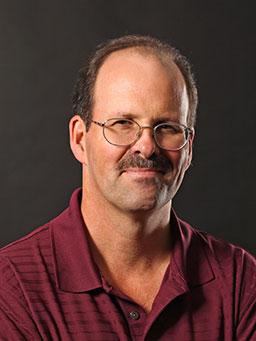
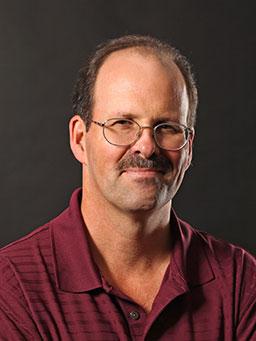
"The standard of care for acute myeloid leukemia hasn't changed since the 1960s. This study, and the concept of targeting leukemia stem cells in general, could help us offer new treatments for this most common form of adult leukemia," says Craig T. Jordan, PhD, investigator at University of Colorado Cancer Center, division chief of the Division of Hematology and the Nancy Carroll Allen Professor of Hematology at the University of Colorado School of Medicine.
As you could probably guess from this article's central analogy, it all comes down to energy. In your cells, mitochondria make energy. Mitochondria do something a little different in LSCs, but it is specifically the mitochondria that are stressed when a healthy stem cell transforms into an LSC (maybe think of mitochondria like your pocketbook?). What does an LSC do with these mitochondria that are stressed to the point of damage? It eats them – thus the term "mitophagy".
"in various situations, mitochondria may need to be destroyed. Really, it's the mitochondria saying, 'I need to eat myself.' Typically, the reason they need to eat themselves is when they're damaged," Jordan says.
Work in the Jordan lab by postdoctoral fellow and paper first author Shanshan Pei, PhD, shows there is another genetic player here, namely the gene FIS1. It directly turns on mitophagy. But FIS1 is also very difficult to manipulate. Luckily, AMPK turns on FIS1, which turns on mitophagy, and AMPK is much easier to mess with. And turning off AMPK turns off FIS1, which turns off mitophagy.
"Leukemia stem cells require AMPK for their survival, but normal hematopoetic cells can do without it. The reason this study is so important is that so far nobody's come up with a good way to kill leukemia stem cells while sparing normal blood-forming cells. If we can translate this concept to patients, the potential for improved therapy is very exciting," says Jordan. In fact, Jordan points out the CU program is unique in its focus on laboratory and clinical research designed to specifically target cancer stem cells.
"Over the past five years I've worked closely with Dr. Daniel Pollyea, the clinical director of our leukemia services, to create a bench-to-bedside program in which we only evaluate therapies with the potential to kill the heart of leukemic disease – the leukemia stem cell," Jordan says.
"We're not aware of anyone else with this same focus," says Pollyea. "In just the past couple of years, we're beginning to see how targeting leukemia stem cells can have a huge impact on patient outcomes. It's a truly exciting time for the field and our patients."
Additional studies describing drugs targeting leukemia stem cells have been submitted and are under review at other academic journals.
###
Media Contact
Garth Sundem
[email protected]
@CUAnschutz
http://www.ucdenver.edu