Credit: Cedars-Sinai
LOS ANGELES (June 5, 2018) – Cedars-Sinai investigators have for the first time identified a gas produced in gut that could improve the diagnosis and treatment of patients with two common intestinal illnesses–small intestine bacterial overgrowth (SIBO) and irritable bowel syndrome (IBS).
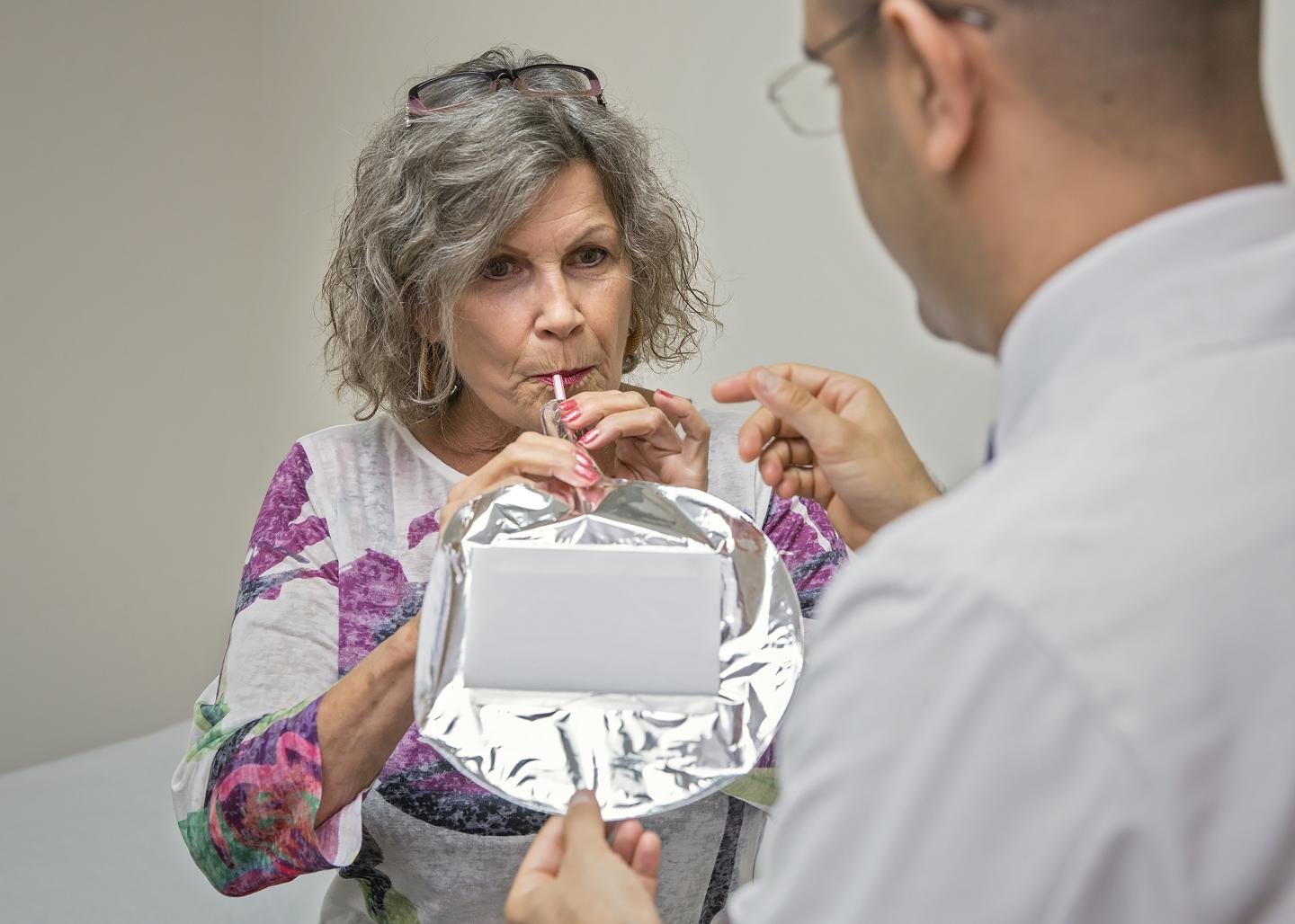
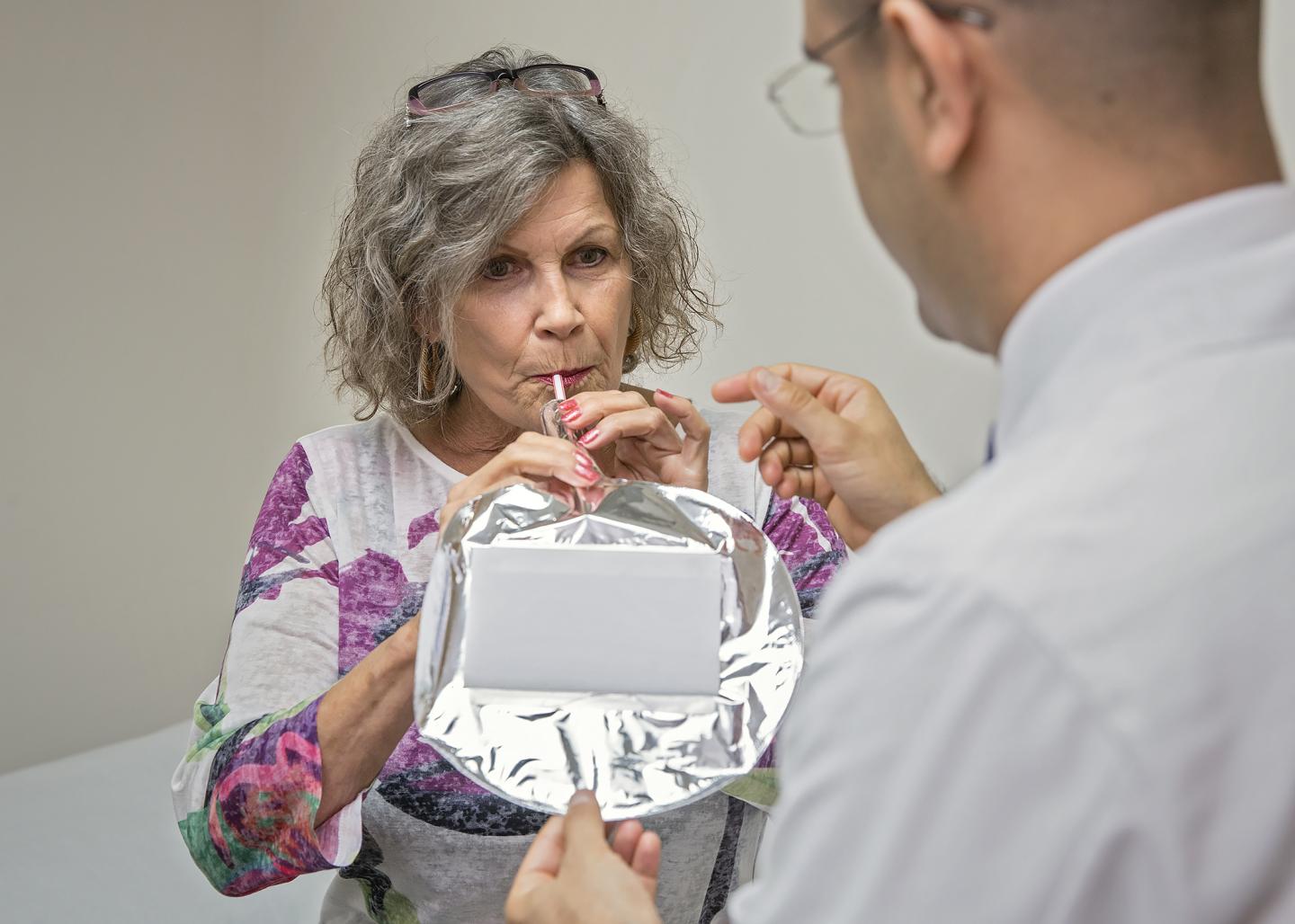
Patients complaining of pain, bloating, diarrhea, constipation and other gastrointestinal distress are routinely given a breath test to determine if they have small intestine bacterial overgrowth, an excess of certain bacteria in the small intestine. The presence of methane gas often explains the symptoms but has not been linked to diarrhea in many patients.
Now a large-scale clinical trial has identified the presence of another gut gas–hydrogen sulfide–among these patients who experience diarrhea.
"This is a game-changer because we now see the full picture of fermentation gases, and it is hydrogen sulfide that appears to be linked to diarrhea," said Mark Pimentel, MD, executive director of the Medically Associated Science and Technology (MAST) Program at Cedars-Sinai. "We knew something was missing from the conventional test."
Pimentel's team unveiled the new study results at the Digestive Disease Week conference in Washington D.C., where Cedars-Sinai investigators shared other research findings as well. Pimentel, the study's senior author, said the new research by his team has led to the development of a new four-gas breath test device that should be available to patients by the end of the year.
"This novel device will allow physicians to better diagnose and treat small intestine bacterial overgrowth in patients. And the new tool will also be useful in screening for IBS–the most common GI disorder in the world," he said.
Disclosure: "Mark Pimentel, MD, Ali Rezaie, MD and Kapil Gupta, MD are involved in the clinical trial and named on the patent application for the new breath test device. At this time, there is no financial value associated with the filed patent, however, it is possible that the investigators could receive royalty income should the patent be licensed in the future."
Cedars-Sinai investigations presented results of a variety of other studies at Digestive Disease Week, including the following:
- Gender differences in inflammatory bowel disease: Gender differences in the genetic underpinnings of inflammatory bowel disease (IBD) are not well understood. Researchers at Cedars-Sinai's Inflammatory Bowel and Immunobiology Research Institute, directed by Stephan R. Targan, MD, have identified gender-specific associations in patients with Crohn's disease and ulcerative colitis, the two most prominent forms of IBD. The results of the genetic research suggest a closer look at gender may provide important insights into the severity with which IBD develops in male and female patients. The investigation was led by research scientist Talin Haritunians, PhD and Dermot P. McGovern, MD, PhD, director of Translational Research in the Inflammatory Bowel and Immunobiology Research Institute.
- "Creeping Fat" around intestines of IBD patients: Most Crohn's disease patients develop what is known as "creeping fat" around sites of inflammation in the intestines. Does this phenomenon protect the intestines or lead to further disease complications? In a study of the make-up and behavior of "creeping fat," investigators led by Suzanne Devkota, PhD, found that specific gut bacteria migrate to the fat tissue outside of the gut and stimulate that area of fat to grow. While this process may initially be a protective response to wounds in the intestine caused by Crohn's, the extra fat can eventually cause fibrosis, making the disease worse.
- Mobile health and food symptom tracker: How good are we at accurately associating what we eat with the development of gut trouble? Research led by Brennan M. Spiegel, MD, director of Health Services Research at Cedars-Sinai, tested a new questionnaire called the Food and Symptom Tracker (FAST). Investigators successfully validated the FAST questionnaire against existing measures. The findings suggest that FAST can be used as part of digital health apps for patients to more accurately track their food-specific gastrointestinal symptoms.
###
Media Contact
Laura Coverson
[email protected]
310-423-5215
@cedarssinai
http://www.csmc.edu
Original Source
https://www.cedars-sinai.org/newsroom/cedars-sinai-research-identifies-gut-gas-linked-to-diarrhea/