• HOME
  • NEWS
  • EXPLORE
    • CAREER
      • Companies
      • Jobs
    • EVENTS
    • iGEM
      • News
      • Team
    • PHOTOS
    • VIDEO
    • WIKI
  • BLOG
  • COMMUNITY
    • FACEBOOK
    • INSTAGRAM
    • TWITTER
Friday, April 17, 2026
BIOENGINEER.ORG
No Result
View All Result
  • Login
  • HOME
  • NEWS
  • EXPLORE
    • CAREER
      • Companies
      • Jobs
        • Lecturer
        • PhD Studentship
        • Postdoc
        • Research Assistant
    • EVENTS
    • iGEM
      • News
      • Team
    • PHOTOS
    • VIDEO
    • WIKI
  • BLOG
  • COMMUNITY
    • FACEBOOK
    • INSTAGRAM
    • TWITTER
  • HOME
  • NEWS
  • EXPLORE
    • CAREER
      • Companies
      • Jobs
        • Lecturer
        • PhD Studentship
        • Postdoc
        • Research Assistant
    • EVENTS
    • iGEM
      • News
      • Team
    • PHOTOS
    • VIDEO
    • WIKI
  • BLOG
  • COMMUNITY
    • FACEBOOK
    • INSTAGRAM
    • TWITTER
No Result
View All Result
Bioengineer.org
No Result
View All Result
Home NEWS Science News Biology

Radish cover crop traps nitrogen; mystery follows

Bioengineer by Bioengineer
May 30, 2018
in Biology
Reading Time: 2 mins read
0
Share on FacebookShare on TwitterShare on LinkedinShare on RedditShare on Telegram
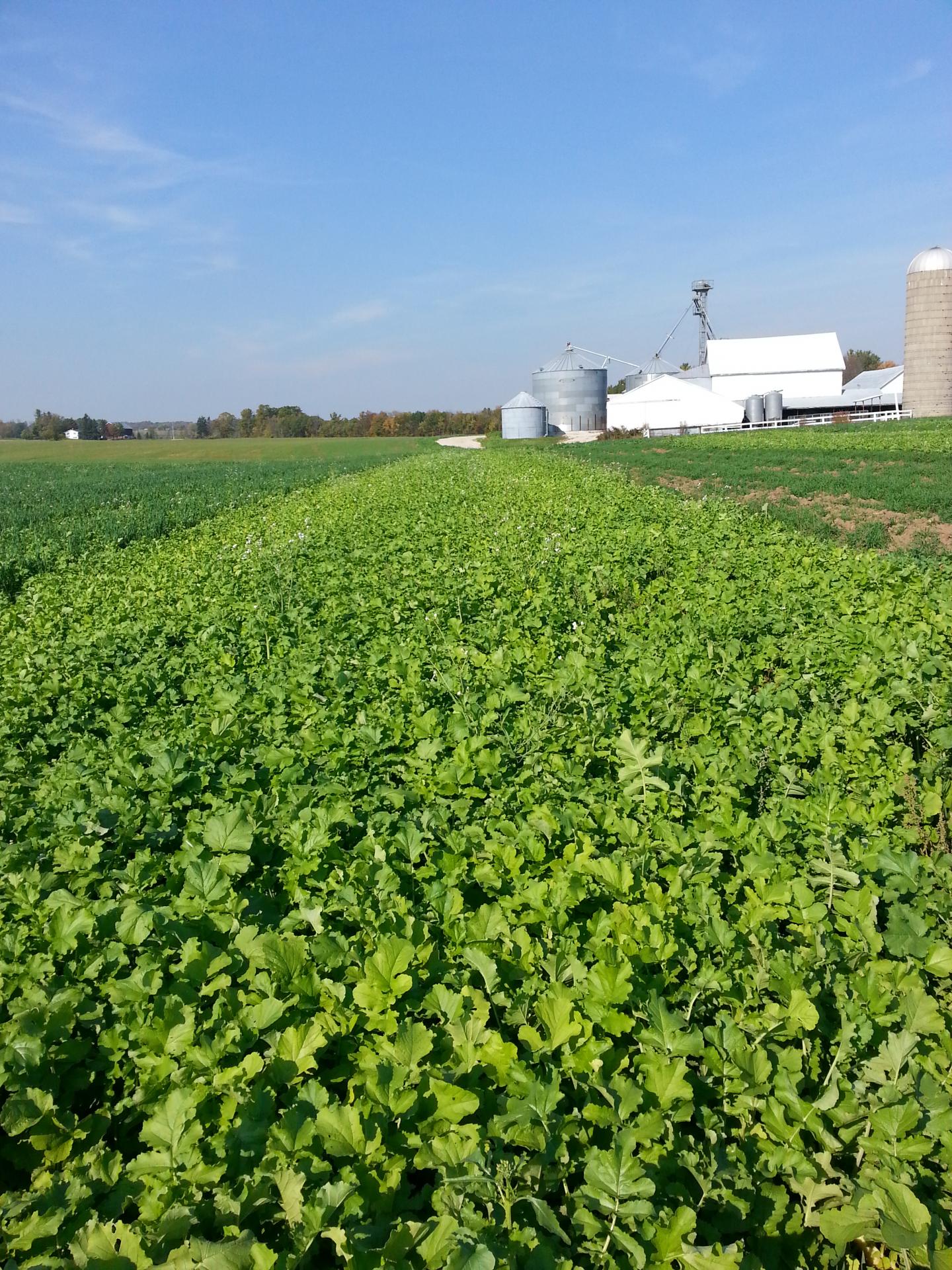
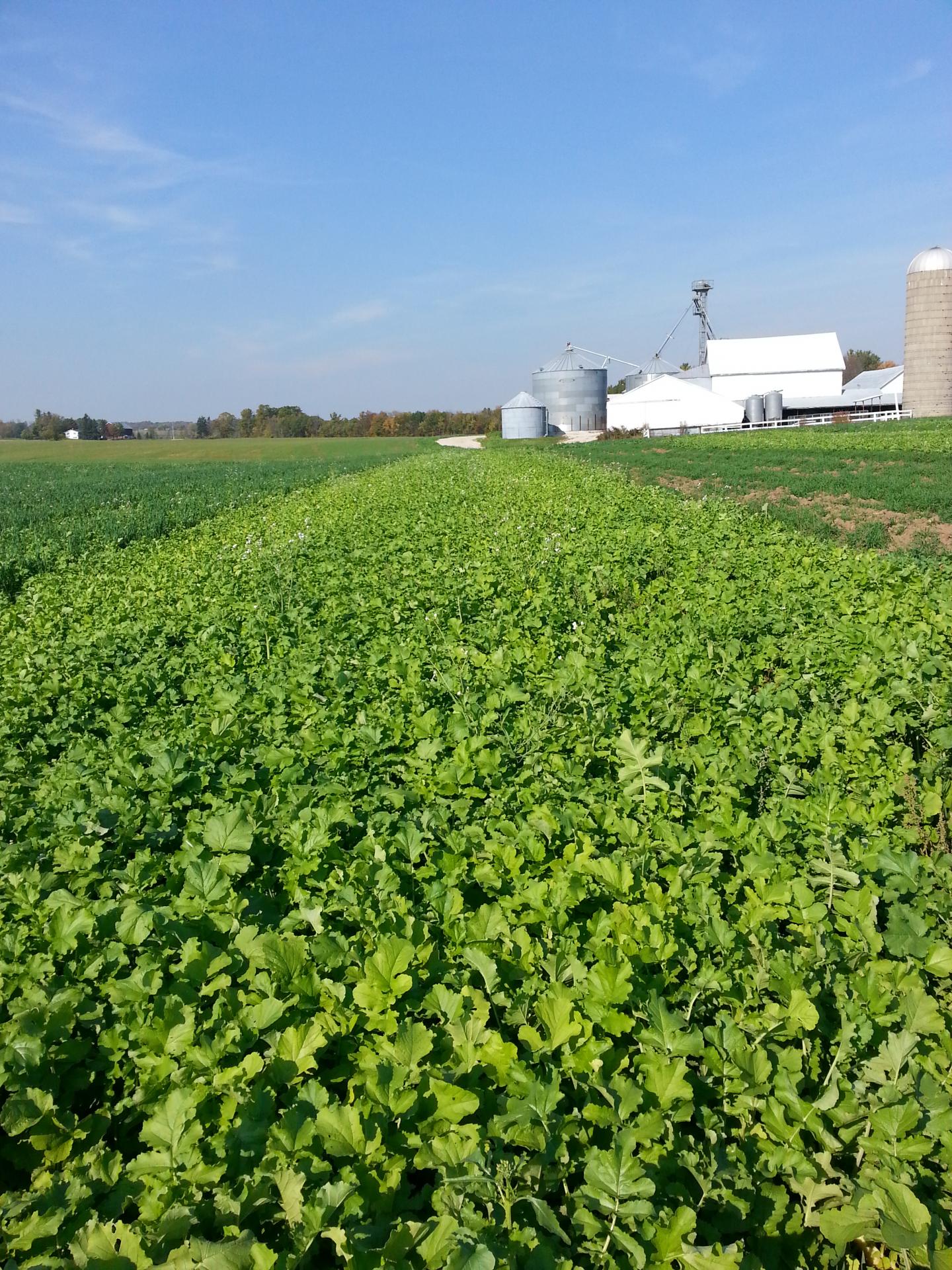
IMAGE

Credit: Matt Ruark.

When you think of a radish, you may think of the small, round, crunchy, red-and-white vegetable that is sliced into salads. You might be surprised to learn that a larger, longer form of this root vegetable is being used in agriculture as a cover crop.

Cover crops are grown between main crops such as wheat, corn, or soybeans when the soil would otherwise be bare. Cover crops can control erosion, build soil, and suppress weeds. Radish as a cover crop can provide these benefits and more. The long radish root creates deep channels in the soil that can make it easier for subsequent crops to reach water in the soil below.

Radish is also known to benefit water quality. It does so by taking up nitrogen, in the form of nitrates, from the soil. This leaves less nitrogen in the soil that can run off to nearby streams and lakes.

Matt Ruark of the University of Wisconsin-Madison and colleagues wanted to know more about the effect of this nitrate uptake in the following growing season. They established test sites in three Wisconsin locations and studied them for three years. At each site, some plots received the radish cover crop and some did not. The radish cover crop was planted in August after a wheat harvest. Corn was planted the following spring.

The research showed that radish significantly reduced the nitrate content in the soil as compared to the test plots with no cover crop. This finding confirmed the results of several earlier studies. It showed that radish did take up nitrogen, in the form of nitrates, from the soil.

This research supports the use of radish as a cover crop as a trap crop for fall nitrogen. However, what happens to that nitrogen afterward remains unknown.

There was no consistent evidence that nitrogen was returned to the soil as the radish crop decomposed. Radish did not supply nitrogen to the corn crop. The researchers concluded that in the Upper Midwest the nitrogen in radish could not replace fertilizer.

Ruark commented, "Radish grows well when planted in late summer and traps a lot of nitrogen. But the way it decomposes doesn't result in a nitrogen fertilizer benefit to the next crop. We don't know exactly why. We were hoping it would provide a nitrogen benefit, but alas, it did not."

What happens to the nitrogen? The decomposition pattern of radish needs to be explored more fully to learn more. And perhaps, Ruark said, radish could be more beneficial if mixed with a winter-hardy cover crop.

###

Read more about Ruark's work in Agronomy Journal. The Wisconsin Fertilizer Research Council funded this research with additional support from the Leo Walsh Graduate Fellowship.

Media Contact

Susan Fisk
[email protected]
608-268-3976
@ASA_CSSA_SSSA

http://www.agronomy.org

Related Journal Article

http://dx.doi.org/10.2134/agronj2017.06.0352

Share12Tweet8Share2ShareShareShare2

Related Posts

MIT Study Uncovers Novel Function of Cell Membranes

MIT Study Uncovers Novel Function of Cell Membranes

April 16, 2026
Long-Term HIV Remission via CCR5Δ32 Stem Cell Transplant

Long-Term HIV Remission via CCR5Δ32 Stem Cell Transplant

April 16, 2026

Renowned Cell Biologist Dr. Peter Walter Joins Faculty at The Buck Institute

April 16, 2026

Freshwater Fish Found to Accumulate Opioids and Other Pharmaceuticals

April 16, 2026
Please login to join discussion

POPULAR NEWS

  • Scientists Investigate Possible Connection Between COVID-19 and Increased Lung Cancer Risk

    61 shares
    Share 24 Tweet 15
  • Boosting Breast Cancer Risk Prediction with Genetics

    47 shares
    Share 19 Tweet 12
  • NSF funds machine-learning research at UNO and UNL to study energy requirements of walking in older adults

    100 shares
    Share 40 Tweet 25
  • Popular Anti-Aging Compound Linked to Damage in Corpus Callosum, Study Finds

    46 shares
    Share 18 Tweet 12

About

We bring you the latest biotechnology news from best research centers and universities around the world. Check our website.

Follow us

Recent News

Fiber-Optic Sensor Captures Precise Flight Data at Nevada Airfield

NAT10 Drives Gallbladder Cancer via Cholesterol Metabolism

Sedentary Behavior Alters Balance Rehab in Parkinson’s

Subscribe to Blog via Email

Enter your email address to subscribe to this blog and receive notifications of new posts by email.

Join 79 other subscribers
  • Contact Us

Bioengineer.org © Copyright 2023 All Rights Reserved.

Welcome Back!

Login to your account below

Forgotten Password?

Retrieve your password

Please enter your username or email address to reset your password.

Log In
No Result
View All Result
  • Homepages
    • Home Page 1
    • Home Page 2
  • News
  • National
  • Business
  • Health
  • Lifestyle
  • Science

Bioengineer.org © Copyright 2023 All Rights Reserved.