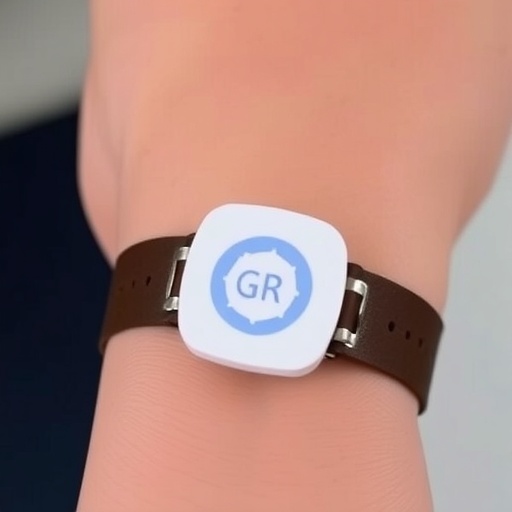
Wearable Sensors Could Turn Uric Acid Monitoring Into an Everyday Health Check
Uric acid, a waste product formed when the body breaks down purines, may soon be monitored in ways that resemble checking the time or counting daily steps. A new review by researchers from City University of Hong Kong, Shenzhen University and collaborating institutions examines how wearable biosensors are being developed to track uric acid continuously in sweat, wound fluid, tissue fluid, saliva and urine. The researchers say these technologies could help transform uric acid testing from an occasional laboratory procedure into a real-time tool for personalised healthcare.
Uric acid is more than a chemical associated with gout. It can provide information about metabolic activity, kidney function and broader physiological changes. Persistently elevated concentrations are linked to hyperuricaemia, gout, cardiovascular disease and chronic kidney disease. In wound exudate, the fluid released by damaged tissue during healing, changing uric acid levels could also reveal information about inflammation, tissue repair and the effectiveness of treatment. Conventional testing, however, generally requires a sample to be collected and sent to a laboratory, offering only a snapshot rather than a continuous record.
In their review, published in the journal Wearable Electronics, the researchers systematically examine the main strategies used to detect uric acid in wearable devices. Electrochemical sensing currently dominates the field because it can combine high sensitivity with compact hardware, low power consumption and straightforward integration into flexible electronics. These sensors measure changes in electrical signals produced when uric acid participates in a chemical reaction at the sensor surface. By analysing current, voltage or impedance, the device can estimate the concentration of uric acid in a small volume of biological fluid.
Many electrochemical systems use enzyme-based recognition, particularly uricase, an enzyme that catalyses the oxidation of uric acid. This reaction generates chemical products that can be converted into an electrical signal. Although enzyme-based sensors can be highly selective, their performance may be affected by temperature, acidity, enzyme stability and interfering molecules. To address these challenges, researchers are engineering electrode surfaces with advanced materials, including carbon nanomaterials, conductive polymers, metal nanoparticles and metal-organic frameworks. These materials can increase the active surface area, accelerate electron transfer and improve the ability to detect very small concentrations.
The review also highlights the importance of protecting the sensing interface from the complex chemistry of body fluids. Sweat, saliva, wound fluid and urine contain proteins, salts, metabolites and other compounds that can interfere with the target signal. Hydrogels, selective membranes and antifouling coatings are being used to control which molecules reach the electrode and to reduce the accumulation of biological material on its surface. Some devices combine uric acid sensing with temperature and pH measurements, allowing the system to compensate for environmental changes that might otherwise produce misleading readings.
Optical approaches offer another route to wearable uric acid detection. These systems can use changes in colour, fluorescence or light absorption to indicate the presence and concentration of uric acid. Optical sensors may be particularly useful when integrated into transparent or visually readable patches, although they must overcome challenges involving ambient light, optical alignment and the stability of dyes or nanomaterials. Other emerging approaches explored in the review include transistor-based platforms and multifunctional systems designed to analyse several biomarkers at the same time.
Wearable formats are expanding beyond conventional adhesive patches. Researchers have demonstrated concepts involving microneedles, smart textiles, watches, gloves, mouthguards and smart diapers. Microneedles can access interstitial fluid through the outer layers of the skin while causing minimal discomfort, whereas textiles may collect and analyse sweat during daily activity. Mouthguards can sample saliva, and smart diapers could potentially monitor urine without requiring a separate collection step. These formats are designed to place the sensor closer to the biological fluid of interest while maintaining flexibility and user comfort.
The researchers note that reliable long-term monitoring requires more than a sensitive chemical reaction. Wearable sensors must remain stable during movement, bending, stretching and repeated exposure to moisture. Built-in reference signals can help identify changes caused by sensor ageing, while calibration strategies may correct variations between individuals. Machine-learning algorithms could further improve interpretation by separating genuine physiological changes from noise caused by motion, temperature, pH or fluctuating fluid production. However, the review stresses that algorithmic correction cannot replace careful sensor design, standardised testing and clinical validation.
According to corresponding author Yue Hu, future uric acid monitoring could support earlier disease detection, provide more detailed information about wound healing and help clinicians deliver more timely and personalised care. The authors envision devices that are precise, comfortable, intelligent and suitable for prolonged use. Reaching that goal will require evidence from large clinical studies, agreement on testing standards, strong protection for sensitive health data and environmentally responsible manufacturing. If those challenges can be solved, the combination of advanced materials, flexible electronics and intelligent data analysis could make continuous uric acid monitoring a practical part of everyday healthcare rather than a technology confined to the laboratory.
Subject of Research: Wearable sensors and biosensing platforms for uric acid detection
Article Title: Recent advances in wearable sensors for uric acid detection: Methods, devices, and outlooks
Web References: https://doi.org/10.1016/j.wees.2026.04.002
References: Hu, Y., et al. “Recent advances in wearable sensors for uric acid detection: Methods, devices, and outlooks.” Wearable Electronics. DOI: 10.1016/j.wees.2026.04.002
Image Credits: Hu, Y., et al.
Keywords
Wearable biosensors, uric acid, gout, hyperuricaemia, kidney function, electrochemical sensors, optical sensors, flexible electronics, health monitoring, personalised healthcare
Tags: advancements in wearable biosensingchronic disease management through wearable sensorscontinuous health monitoring technologyinflammation and tissue repair biomarkersnon-invasive uric acid detectionpersonalized healthcare technologyreal-time health assessment toolssaliva and urine uric acid sensorssweat-based biosensors for metabolic trackingwearable biosensors for uric acid monitoringwearable devices for kidney function monitoringwearable electronics for metabolic health