Credit: MSU
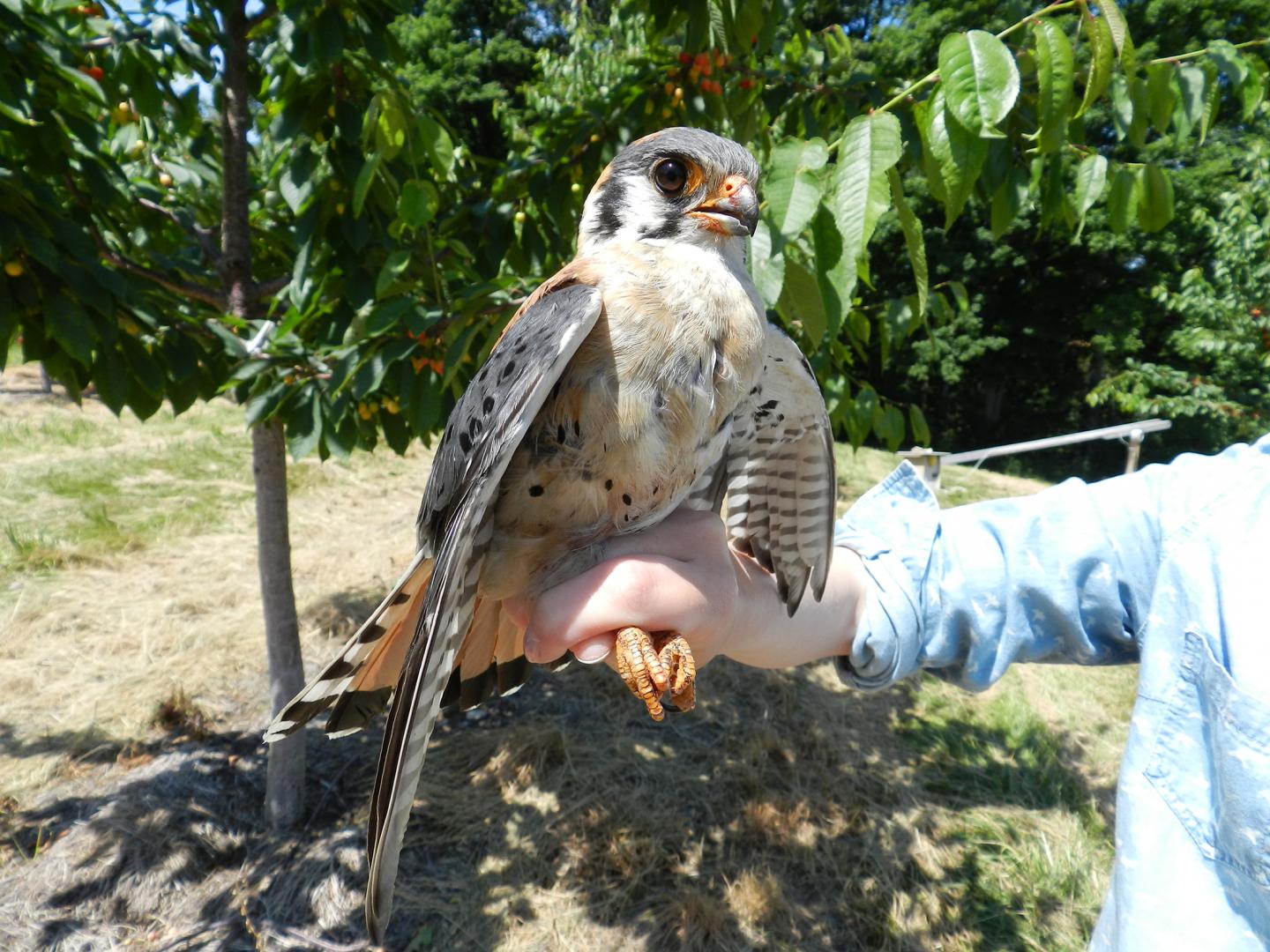
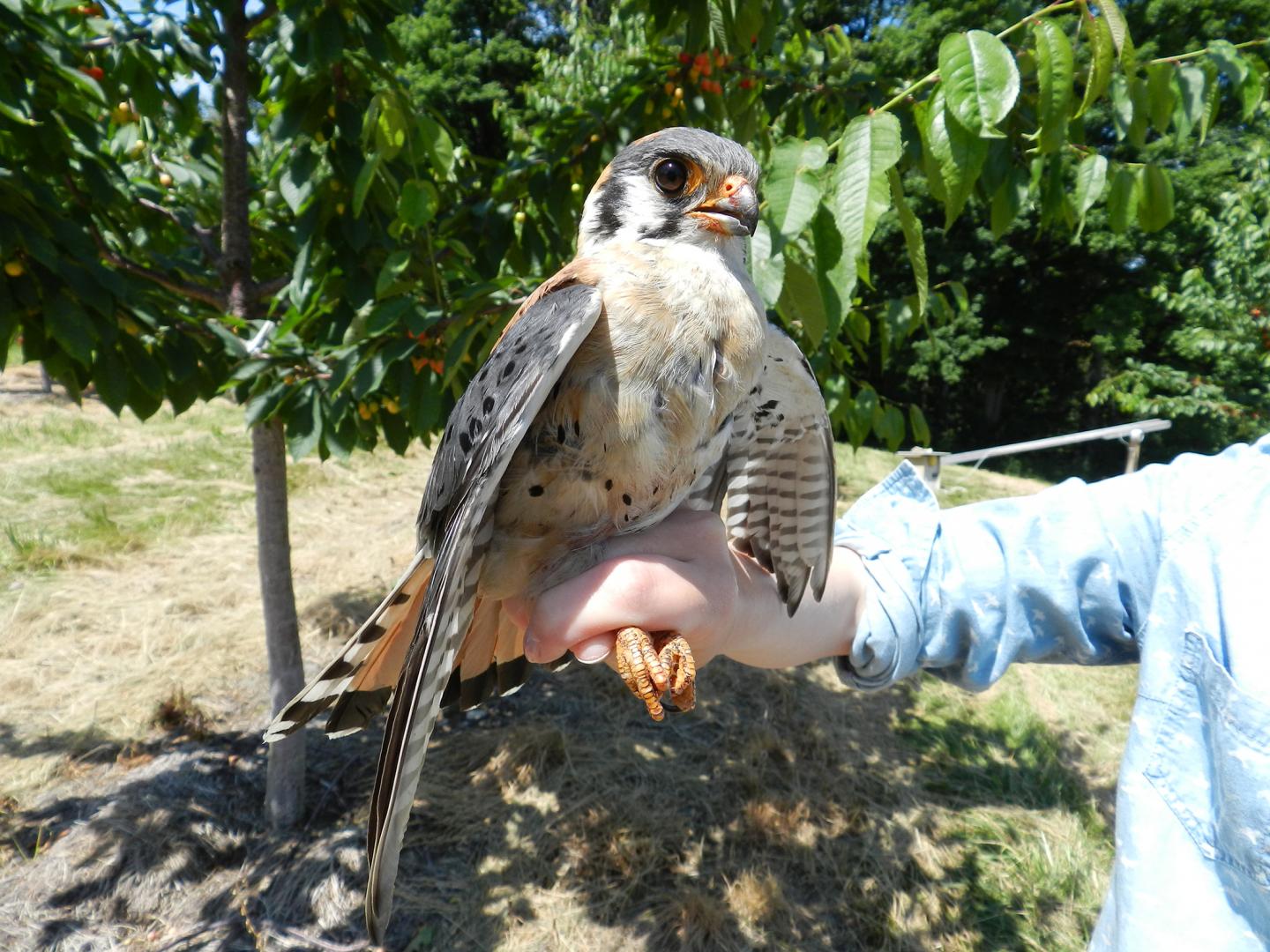
EAST LANSING, Mich. – What can help boost Michigan's economy? American kestrels.
A new Michigan State University study, published in the Journal of Applied Ecology and funded by the National Science Foundation, shows that America's smallest raptor can boost Michigan's – and other fruit-growing states' – bottom lines. It's the first study ever to measure regional job creation due to native predators' regulating services.
American kestrels can be found from Alaska to southernmost South America. They dine on bugs, mammals and fruit-eating birds. Growers can attract more of these beneficial birds by building nesting boxes. More kestrels mean fewer pests, and the tiny hawk's mere presence can produce measurable improvements, said Catherine Lindell, MSU integrative biologist and study co-author.
"Having more American kestrels around orchards reduces the number of fruit-eating birds significantly," she said. "It's not just a microeconomic boost that simply benefits the fruit grower, either; it has a macroeconomic effect that benefits the state's economy."
Lindell and her team calculated the benefit-to-cost ratios for building kestrel nest boxes around orchards. The results showed that every dollar spent, $84 to $357 of sweet cherries are saved from fruit-eating birds.
To scale up their projections, the team used regional economic modelling. These models predicted that increased sweet cherry production from reduced bird damage would generate 46 to 50 jobs, which translates to a major contribution to Michigan's economy.
"This research shows that farmers can use science to design agricultural fields that benefit people and wildlife," said Betsy Von Holle, a program director for the National Science Foundation Dynamics of Coupled Natural and Human Systems program, which funded the research. "Fruit-eating birds avoid orchards with American kestrels, so orchards with kestrel nest boxes end up producing more cherries. If building kestrel nest boxes were applied more widely, the researchers estimate that would benefit Michigan by adding new jobs and more than $2 million in increased revenue over a five-year period."
This strategy isn't limited solely to Michigan cherry producers. It's a potential boon for just about any fruit producer in the kestrels' range. It's not only a highly cost-effective ecosystem service, but now there's peer-reviewed research that shows the potential reverberating benefits for a regional economy. Building boxes, though, doesn't always guarantee a booming kestrel population, said Megan Shave, MSU integrative biology graduate student and first author.
"Box occupancy rates will undoubtedly vary," she said. "However, installation and maintenance costs of boxes are small and, even if box occupancy rates are low, they can direct kestrel activity to particular places in agricultural landscapes where they can deter pest birds."
Even though birds comprise just 2 percent of kestrels' diets, just having the feathery enforcers in the area keeps many fruit eaters out of orchards. These improvements give growers another more-sustainable option to conventional pesticide-based crop protection, Lindell added.
In a previous paper, Lindell and her team reviewed other studies which demonstrated that birds – and even bats – can contribute to a region's economy. In Jamaica, for example, attracting birds that ate a persistent coffee pest, saved an estimated $18 to $126 per acre annually.
###
Stephanie Shwiff and Julie Elser, with the USDA's National Wildlife Research Center, did the economic analyses for the study.
Michigan State University has been working to advance the common good in uncommon ways for more than 150 years. One of the top research universities in the world, MSU focuses its vast resources on creating solutions to some of the world's most pressing challenges, while providing life-changing opportunities to a diverse and inclusive academic community through more than 200 programs of study in 17 degree-granting colleges.
Media Contact
Layne Cameron
[email protected]
517-353-8819
@MSUnews
http://msutoday.msu.edu/journalists/
Original Source
https://msutoday.msu.edu/news/2018/lifting-the-economy-on-hawks-wings/