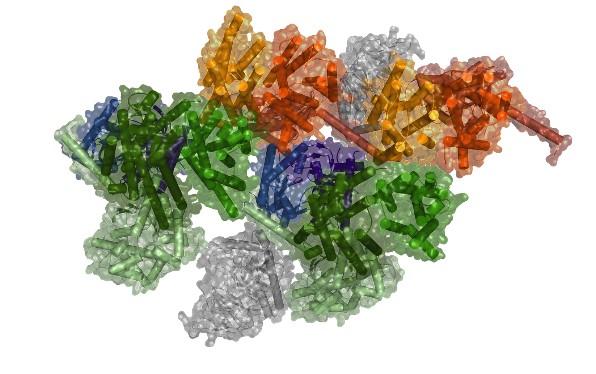
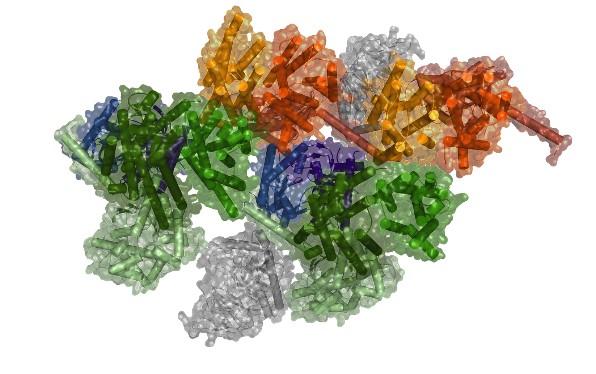
Credit: Courtesy: NIDA IRP and Dr. Sergi Ferré
Scientists at the National Institute on Drug Abuse (NIDA) Intramural Research Program (IRP) have uncovered evidence that shows a more complex and elaborate role for the body's hard-working G protein-coupled receptors (GPCRs) than previously thought, suggesting a conceptual advance in the fields of biochemistry and pharmacology. With more than 800 members in the human genome, GPCRs are the largest family of proteins involved in decoding signals as they come into the cell and then adapt the cell's function in response. NIDA is part of the National Institutes of Health.
Manipulating how cells respond to signals is key to developing new medications. Although pharmacologists have studied GPCRs for many years, there is still a debate on how they operate — are they isolated units that randomly collide with each other or are they deliberately coupled together to receive signals? The NIDA scientists conclude that GPCRs form part of very elaborate pre-coupled macromolecular complexes. Simply put, they act as little computing devices that optimally gather and process information coming into the cell, allowing the cells to adapt and change their function.
"These findings represent many years of complex and highly nuanced science, following the trail as chemical signals travel through the body at the cellular level," said NIDA Director Nora D. Volkow, M.D. "This remarkable discovery will open new avenues for medication development for addiction, pain and other conditions, offering more precise targets with fewer side effects."
"The specific macromolecular complex investigated in this study has therapeutic implications not only for addiction, but also for Parkinson's disease and schizophrenia," said Dr. Sergi Ferré, who led the team of scientists. "Discovering that these protein interact with other signals in preformed complexes gives us more precise targets for medication development."
To unravel the complex journey of the body's GPCRs, scientists used biophysical tools, including fluorescent biosensors; biochemical tools, such as cell signaling in neuronal cultures; as well as computational models.
###
Article
Navarro et al. Evidence for functional pre-coupled complexes of receptor heteromers and adenylyl cyclase, March 28, 2018, Nature Communications. DOI: 10.1038/s41467-018-03522-3.
About the National Institute on Drug Abuse (NIDA): The National Institute on Drug Abuse (NIDA) is a component of the National Institutes of Health, U.S. Department of Health and Human Services. NIDA supports most of the world's research on the health aspects of drug use and addiction. The Institute carries out a large variety of programs to inform policy, improve practice, and advance addiction science. The mission of NIDA's Intramural Research Program (IRP) is to conduct state-of-the-art research on basic mechanisms that underlie drug use and addiction, and to develop new methods for treatment. Fact sheets on the health effects of drugs and information on NIDA research and other activities can be found at http://www.drugabuse.gov, which is now compatible with your smartphone, iPad or tablet. To order publications in English or Spanish, call NIDA's DrugPubs research dissemination center at 1-877-NIDA-NIH or 240-645-0228 (TDD) or email requests to [email protected]. Online ordering is available at drugpubs.drugabuse.gov. NIDA's media guide can be found at http://www.drugabuse.gov/publications/media-guide/dear-journalist, and its easy-to-read website can be found at http://www.easyread.drugabuse.gov. You can follow NIDA on Twitter and Facebook.
About the National Institutes of Health (NIH): NIH, the nation's medical research agency, includes 27 Institutes and Centers and is a component of the U.S. Department of Health and Human Services. NIH is the primary federal agency conducting and supporting basic, clinical, and translational medical research, and is investigating the causes, treatments, and cures for both common and rare diseases. For more information about NIH and its programs, visit http://www.nih.gov.
NIH…Turning Discovery Into Health®
Media Contact
NIDA Press Office
[email protected]
301-443-6245
http://www.nida.nih.gov
Original Source
https://www.drugabuse.gov/news-events/news-releases/2018/03/study-changes-long-held-concepts-cell-decoding http://dx.doi.org/10.1038/s41467-018-03522-3