

• HOME
  • NEWS
  • EXPLORE
    • CAREER
      • Companies
      • Jobs
    • EVENTS
    • iGEM
      • News
      • Team
    • PHOTOS
    • VIDEO
    • WIKI
  • BLOG
  • COMMUNITY
    • FACEBOOK
    • INSTAGRAM
    • TWITTER
Monday, April 6, 2026
BIOENGINEER.ORG
No Result
View All Result
  • Login
  • HOME
  • NEWS
  • EXPLORE
    • CAREER
      • Companies
      • Jobs
        • Lecturer
        • PhD Studentship
        • Postdoc
        • Research Assistant
    • EVENTS
    • iGEM
      • News
      • Team
    • PHOTOS
    • VIDEO
    • WIKI
  • BLOG
  • COMMUNITY
    • FACEBOOK
    • INSTAGRAM
    • TWITTER
  • HOME
  • NEWS
  • EXPLORE
    • CAREER
      • Companies
      • Jobs
        • Lecturer
        • PhD Studentship
        • Postdoc
        • Research Assistant
    • EVENTS
    • iGEM
      • News
      • Team
    • PHOTOS
    • VIDEO
    • WIKI
  • BLOG
  • COMMUNITY
    • FACEBOOK
    • INSTAGRAM
    • TWITTER
No Result
View All Result
Bioengineer.org
No Result
View All Result
Home NEWS Science News Biology

Staphylococcus aureus: A new mechanism involved in virulence and antibiotic resistance

Bioengineer by Bioengineer
March 23, 2018
in Biology
Reading Time: 2 mins read
3
Share on FacebookShare on TwitterShare on LinkedinShare on RedditShare on Telegram
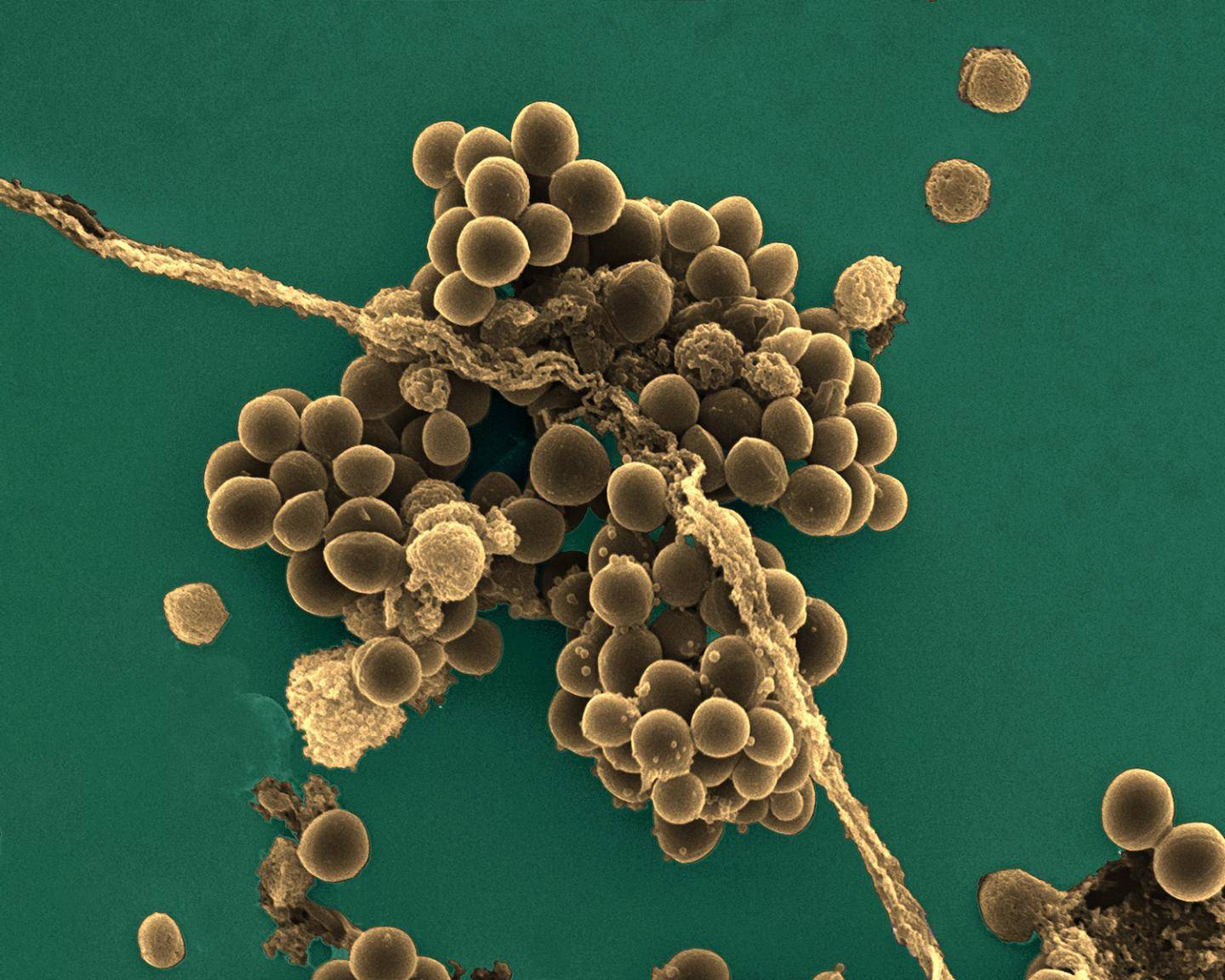
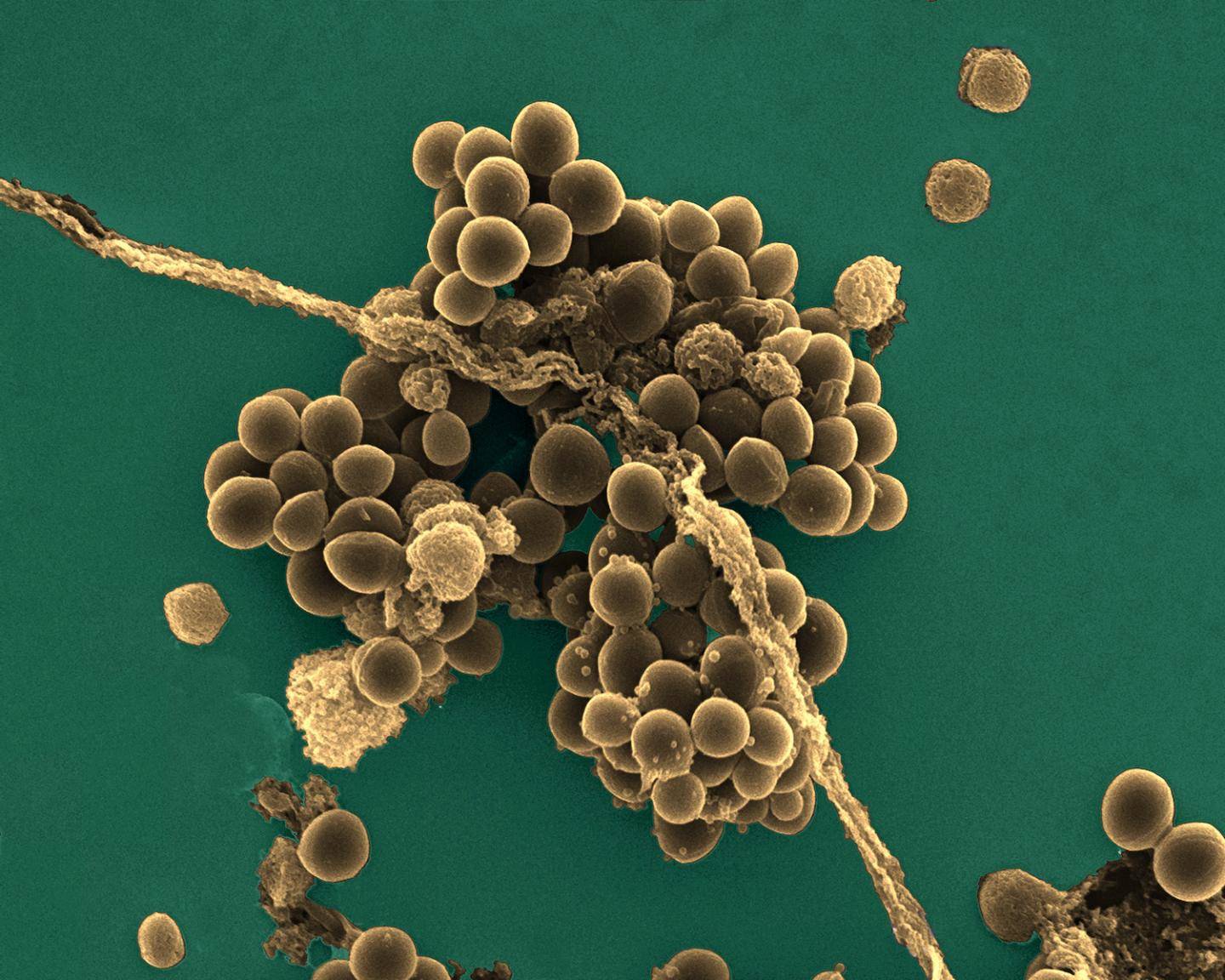
IMAGE

Credit: © Institut Pasteur/Mélanie Falord and Tarek Msadek — Colorization by Jean-Marc Panaud

An Institut Pasteur-CNRS research team has characterized a Staphylococcus aureus gene involved in virulence, biofilm formation and resistance to certain antibiotics. These results open up new avenues for understanding the control of S. aureus virulence mechanisms. This work was recently published in the journal PLoS Pathogens.

Staphylococcus aureus is part of the natural skin flora, preferentially colonizing external mucosa in 30 to 50% of the population, healthy carriers who develop no symptoms. But it is also a major human pathogen, causing diseases ranging from skin lesions (boils, impetigo, etc.) to endocarditis, acute pneumonia, osteomyelitis or sepsis. It is the leading Gram-positive bacterium responsible for nosocomial infections (hospital acquired infections). The most dangerous strains are those that display resistance to multiple antibiotics. This is the case of MRSA[1], resistant to Meticillin, widespread in hospitals and posing a major public health concern.

The Signaling and Pathogenesis of Staphylococci team, led by Tarek Msadek, a researcher in the Biology of Gram-positive Pathogens Unit at the Institut Pasteur (CNRS ERL 3526), is studying bacterial responses to environmental variations and their role in Staphylococcus aureus pathogenesis and host interactions. These responses are often genetically controlled by so-called "two-component" systems. During the study of one of these systems, WalKR, essential for bacterial survival, they characterized an additional component, SpdC, a membrane protein whose role was unknown. This component interacts with the WalKR system to control its activity and its absence leads to a strong decrease in virulence, biofilm formation (bacterial aggregates), and resistance to certain antibiotics.

These results suggest that inhibition of SpdC could be used as an approach to combat S. aureus infections and understand the mechanisms involved in its transition from commensal to pathogen.

###

[1] Meticillin resistant Staphylococcus aureus.

Media Contact

Aurelie Perthuison
[email protected]

http://www.pasteur.fr

Original Source

https://www.pasteur.fr/en/research-journal/news/staphylococcus-aureus-new-mechanism-involved-virulence-and-antibiotic-resistance http://dx.doi.org/10.1371/journal.ppat.1006917


Share15Tweet8Share2ShareShareShare2

Related Posts

A Rare Cause of Cryptorchidism: Recognizing Persistent Müllerian Duct Syndrome

A Rare Cause of Cryptorchidism: Recognizing Persistent Müllerian Duct Syndrome

April 6, 2026
Drug–Microbiome Interactions Affect Parkinson’s Medications

Drug–Microbiome Interactions Affect Parkinson’s Medications

April 6, 2026

Damselfly Mating Strategies Shed Light on Reproductive Barriers

April 4, 2026

Custom Biochar Approaches Enhance Alfalfa Growth and Stress Tolerance in Saline Soils

April 3, 2026
Please login to join discussion

POPULAR NEWS

  • blank

    Revolutionary AI Model Enhances Precision in Detecting Food Contamination

    97 shares
    Share 39 Tweet 24
  • Promising Outcomes from First Clinical Trials of Gene Regulation in Epilepsy

    51 shares
    Share 20 Tweet 13
  • Imagine a Social Media Feed That Challenges Your Views Instead of Reinforcing Them

    1009 shares
    Share 399 Tweet 249
  • Popular Anti-Aging Compound Linked to Damage in Corpus Callosum, Study Finds

    44 shares
    Share 18 Tweet 11

About

We bring you the latest biotechnology news from best research centers and universities around the world. Check our website.

Follow us

Recent News

JMIR Publications Highlights Breakthrough in Precision Oncology: Personalized Multi-Drug Regimens Surpass Standard Treatments

Revolutionizing Advanced Healthcare at East Campus Medical Center

Dandelion Polyphenols Combat Inflammation Pathways

Subscribe to Blog via Email

Enter your email address to subscribe to this blog and receive notifications of new posts by email.

Join 78 other subscribers
  • Contact Us

Bioengineer.org © Copyright 2023 All Rights Reserved.

Welcome Back!

Login to your account below

Forgotten Password?

Retrieve your password

Please enter your username or email address to reset your password.

Log In
No Result
View All Result
  • Homepages
    • Home Page 1
    • Home Page 2
  • News
  • National
  • Business
  • Health
  • Lifestyle
  • Science

Bioengineer.org © Copyright 2023 All Rights Reserved.