• HOME
  • NEWS
  • EXPLORE
    • CAREER
      • Companies
      • Jobs
    • EVENTS
    • iGEM
      • News
      • Team
    • PHOTOS
    • VIDEO
    • WIKI
  • BLOG
  • COMMUNITY
    • FACEBOOK
    • INSTAGRAM
    • TWITTER
Monday, May 18, 2026
BIOENGINEER.ORG
No Result
View All Result
  • Login
  • HOME
  • NEWS
  • EXPLORE
    • CAREER
      • Companies
      • Jobs
        • Lecturer
        • PhD Studentship
        • Postdoc
        • Research Assistant
    • EVENTS
    • iGEM
      • News
      • Team
    • PHOTOS
    • VIDEO
    • WIKI
  • BLOG
  • COMMUNITY
    • FACEBOOK
    • INSTAGRAM
    • TWITTER
  • HOME
  • NEWS
  • EXPLORE
    • CAREER
      • Companies
      • Jobs
        • Lecturer
        • PhD Studentship
        • Postdoc
        • Research Assistant
    • EVENTS
    • iGEM
      • News
      • Team
    • PHOTOS
    • VIDEO
    • WIKI
  • BLOG
  • COMMUNITY
    • FACEBOOK
    • INSTAGRAM
    • TWITTER
No Result
View All Result
Bioengineer.org
No Result
View All Result
Home NEWS Science News Biology

Red light controls signaling in human cells

Bioengineer by Bioengineer
February 13, 2018
in Biology
Reading Time: 2 mins read
0
Share on FacebookShare on TwitterShare on LinkedinShare on RedditShare on Telegram
IMAGE

Credit: IST Austria

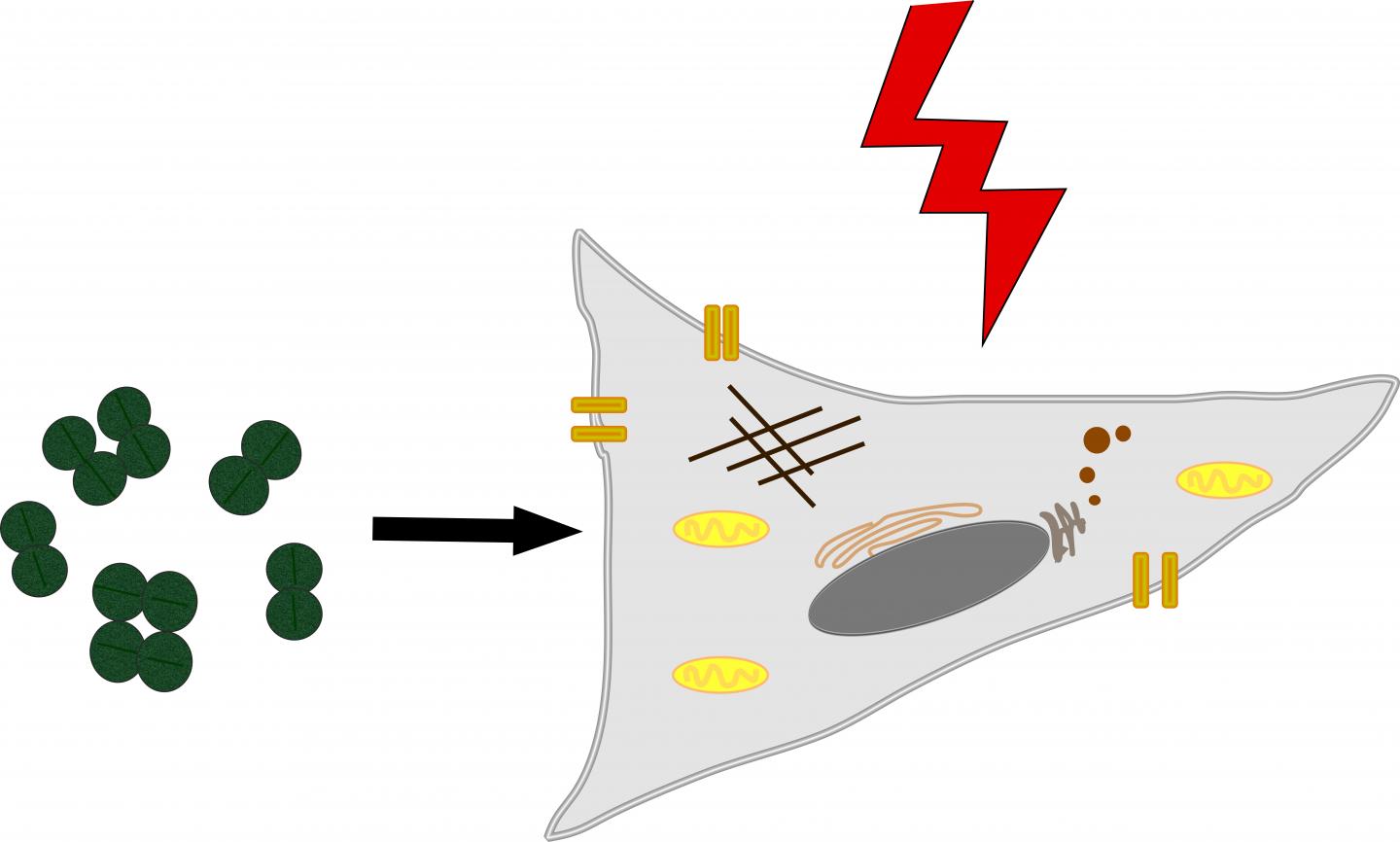
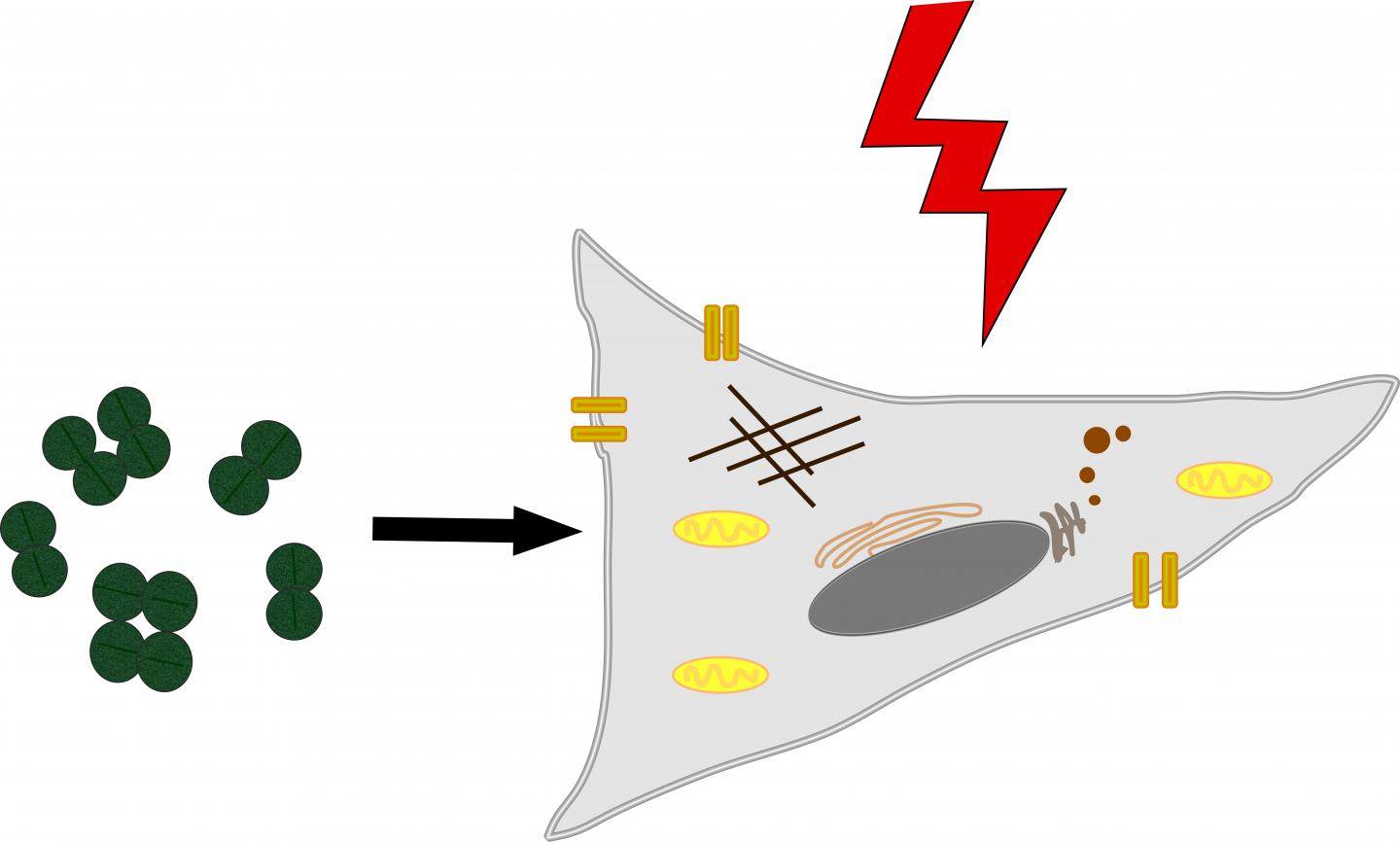
Compared with the blue light mostly used in current approaches, red light has major benefits, particularly with respect to applications in model systems for diseases. Red light can penetrate deep tissues and can be employed without surgery in a non-invasive way; it has minimal cytotoxicity for human and animal tissues and has no effects on fluorescent proteins. Often used for various applications in research labs, florescent proteins tend to be activated or bleached by blue light. Although red light has so many advantages over blue light, there are very few red light-based optogenetic tools currently available.

For the light-sensitive protein, IST Austria Professor Harald Janovjak and his research group chose a photoreceptor which can be activated by red light. This photoreceptor was found in the cyanobacterium Synechocystos which was already first described in 1968. In their study the authors modified the receptor and fused it with a mammalian receptor, which has been found significant for many diseases such as cancer, Alzheimer, Parkinson and diabetes. Later, they successfully demonstrated in experiments that the red-light activation of the fused receptor could activate a signal pathway that plays a crucial role in cell division.

As a rule, cell division is activated by so-called growth factors. They are the reason why two receptors undergo a binding and activation process, marking the start of cell division. The researchers managed to induce the binding and activation process by combining the receptors and using red light. Additionally, they showed that the fused receptor could be activated by red light even across tissue in cells which are used in model studies for diabetes.

Harald Janovjak and his co-authors, including PhD student Eva Reichhart, expect huge improvements in future research: "Specific receptors are less active or numerically limited in such diseases as Alzheimer, Parkinson, and diabetes. In the future, scientists might develop an approach based on gene therapy that could restore the normal signal pathways by using fused receptors — without recourse to surgery."

###

Media Contact

Stefan Bernhardt
[email protected]
@Istaustria

http://Www.ist.ac.at
Share12Tweet8Share2ShareShareShare2

Related Posts

Uncovering C. elegans Immunity via Genetic Screens — Biology

Uncovering C. elegans Immunity via Genetic Screens

May 16, 2026
Single mother must adapt swiftly — the survival of her colony depends on it — Biology

Single mother must adapt swiftly — the survival of her colony depends on it

May 15, 2026

Why Are Nearly Everyone Right-Handed? It Might Be Linked to How We Learned to Walk

May 15, 2026

Excessive Neuronal Activity Initiates Severe Autoimmune Brain Disorder

May 15, 2026
Please login to join discussion

POPULAR NEWS

  • Research Indicates Potential Connection Between Prenatal Medication Exposure and Elevated Autism Risk

    844 shares
    Share 338 Tweet 211
  • New Study Reveals Plants Can Detect the Sound of Rain

    731 shares
    Share 292 Tweet 182
  • Salmonella Haem Blocks Macrophages, Boosts Infection

    62 shares
    Share 25 Tweet 16
  • Breastmilk Balances E. coli and Beneficial Bacteria in Infant Gut Microbiomes

    58 shares
    Share 23 Tweet 15

About

We bring you the latest biotechnology news from best research centers and universities around the world. Check our website.

Follow us

Recent News

Micronutrients Linked to Mood and Psychotic Disorders

AI Tool in Radiotherapy Advances Global Fight to Eradicate Cervical Cancer

Detecting Illicit Bitcoin Transactions with Temporal Graph Learning

Subscribe to Blog via Email

Enter your email address to subscribe to this blog and receive notifications of new posts by email.

Join 82 other subscribers
  • Contact Us

Bioengineer.org © Copyright 2023 All Rights Reserved.

Welcome Back!

Login to your account below

Forgotten Password?

Retrieve your password

Please enter your username or email address to reset your password.

Log In
No Result
View All Result
  • Homepages
    • Home Page 1
    • Home Page 2
  • News
  • National
  • Business
  • Health
  • Lifestyle
  • Science

Bioengineer.org © Copyright 2023 All Rights Reserved.