• HOME
  • NEWS
  • EXPLORE
    • CAREER
      • Companies
      • Jobs
    • EVENTS
    • iGEM
      • News
      • Team
    • PHOTOS
    • VIDEO
    • WIKI
  • BLOG
  • COMMUNITY
    • FACEBOOK
    • INSTAGRAM
    • TWITTER
Sunday, May 17, 2026
BIOENGINEER.ORG
No Result
View All Result
  • Login
  • HOME
  • NEWS
  • EXPLORE
    • CAREER
      • Companies
      • Jobs
        • Lecturer
        • PhD Studentship
        • Postdoc
        • Research Assistant
    • EVENTS
    • iGEM
      • News
      • Team
    • PHOTOS
    • VIDEO
    • WIKI
  • BLOG
  • COMMUNITY
    • FACEBOOK
    • INSTAGRAM
    • TWITTER
  • HOME
  • NEWS
  • EXPLORE
    • CAREER
      • Companies
      • Jobs
        • Lecturer
        • PhD Studentship
        • Postdoc
        • Research Assistant
    • EVENTS
    • iGEM
      • News
      • Team
    • PHOTOS
    • VIDEO
    • WIKI
  • BLOG
  • COMMUNITY
    • FACEBOOK
    • INSTAGRAM
    • TWITTER
No Result
View All Result
Bioengineer.org
No Result
View All Result
Home NEWS Science News Health

Tattoos mark the spot — for surgery — then disappear

Bioengineer by Bioengineer
February 13, 2018
in Health
Reading Time: 2 mins read
0
Share on FacebookShare on TwitterShare on LinkedinShare on RedditShare on Telegram
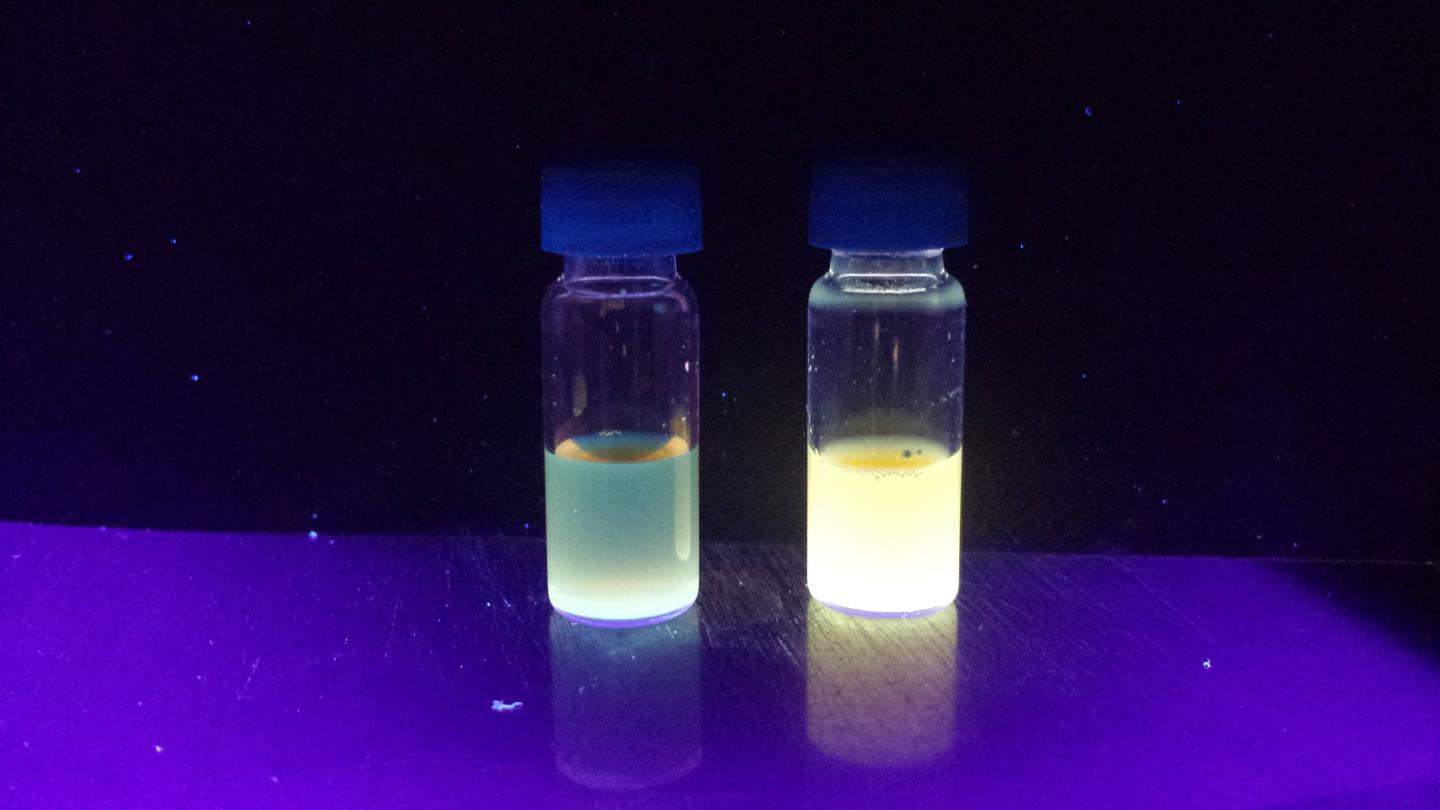
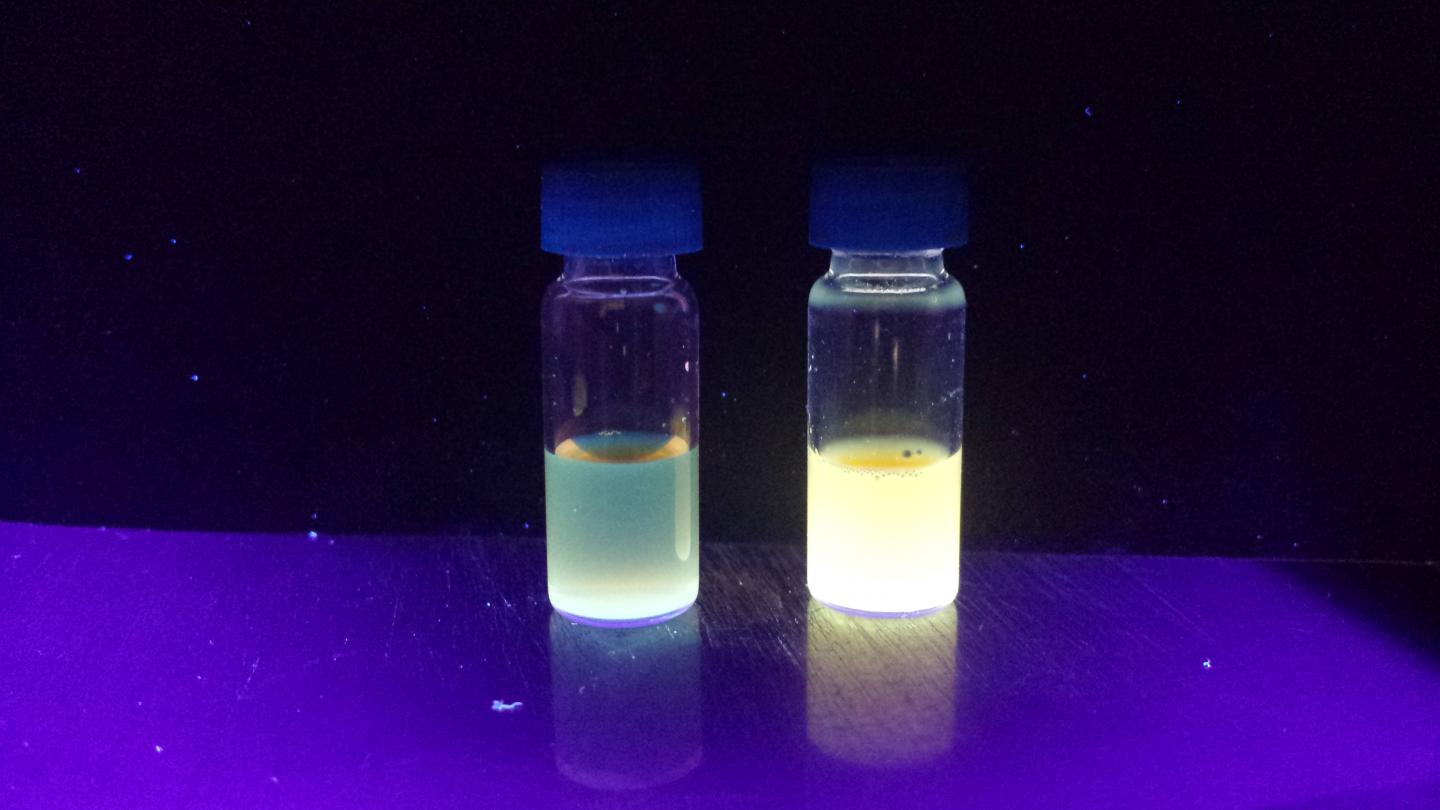
IMAGE

Credit: Jin-sil Choi/ Hsian-Rong Tseng

Tattoos aren't just for body art. They can have medical applications, too. Doctors are using them on patients to mark an area for future treatment — particularly for non-melanoma skin cancer such as basal cell carcinoma — but the inks can cause problems. Now scientists have developed a better solution. In the journal ACS Nano, they report a new ink that glows only under certain light conditions and can disappear altogether after a period of time.

Patients diagnosed with skin cancer typically have to wait up to three months between a biopsy confirming their condition and treatment. Doctors can mark the spot for possible future treatment using carbon graphite, India ink or fluorescent dye. But these pigments permanently color the skin, and can require laser or surgical removal after a patient has undergone surgery. They can also cause inflammation and discomfort at the site of the tattoo. Kai Chen, Gary S. Chuang, Hsian-Rong Tseng and colleagues wanted to develop a safer, more patient-friendly option.

The researchers created a time-limited pigment by cross-linking fluorescent supramolecular nanoparticles. Under ambient lighting, the nanoparticles are invisible, which would avoid unwanted markings in a patient's skin. But the pigment glows under light shining at a wavelength of 465 nanometers, so doctors would be able to use a special light to see the dye. Testing in mice showed that tattoos created with these nanoparticles didn't cause inflammation and lasted for three months. This would be long enough to mark a spot from biopsy through treatment for a non-melanoma patient.

###

The authors acknowledge funding from the National Institutes of Health and the Department of Radiology at the University of Southern California.

The abstract that accompanies this study is available here.

The American Chemical Society is a nonprofit organization chartered by the U.S. Congress. With nearly 157,000 members, ACS is the world's largest scientific society and a global leader in providing access to chemistry-related research through its multiple databases, peer-reviewed journals and scientific conferences. Its main offices are in Washington, D.C., and Columbus, Ohio.

To automatically receive news releases from the American Chemical Society, contact [email protected]

Follow us: Twitter Facebook

Media Contact

Michael Bernstein
[email protected]
202-872-6042
@ACSpressroom

http://www.acs.org

Share12Tweet8Share2ShareShareShare2

Related Posts

New Study Reveals the Massive Economic Impact of Tuberculosis

May 17, 2026

Age Discrimination Affects Healthcare Use in India

May 17, 2026

Advancements and Insights into Life Expectancy for Chronic Obstructive Pulmonary Disease Patients

May 17, 2026

Intrinsic Capacity, Resilience, Frailty in Stroke Recovery

May 17, 2026
Please login to join discussion

POPULAR NEWS

  • Research Indicates Potential Connection Between Prenatal Medication Exposure and Elevated Autism Risk

    844 shares
    Share 338 Tweet 211
  • New Study Reveals Plants Can Detect the Sound of Rain

    730 shares
    Share 291 Tweet 182
  • Salmonella Haem Blocks Macrophages, Boosts Infection

    62 shares
    Share 25 Tweet 16
  • Breastmilk Balances E. coli and Beneficial Bacteria in Infant Gut Microbiomes

    58 shares
    Share 23 Tweet 15

About

We bring you the latest biotechnology news from best research centers and universities around the world. Check our website.

Follow us

Recent News

Detecting Illicit Bitcoin Transactions with Temporal Graph Learning

New Study Reveals the Massive Economic Impact of Tuberculosis

Age Discrimination Affects Healthcare Use in India

Subscribe to Blog via Email

Enter your email address to subscribe to this blog and receive notifications of new posts by email.

Join 82 other subscribers
  • Contact Us

Bioengineer.org © Copyright 2023 All Rights Reserved.

Welcome Back!

Login to your account below

Forgotten Password?

Retrieve your password

Please enter your username or email address to reset your password.

Log In
No Result
View All Result
  • Homepages
    • Home Page 1
    • Home Page 2
  • News
  • National
  • Business
  • Health
  • Lifestyle
  • Science

Bioengineer.org © Copyright 2023 All Rights Reserved.