

• HOME
  • NEWS
  • EXPLORE
    • CAREER
      • Companies
      • Jobs
    • EVENTS
    • iGEM
      • News
      • Team
    • PHOTOS
    • VIDEO
    • WIKI
  • BLOG
  • COMMUNITY
    • FACEBOOK
    • INSTAGRAM
    • TWITTER
Saturday, February 7, 2026
BIOENGINEER.ORG
No Result
View All Result
  • Login
  • HOME
  • NEWS
  • EXPLORE
    • CAREER
      • Companies
      • Jobs
        • Lecturer
        • PhD Studentship
        • Postdoc
        • Research Assistant
    • EVENTS
    • iGEM
      • News
      • Team
    • PHOTOS
    • VIDEO
    • WIKI
  • BLOG
  • COMMUNITY
    • FACEBOOK
    • INSTAGRAM
    • TWITTER
  • HOME
  • NEWS
  • EXPLORE
    • CAREER
      • Companies
      • Jobs
        • Lecturer
        • PhD Studentship
        • Postdoc
        • Research Assistant
    • EVENTS
    • iGEM
      • News
      • Team
    • PHOTOS
    • VIDEO
    • WIKI
  • BLOG
  • COMMUNITY
    • FACEBOOK
    • INSTAGRAM
    • TWITTER
No Result
View All Result
Bioengineer.org
No Result
View All Result
Home NEWS Science News Biology

South Africa’s long-legged bees adapted to pollinate snapdragon…

Bioengineer by Bioengineer
February 13, 2018
in Biology
Reading Time: 2 mins read
0
Share on FacebookShare on TwitterShare on LinkedinShare on RedditShare on Telegram
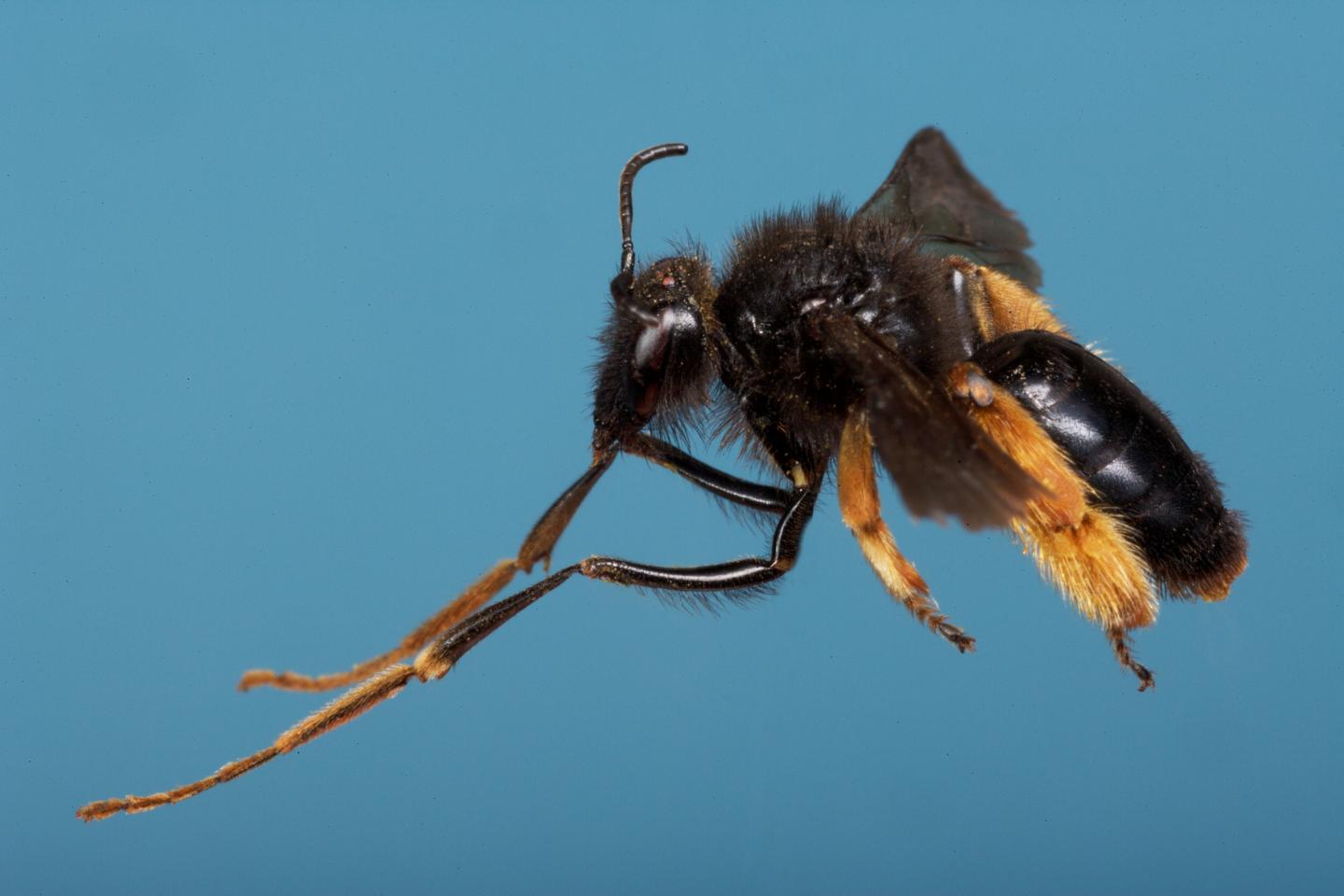
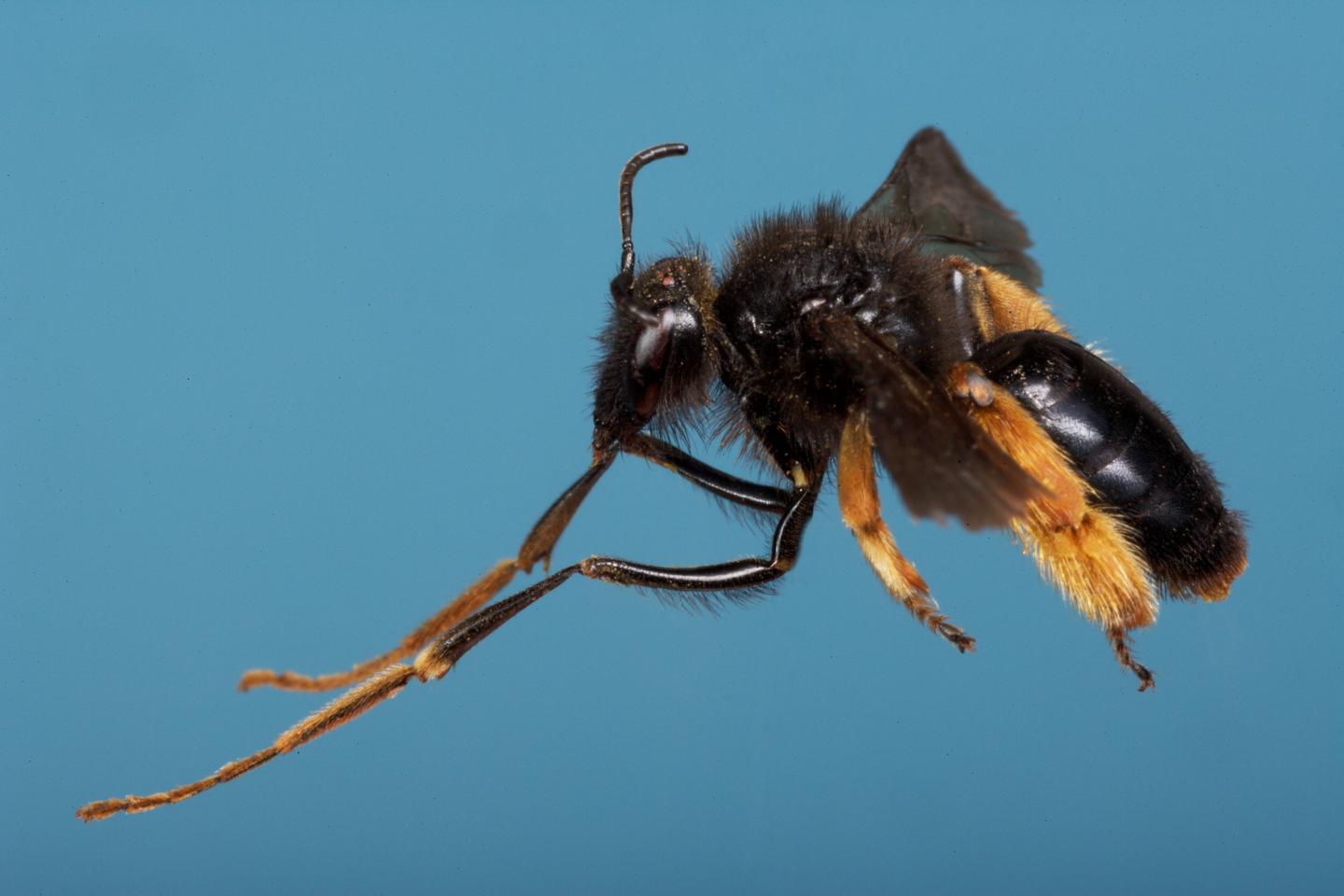
IMAGE

Credit: Anton Pauw

New research from Stellenbosch University (SU) in South Africa shows that, in an extraordinary case of adaptation, the disproportionately long front legs of South Africa's oil-collecting Rediviva bee species have evolved in response to the equally long oil-producing spurs of snapdragons.

"This is one of the few examples where a pollinator had to adapt to the flowers that it pollinates, rather than the other way round," explains Prof Anton Pauw, lead author of the article 'Long-legged bees make adaptive leaps: linking adaptation to coevolution in a plant-pollinator network', published in the Proceedings of the Royal Society B: Biology today (13 September 2017).

Prof Pauw, an evolutionary ecologist in the Department of Botany and Zoology at SU, says pollinators often hold the key to understanding the genesis of floral diversity. In other words, the flowers of plants have adapted to their pollinators in spectacular ways in order to be able to reproduce.

In this case, however, the little-known Rediviva bee species have developed front legs of varying lengths – from 6.9 to 23.4 mm long – in order to reach the oil produced deep at the back of the snapdragon's twin spurs. The length of these spurs also vary from species to species, with 70 species in the largest genus of oil-producing flowers (Diascia).

The bees' front legs are coated in a dense pile of velvety hairs that soak up the oil, which is then mixed with pollen to form a super-nutritious bread for the larvae in their underground nests. The oil is also used to line the walls of these underground nests.

Working in collaboration with researchers from Germany, the United Kingdom, Belgium and the United States of America, Pauw used DNA analysis to produce a family tree for 19 of the 26 Rediviva species: "We were able to show that very closely related bee species often differ dramatically in leg length and that this divergence could be explained by differences in the spur length of the flowers that they visit."

Documenting the network of interactions between the oil-collecting bees and the 96 plant species from which they gather oil, required many years of observation. Many of the oil-secreting plants flower only the first year after a fire.

Prof Pauw says the next step would be to do a phylogenetic analysis of snapdragons (Diascia), to test whether flower spur length and bee leg length evolved simultaneously as one would expect if bees and plants were coevolving: "In this scenario, plants and bees evolve together in a sort of evolutionary dance."

He says it is important, from an ecological perspective, to understand these interactions: "Oil-collecting bees are threatened by man's activities, in particular by urbanization. By understanding their role in generating and maintaining plant diversity, it might be possible to predict and ameliorate human impacts".

###

Co-authors on the article are Belinda Kahnt, Michael Kuhlmann, Denis Michez, Graham A. Montgomery, Elizabeth Murray and Bryan N. Danforth.

Media Contact

Anton Pauw
[email protected]
027-021-808-3314
@scienceSUN

http://www.sun.ac.za

Original Source

http://www.sun.ac.za/english/Lists/news/DispForm.aspx?ID=5133 http://dx.doi.org/10.1098/rspb.2017.1707


Share12Tweet8Share2ShareShareShare2

Related Posts

Florida Cane Toad: Complex Spread and Selective Evolution

Florida Cane Toad: Complex Spread and Selective Evolution

February 7, 2026
New Study Uncovers Mechanism Behind Burn Pit Particulate Matter–Induced Lung Inflammation

New Study Uncovers Mechanism Behind Burn Pit Particulate Matter–Induced Lung Inflammation

February 6, 2026

DeepBlastoid: Advancing Automated and Efficient Evaluation of Human Blastoids with Deep Learning

February 6, 2026

Navigating the Gut: The Role of Formic Acid in the Microbiome

February 6, 2026
Please login to join discussion

POPULAR NEWS

  • Robotic Ureteral Reconstruction: A Novel Approach

    Robotic Ureteral Reconstruction: A Novel Approach

    82 shares
    Share 33 Tweet 21
  • Digital Privacy: Health Data Control in Incarceration

    63 shares
    Share 25 Tweet 16
  • Study Reveals Lipid Accumulation in ME/CFS Cells

    57 shares
    Share 23 Tweet 14
  • Breakthrough in RNA Research Accelerates Medical Innovations Timeline

    53 shares
    Share 21 Tweet 13

About

We bring you the latest biotechnology news from best research centers and universities around the world. Check our website.

Follow us

Recent News

Phage-Antibiotic Combo Beats Resistant Peritoneal Infection

Boosting Remote Healthcare: Stepped-Wedge Trial Insights

Barriers and Boosters of Seniors’ Physical Activity in Karachi

Subscribe to Blog via Email

Enter your email address to subscribe to this blog and receive notifications of new posts by email.

Join 73 other subscribers
  • Contact Us

Bioengineer.org © Copyright 2023 All Rights Reserved.

Welcome Back!

Login to your account below

Forgotten Password?

Retrieve your password

Please enter your username or email address to reset your password.

Log In
No Result
View All Result
  • Homepages
    • Home Page 1
    • Home Page 2
  • News
  • National
  • Business
  • Health
  • Lifestyle
  • Science

Bioengineer.org © Copyright 2023 All Rights Reserved.