• HOME
  • NEWS
  • EXPLORE
    • CAREER
      • Companies
      • Jobs
    • EVENTS
    • iGEM
      • News
      • Team
    • PHOTOS
    • VIDEO
    • WIKI
  • BLOG
  • COMMUNITY
    • FACEBOOK
    • INSTAGRAM
    • TWITTER
Saturday, February 7, 2026
BIOENGINEER.ORG
No Result
View All Result
  • Login
  • HOME
  • NEWS
  • EXPLORE
    • CAREER
      • Companies
      • Jobs
        • Lecturer
        • PhD Studentship
        • Postdoc
        • Research Assistant
    • EVENTS
    • iGEM
      • News
      • Team
    • PHOTOS
    • VIDEO
    • WIKI
  • BLOG
  • COMMUNITY
    • FACEBOOK
    • INSTAGRAM
    • TWITTER
  • HOME
  • NEWS
  • EXPLORE
    • CAREER
      • Companies
      • Jobs
        • Lecturer
        • PhD Studentship
        • Postdoc
        • Research Assistant
    • EVENTS
    • iGEM
      • News
      • Team
    • PHOTOS
    • VIDEO
    • WIKI
  • BLOG
  • COMMUNITY
    • FACEBOOK
    • INSTAGRAM
    • TWITTER
No Result
View All Result
Bioengineer.org
No Result
View All Result
Home NEWS Science News Health

The ‘Star dust’ wasp is a new extinct species named after David Bowie’s alter ego

Bioengineer by Bioengineer
February 12, 2018
in Health
Reading Time: 2 mins read
0
Share on FacebookShare on TwitterShare on LinkedinShare on RedditShare on Telegram
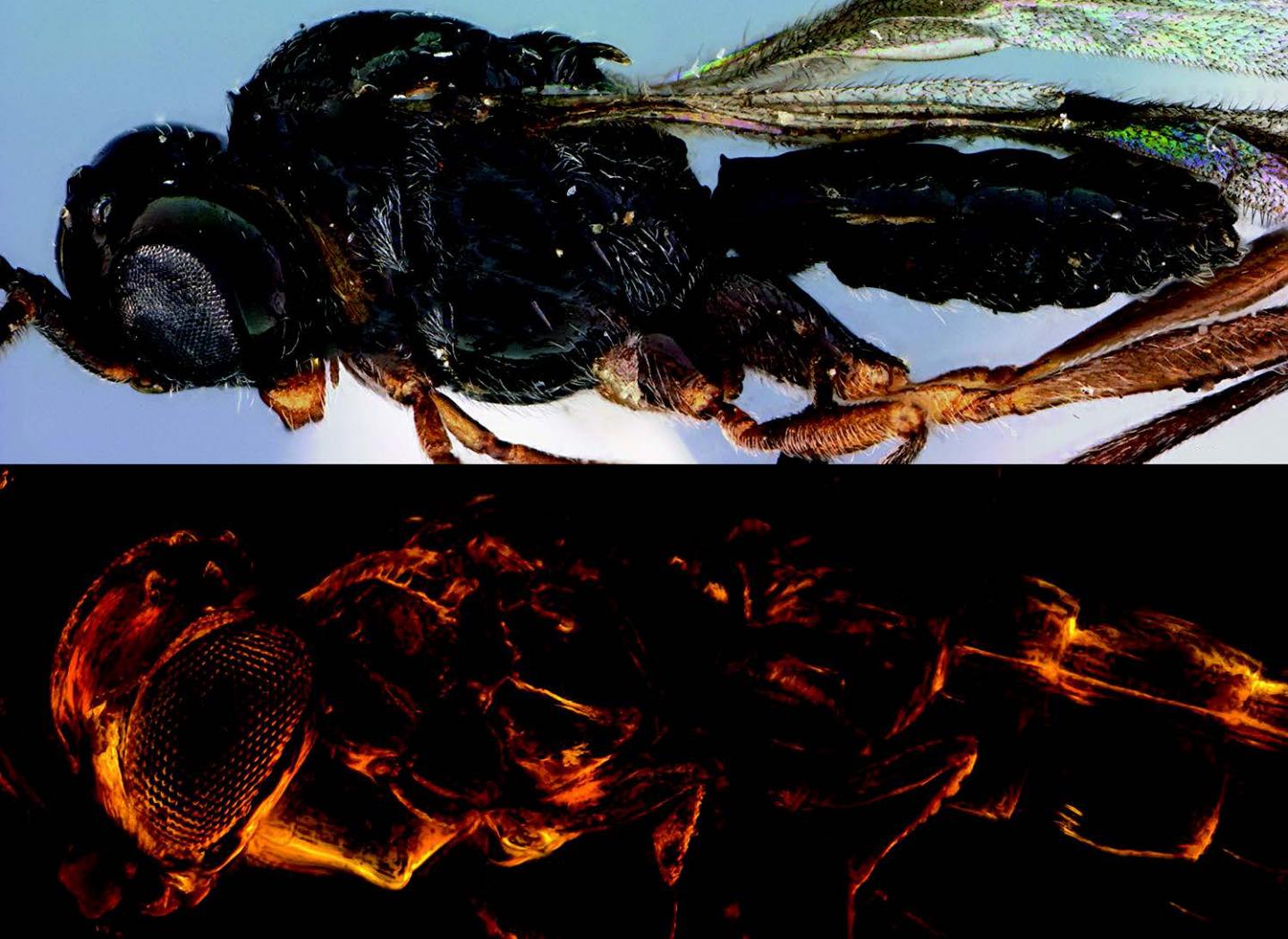
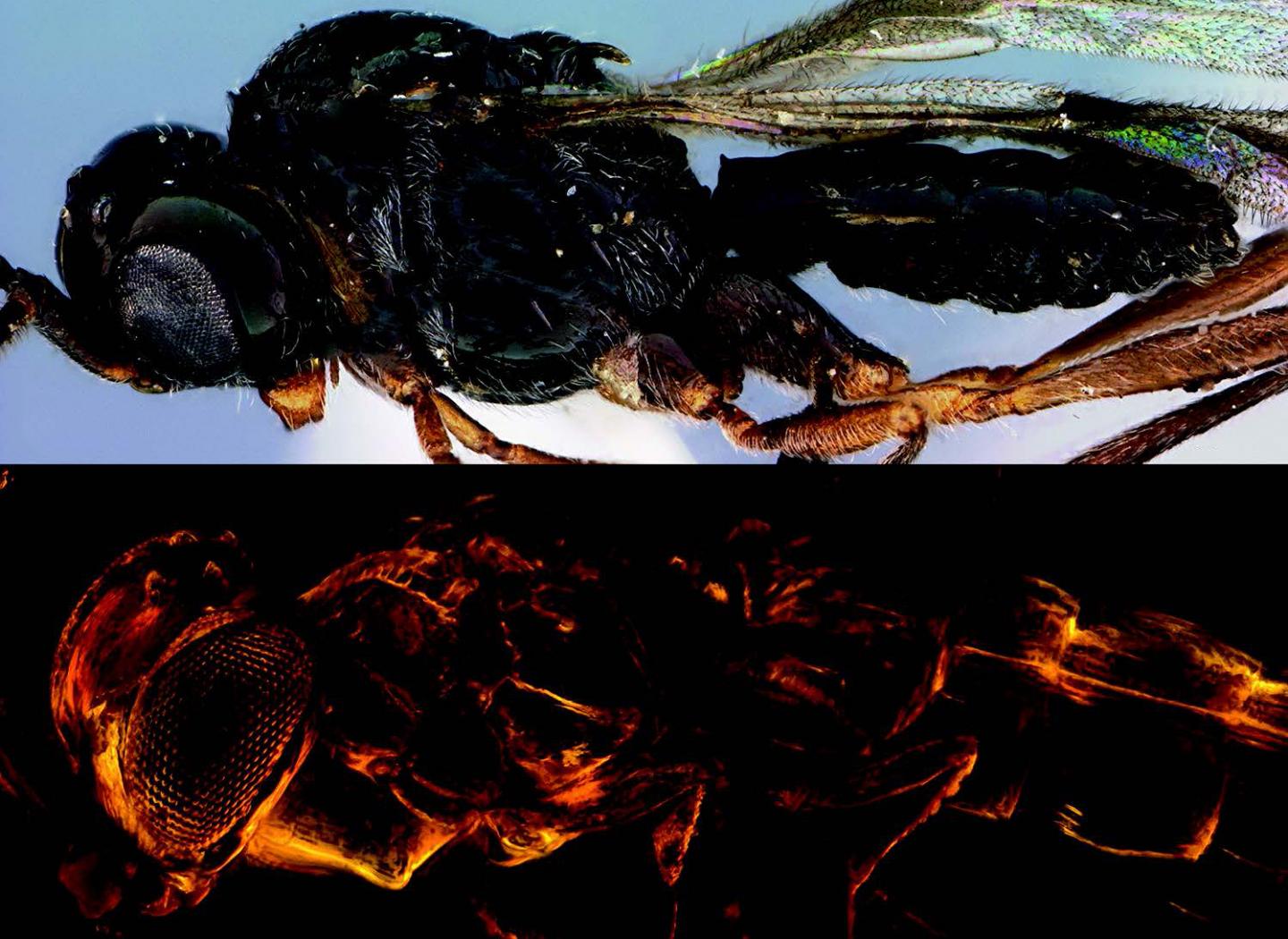
IMAGE

Credit: Dr. Elijah J. Talamas

During her study on fossil insects of the order Hymenoptera at China's Capitol Normal University, student Longfeng Li visited the Smithsonian National Museum of Natural History, Washington, carrying two unidentified wasp specimens that were exceptionally well-preserved in Burmese amber. This type of fossilized tree resin is known for the quality of the fossil specimens which can be preserved inside it. Being 100 million years old, they provide an incredible view into the past.

The subsequent analysis of the specimens revealed that both represent species new to science. Furthermore, one of the wasps showed such amazing similarities to a modern group of wasps that it was placed in a currently existing genus, Archaeoteleia which has long been considered as an ancient lineage. The species are described in a study published in the open access Journal of Hymenoptera Research.

However, Archaeoteleia has changed since the times when the ancient wasp got stuck on fresh tree resin. The authors note that "a novice might not recognize the characters that unite the fossil with extant species". For instance, the modern wasp species of the genus show visibly longer antennal segments and a different number of teeth on the mandible when compared to the fossil. In turn, the description of the new extinct species enhances the knowledge about living species by highlighting anatomical structures shared by all species within the genus.

This fossil wasp with living relatives received quite a curious name, Archaeoteleia astropulvis. The species name, astropulvis, translates from Latin to 'star dust'. The discoverers chose the name to refer to both "the ancient source of the atoms that form our planet and its inhabitants", as well as to commemorate the late David Bowie's alter ego – Ziggy Stardust.

Unlike the Star dust wasp, the second new species belongs to a genus (Proteroscelio) known exclusively from Cretaceous fossils. Likewise, it is a tiny insect, measuring less than 2mm in length. It also plays an important role in taxonomy by expanding the anatomical diversity known from this extinct genus.

The authors conclude that their discovery, especially the Star dust wasp and its placement in an extant genus, where it is the only fossil species, "exemplifies the importance of understanding the extant fauna of a taxon to interpret fossils".

"Such union of fossil and extant morphologies is especially illuminating and requires examination of both kinds of specimens," they add.

###

Original source:

Talamas EJ, Johnson NF, Buffington ML, Dong R (2016) Archaeoteleia Masner in the Cretaceous and a new species of Proteroscelio Brues (Hymenoptera, Platygastroidea). In: Talamas EJ, Buffington ML (Eds) Advances in the Systematics of Platygastroidea. Journal of Hymenoptera Research 56: 241-261. https://doi.org/10.3897/jhr.56.10388

Media Contact

Dr. Elijah J. Talamas
[email protected]
@Pensoft

http://www.pensoft.net

Share12Tweet8Share2ShareShareShare2

Related Posts

Barriers and Boosters of Seniors’ Physical Activity in Karachi

February 7, 2026

Evaluating Pediatric Emergency Care Quality in Ethiopia

February 7, 2026

TPMT Expression Predictions Linked to Azathioprine Side Effects

February 7, 2026

Improving Dementia Care with Enhanced Activity Kits

February 7, 2026
Please login to join discussion

POPULAR NEWS

  • Robotic Ureteral Reconstruction: A Novel Approach

    Robotic Ureteral Reconstruction: A Novel Approach

    82 shares
    Share 33 Tweet 21
  • Digital Privacy: Health Data Control in Incarceration

    63 shares
    Share 25 Tweet 16
  • Study Reveals Lipid Accumulation in ME/CFS Cells

    57 shares
    Share 23 Tweet 14
  • Breakthrough in RNA Research Accelerates Medical Innovations Timeline

    53 shares
    Share 21 Tweet 13

About

We bring you the latest biotechnology news from best research centers and universities around the world. Check our website.

Follow us

Recent News

Barriers and Boosters of Seniors’ Physical Activity in Karachi

Evaluating Pediatric Emergency Care Quality in Ethiopia

TPMT Expression Predictions Linked to Azathioprine Side Effects

Subscribe to Blog via Email

Enter your email address to subscribe to this blog and receive notifications of new posts by email.

Join 73 other subscribers
  • Contact Us

Bioengineer.org © Copyright 2023 All Rights Reserved.

Welcome Back!

Login to your account below

Forgotten Password?

Retrieve your password

Please enter your username or email address to reset your password.

Log In
No Result
View All Result
  • Homepages
    • Home Page 1
    • Home Page 2
  • News
  • National
  • Business
  • Health
  • Lifestyle
  • Science

Bioengineer.org © Copyright 2023 All Rights Reserved.