• HOME
  • NEWS
  • EXPLORE
    • CAREER
      • Companies
      • Jobs
    • EVENTS
    • iGEM
      • News
      • Team
    • PHOTOS
    • VIDEO
    • WIKI
  • BLOG
  • COMMUNITY
    • FACEBOOK
    • INSTAGRAM
    • TWITTER
Saturday, February 7, 2026
BIOENGINEER.ORG
No Result
View All Result
  • Login
  • HOME
  • NEWS
  • EXPLORE
    • CAREER
      • Companies
      • Jobs
        • Lecturer
        • PhD Studentship
        • Postdoc
        • Research Assistant
    • EVENTS
    • iGEM
      • News
      • Team
    • PHOTOS
    • VIDEO
    • WIKI
  • BLOG
  • COMMUNITY
    • FACEBOOK
    • INSTAGRAM
    • TWITTER
  • HOME
  • NEWS
  • EXPLORE
    • CAREER
      • Companies
      • Jobs
        • Lecturer
        • PhD Studentship
        • Postdoc
        • Research Assistant
    • EVENTS
    • iGEM
      • News
      • Team
    • PHOTOS
    • VIDEO
    • WIKI
  • BLOG
  • COMMUNITY
    • FACEBOOK
    • INSTAGRAM
    • TWITTER
No Result
View All Result
Bioengineer.org
No Result
View All Result
Home NEWS Science News Health

Understanding immune reaction to the hepatitis B virus

Bioengineer by Bioengineer
February 12, 2018
in Health
Reading Time: 2 mins read
0
Share on FacebookShare on TwitterShare on LinkedinShare on RedditShare on Telegram
IMAGE

Credit: Professor Hiroyuki Oshiumi

The innate immune system in mammals defends against infection from viruses and other microbial infections. Unfortunately, the human immune response to the hepatitis B virus (HBV) is not yet fully understood. Without vaccination, hepatitis B causes both acute and chronic infections of the liver, and can lead to the development of cirrhosis and liver cancer. To gain a deeper understanding of how the immune system reacts to HBV, researchers from several institutions in Japan and Malaysia led by Professor Hiroyuki Oshiumi of Kumamoto University performed in vivo experiments on the tree shrew, a small mammal that is also prone to HBV infection.

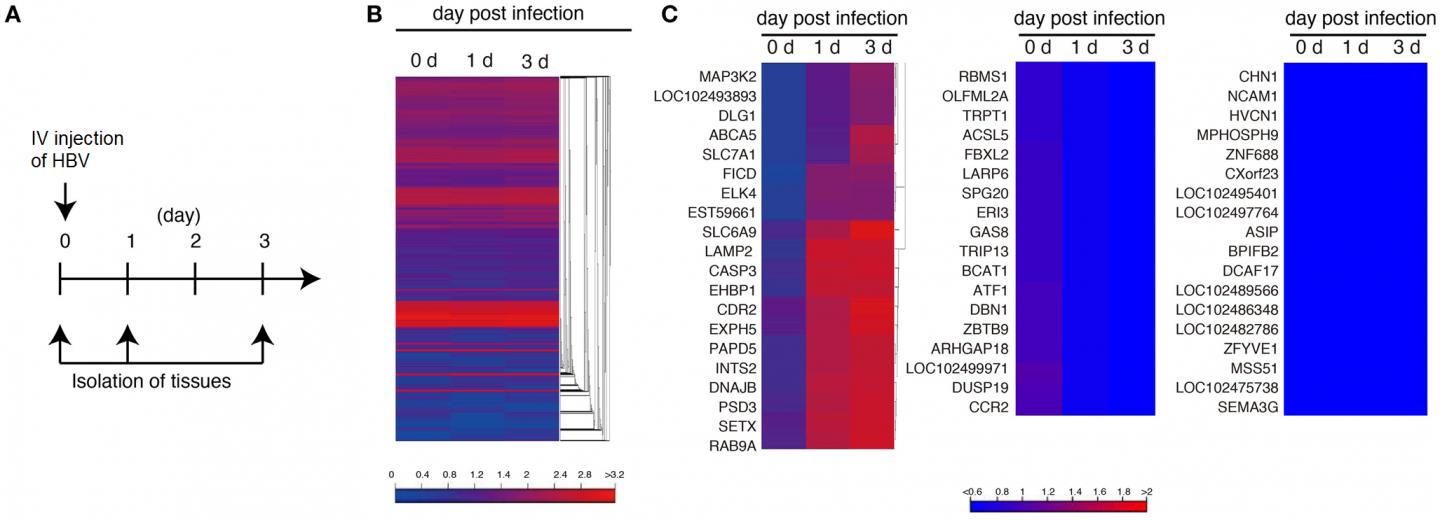
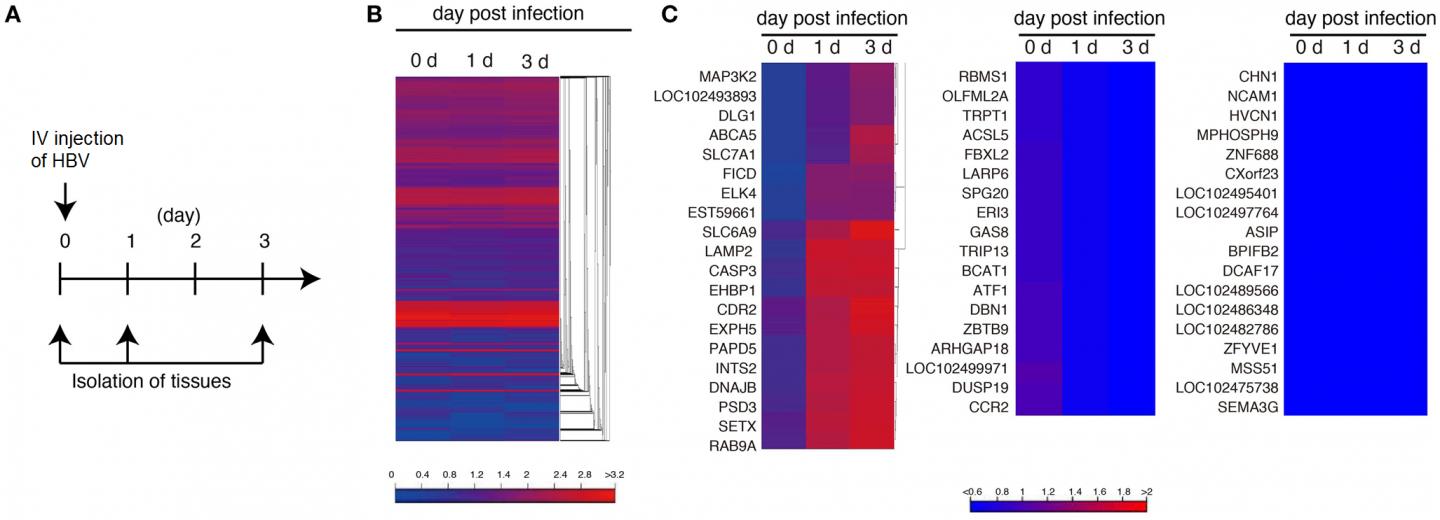
Infection was successful in just over half (55%) of the animals injected with the virus suggesting that a large portion of tree shrews have a natural immunity to HBV. The cytokine interferon-gamma (IFN-gamma), which plays an important role in the activation and modulation of the immune system and in impeding the ability of a virus to replicate, was found early (1 day after infection) in the infected population. This is thought to be caused by the activation of hepatic natural killer (NK) cells in reaction to HBV infection. Further analysis added to the growing body of evidence supporting claims of antiviral actions of IFN-gamma on HBV by confirming that IFN-gamma prompts hepatocyte expression of the DDX60 gene. Expression of this gene causes the degeneration of HBV RNA.

Importantly, the researchers also found that extracellular vesicles (EV) are integral to the innate immune response to HBV infection. "We showed that EVs coming from HBV-infected hepatocytes carry viral nucleic acids which, in turn, stimulates the innate immune response against HBV," said Professor Oshiumi. "However, we also found that HBV can escape the immune response by increasing the immunosuppressive microRNA levels in exosomes. The increase of these microRNAs eventually results in a reduction of NK cell activation which allows HBV to easily proliferate."

The results of this research opens a new window into the innate immune response to the hepatitis B virus and provides further insight into the molecular mechanisms involved. The full article can be found online in the open-access journal Frontiers in Immunology.

###

[Citation]

T. Kouwaki, Y. Fukushima, T. Daito, T. Sanada, N. Yamamoto, E. J. Mifsud, C. R. Leong, K. Tsukiyama-Kohara, M. Kohara, M. Matsumoto, T. Seya, and H. Oshiumi, "Extracellular vesicles including exosomes regulate innate immune responses to hepatitis B virus infection," Frontiers in Immunology, vol. 7, p. 335, Aug 2016.
DOI: 10.3389/fimmu.2016.00335

Media Contact

J. Sanderson, N. Fukuda
[email protected]

http://ewww.kumamoto-u.ac.jp/en/news/

Share13Tweet8Share2ShareShareShare2

Related Posts

TPMT Expression Predictions Linked to Azathioprine Side Effects

February 7, 2026

Improving Dementia Care with Enhanced Activity Kits

February 7, 2026

Decoding Prostate Cancer Origins via snFLARE-seq, mxFRIZNGRND

February 7, 2026

Digital Health Perspectives from Baltic Sea Experts

February 7, 2026
Please login to join discussion

POPULAR NEWS

  • Robotic Ureteral Reconstruction: A Novel Approach

    Robotic Ureteral Reconstruction: A Novel Approach

    82 shares
    Share 33 Tweet 21
  • Digital Privacy: Health Data Control in Incarceration

    63 shares
    Share 25 Tweet 16
  • Study Reveals Lipid Accumulation in ME/CFS Cells

    57 shares
    Share 23 Tweet 14
  • Breakthrough in RNA Research Accelerates Medical Innovations Timeline

    53 shares
    Share 21 Tweet 13

About

We bring you the latest biotechnology news from best research centers and universities around the world. Check our website.

Follow us

Recent News

TPMT Expression Predictions Linked to Azathioprine Side Effects

Improving Dementia Care with Enhanced Activity Kits

Decoding Prostate Cancer Origins via snFLARE-seq, mxFRIZNGRND

Subscribe to Blog via Email

Enter your email address to subscribe to this blog and receive notifications of new posts by email.

Join 73 other subscribers
  • Contact Us

Bioengineer.org © Copyright 2023 All Rights Reserved.

Welcome Back!

Login to your account below

Forgotten Password?

Retrieve your password

Please enter your username or email address to reset your password.

Log In
No Result
View All Result
  • Homepages
    • Home Page 1
    • Home Page 2
  • News
  • National
  • Business
  • Health
  • Lifestyle
  • Science

Bioengineer.org © Copyright 2023 All Rights Reserved.