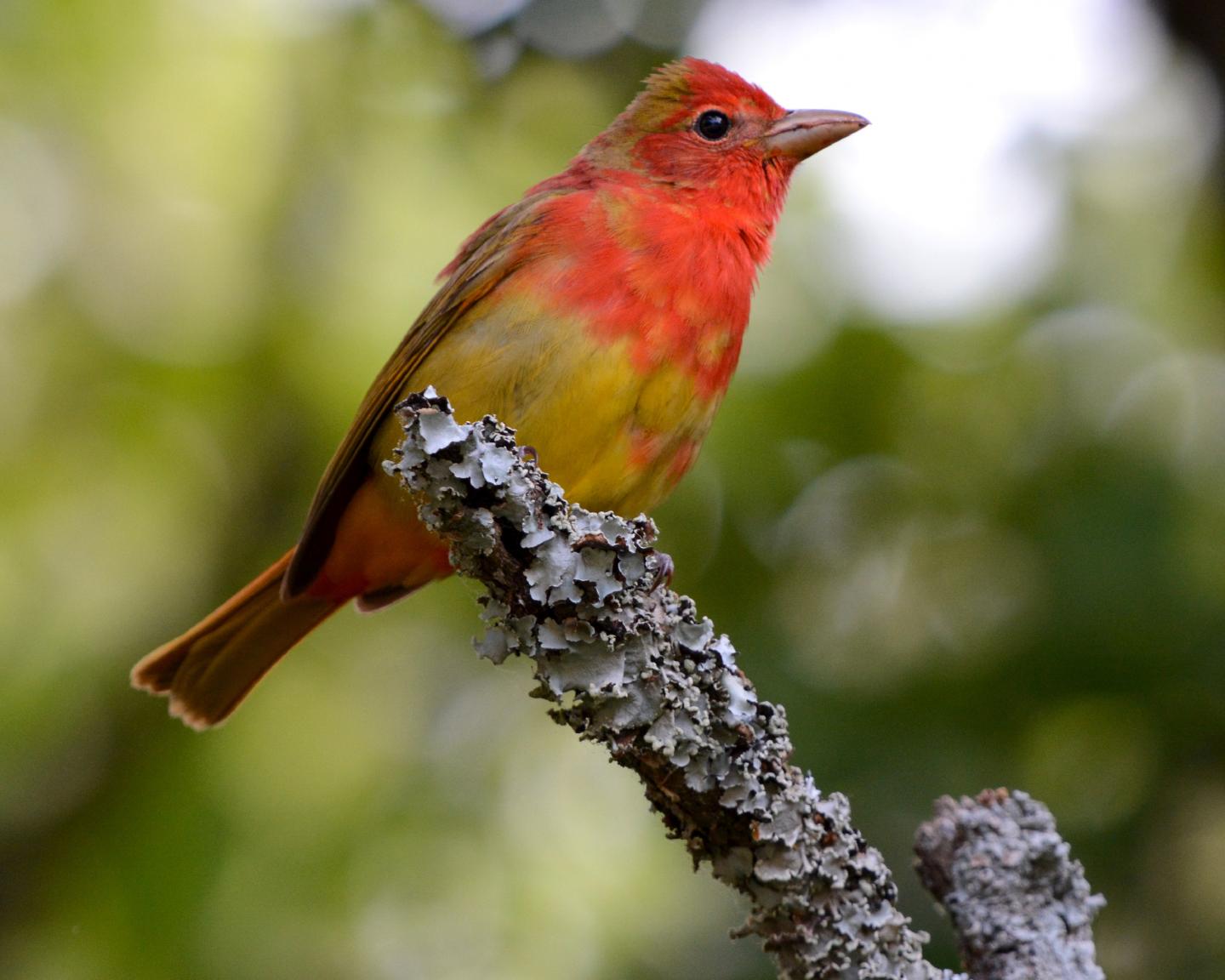
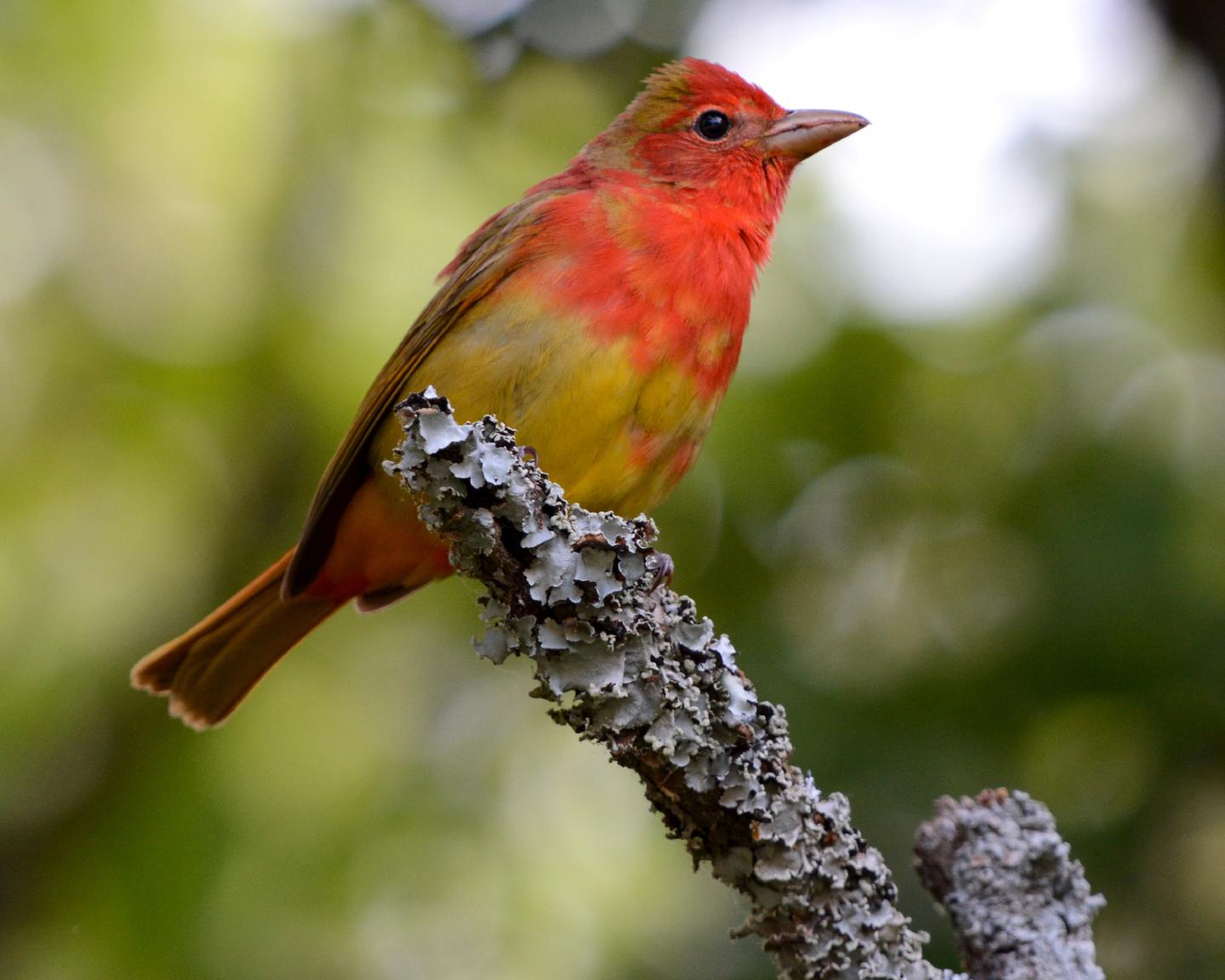
Credit: University of Oklahoma
A University of Oklahoma study demonstrates for the first time that remote sensing data from weather surveillance radar and on-the-ground data from the eBird citizen science database both yield robust indices of migration timing, also known as migration phenology. These indices can now be used to address the critical gap in our knowledge regarding the cues that migrants use for fine tuning their migration timing in response to climate.
"These scientists combined citizen science observations with data from radar, satellites and weather predictions to understand the cues birds use in their migrations across continents," said Liz Blood, program director in the National Science Foundation's Division of Environmental Biology, which funded the research through NSF's MacroSystems Biology Program. "The results show that birds migrate in time with warming temperatures in spring and with seasonal changes in the surface of the land, like the leafing-out of trees."
Seasonality of bird migration is shifting in response to climate change and, as a result, birds are arriving at their northern breeding grounds earlier in the spring. The OU study conducted in the eastern United States uses two novel data sources, weather surveillance radar and eBird citizen science data, to build indices of bird migration timing. These indices are innovative and reflect timing of migration of millions of birds of many species over large regions, expanding on more traditional measures of migration timing based on a few individuals of a particular species.
OU researchers compared these new measures of migration with environmental cues that are thought to be used by birds to adjust migration timing. They found that temperature is likely to be useful to migrants in making adjustments in timing in route, however, they dispute the notion that a commonly used index of vegetation greenness is a useful cue for migration timing in the study region.
OU Professors Jeffrey F. Kelly, Todd Fagin and Eli S. Bridge, Oklahoma Biological Survey, and graduate student Kyle G. Horton, Department of Biology, OU College of Arts and Sciences; in collaboration with OU Professors Phillip B. Chilson, School of Meteorology, and Kirsten de Beurs, Department of Geography and Environmental Sustainability, OU College of Atmospheric and Geographic Sciences; and Phillip M. Stepanian, formerly with the Advanced Radar Research Center, worked together to demonstrate how migration timing relates to land surface phenology and temperature changes.
"Understanding which environmental cues link migration timing to patterns of global change is key to forecasting future responses of migration systems," said Kelly. "Novel data sources from the weather surveillance radar network and the eBird citizen science database enable development of a migration phenology index that can be used to answer this question in future studies."
###
A paper describing this study, "Novel measures of continental-scale avian migration phenology related to proximate environmental cues," was published online Sept. 6 by Ecosphere at http://www.esajournals.org. Funding for this project was provided by the National Science Foundation grant EF-1340921 and by the National Institute for Food and Agriculture of the U.S. Department of Agriculture award 2013-67009-20369.
For more information about eBird, jointly coordinated by the Cornell Laboratory of Ornithology and the National Audubon Society, visit http://www.birds.cornell.edu/citscitoolkit/projects/clo/eBird/. Contact Jeffrey F. Kelly at [email protected] for more information about this project and other related OU
Media Contact
Jana Smith
[email protected]
405-325-1322
@ouresearch
http://www.ou.edu