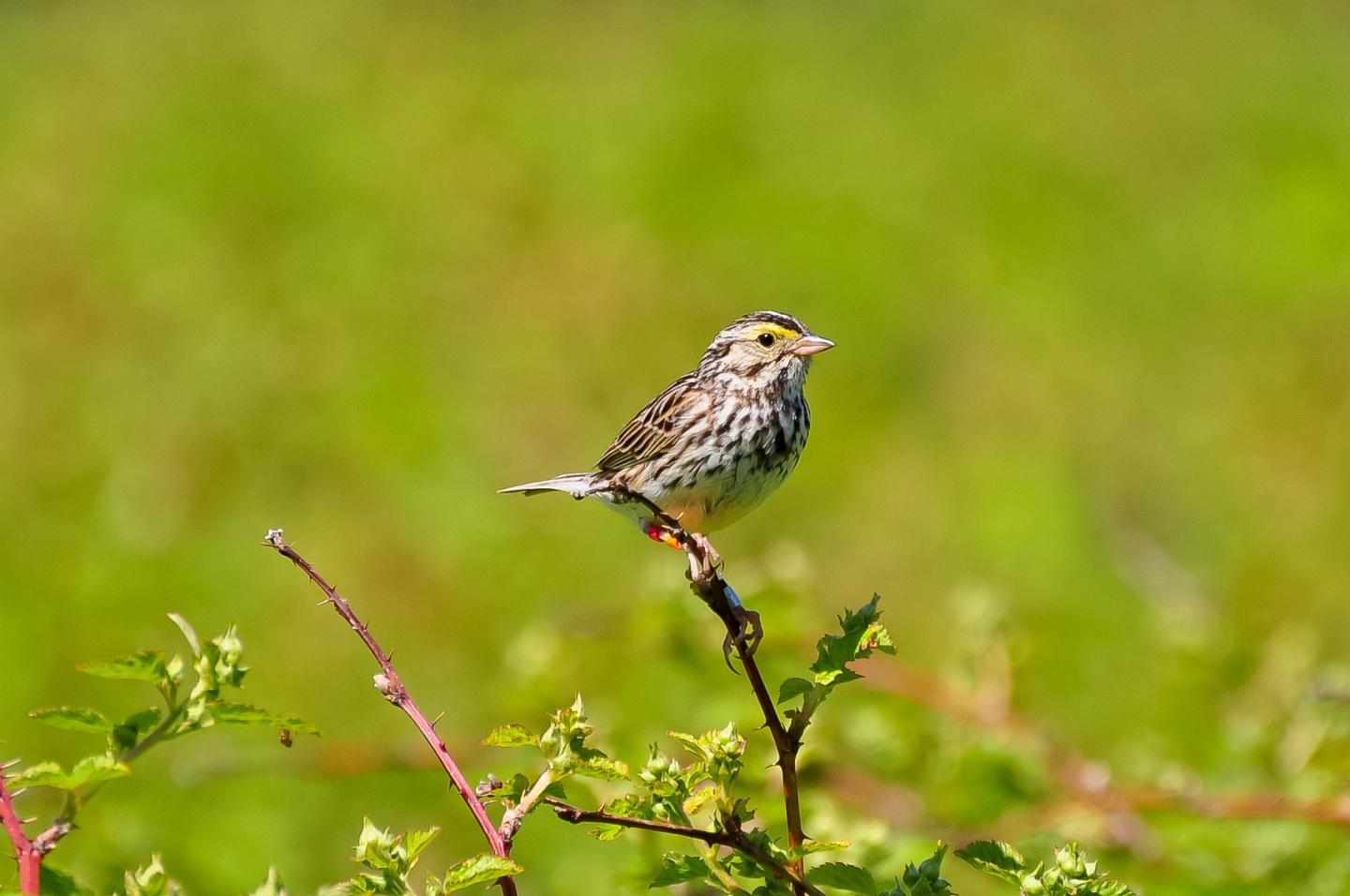
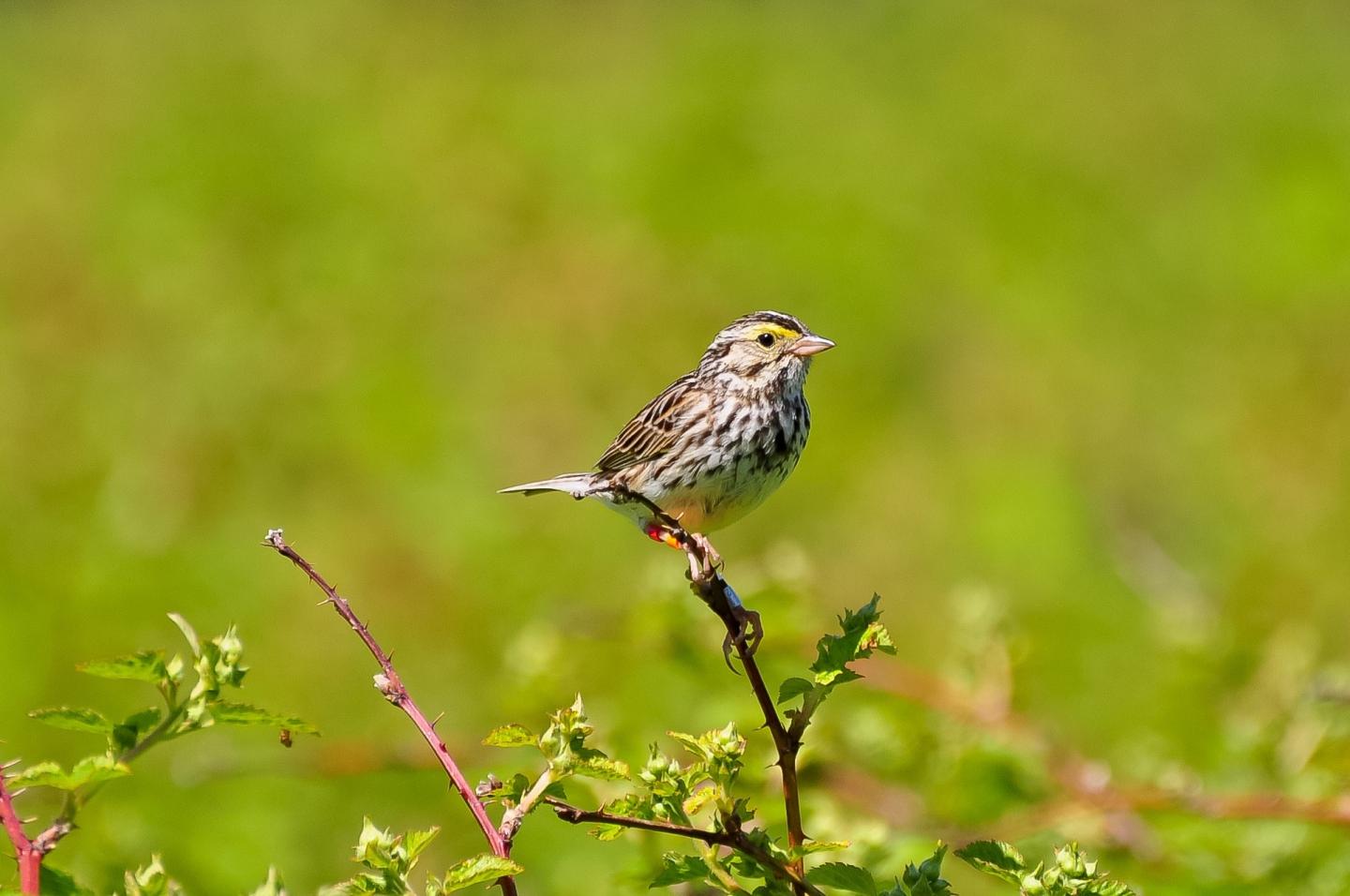
Credit: Stéphanie Doucet
For migratory birds, breeding grounds are where the action is. But a new study by University of Guelph biologists is among the first to suggest that the number of songbirds breeding during spring and summer depends mostly on what happens at their wintering grounds.
The pioneering study points to potential effects of climate change and may help conservation groups better protect migratory birds, including many species whose numbers have dropped in recent years, says Brad Woodworth, a PhD student in the Department of Integrative Biology and the study's lead author.
The paper appears today in Nature Communications. Co-authors are U of G professors Ryan Norris and Amy Newman, and researchers in Maine and Switzerland.
Most researchers spend more time studying birds during the summer breeding season, but this study looked at how conditions in summer and winter homes affected population numbers of savannah sparrows.
The Guelph team used tiny tracking devices called geolocators to follow individual birds – each weighing about as much as three loonies – during migration over thousands of kilometres to and from their wintering grounds in the southern United States.
The researchers also used data collected since the late 1980s by researchers studying the sparrows during summer breeding at the Bowdoin Scientific Station on Kent Island in New Brunswick's Bay of Fundy.
They found that wintering ground temperatures and population density at the breeding grounds are key factors affecting how many individuals return to breed on Kent Island each spring and summer.
That's important information for biologists hoping to understand why populations of certain migratory birds have fallen in recent years, said Norris.
"What's prevented us from learning has been lack of knowing where these birds go and what they do after leaving the breeding grounds," he said.
Acknowledging that breeding grounds are usually more interesting and accessible to most researchers, he said the breeding season offers only a snapshot of a creature's annual life cycle.
"Most birds are visitors to breeding grounds. They spend two to four months, they breed and they're out of there."
Not surprisingly, said Woodworth, warmer wintering grounds improve overall survival and encourage higher populations. But predictions of more frequent and severe weather caused by climate change suggest that any warming benefit may be outweighed by new threats.
"Even a harsh winter storm of a few days could put populations at jeopardy," he said.
Norris said conservation organizations looking to protect habitat, including buying land or pushing for protected status for various species, might need to focus more on wintering ground conditions. Grassland birds, for example, are increasingly threatened by more intensive farming in their winter homes.
"You can only really make effective decisions about where to put resources for conserving migratory animals if you know what's driving year-to-year fluctuations in their populations," said Norris, noting that the study offers a model for studying other migratory animals from caribou to whales.
"We need to know what's happening at both the breeding and non-breeding grounds. For many species like savannah sparrows, the non-breeding grounds might matter more."
###
Media Contact
Ryan Norris
[email protected]
@uofg
http://www.uoguelph.ca