Cetuximab, marketed as Erbitux®, is one of the key therapies for metastatic colorectal cancer. Yet the cancer still returns in some patients, shortening overall survival.
A study at The University of Texas MD Anderson Cancer Center may help explain why the body sometimes becomes resistant to this therapy. The results, published in the Nov. 16 online issue of the Journal of Clinical Investigation reveal new insight into how key proteins, known as epidermal growth factor receptors (EGFR), are regulated, leading to resistance.
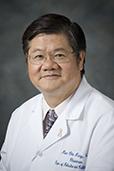
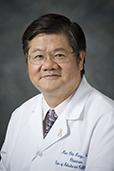
"Our study investigated the role of extracellular methylation in EGFR signaling, and unexpectedly discovered new information about how EGFR renders cancer cells resistant to cetuximab antibody therapy," said Mien Chie Hung, Ph.D., chair of Molecular and Cellular Oncology.
Methylation is a process by which proteins are chemically altered. EGFR, when expressed aberrantly, can lead to cellular changes including runaway cell growth, reduced cell death, tumor formation and metastasis. Hung's group found that expression of methylation-defective EGFR reduced tumor growth in mice.
"More importantly, we showed that increased methylation of EGFR resulted in resistance to cetuximab mediated cancer cell growth," said Hung. "This correlated with poorer clinical outcomes observed in colorectal cancer patients and higher recurrence rates following cetuximab treatment."
The study showed that EGFR methylation was mediated by PRMT1, a protein involved in a variety of genetic processes including gene transcription, DNA repair and signaling.
"EGFR methylation sustained signaling activity and cell proliferation even in the presence of cetuximab," said Hung. "This data suggests that this specific methylation plays an important role in regulating EGFR functionality and resistance to cetuximab treatment."
###
MD Anderson study participants included Hsin-Wei Liao, Ph.D., Jung-Mao Hsu, Ph.D., Weiya Xia, M.D., Ying-Nai Wang, Ph.D., Chao-Kai Chou, Ph.D., Pei-Hsaing Tsou, Ph.D., Hirohito Yamaguchi, D.V.M., Ph.D., Yueh-Fu Feng, M.D., and Heng-Huan Lee, Ph.D., all of the Department of Molecular and Cellular Oncology.
Other participating institutions included The University of Texas Graduate School of Biomedical Sciences, Houston; China Medical University, Taichung, Taiwan; Asia University, Taichung, Taiwan; King Abdulla University of Science and Technology, Thuwal, Saudi Arabia; Chang Gung Memorial Hospital at Linkou, Taipei, Taiwan; Taipei Veterans General Hospital; National Yang-Ming University, Taipei; University of Pittsburgh Medical Center; Academia Sinica, Taipai; University of California, San Francisco; and the University of Leeds, Leeds, U.K.
The study was funded by the National Institutes of Health (CA109311, CA099031, CA016672, CA16672 and P50CA097190), the Cancer Prevention and Research Institute of Texas (RP150245); The University of Texas MD Anderson-China Medical University and Hospital Sister Institution Fund; Ministry of Science and Technology, International Research-Intensive Centers of Excellence in Taiwan; China Medical University Hospital Cancer Research Center of Excellence (MOHW104-TDU-B-212-124-002); the Center for Biological Pathways; the American Cancer Society; and the King Abdullah University of Science and Technology.