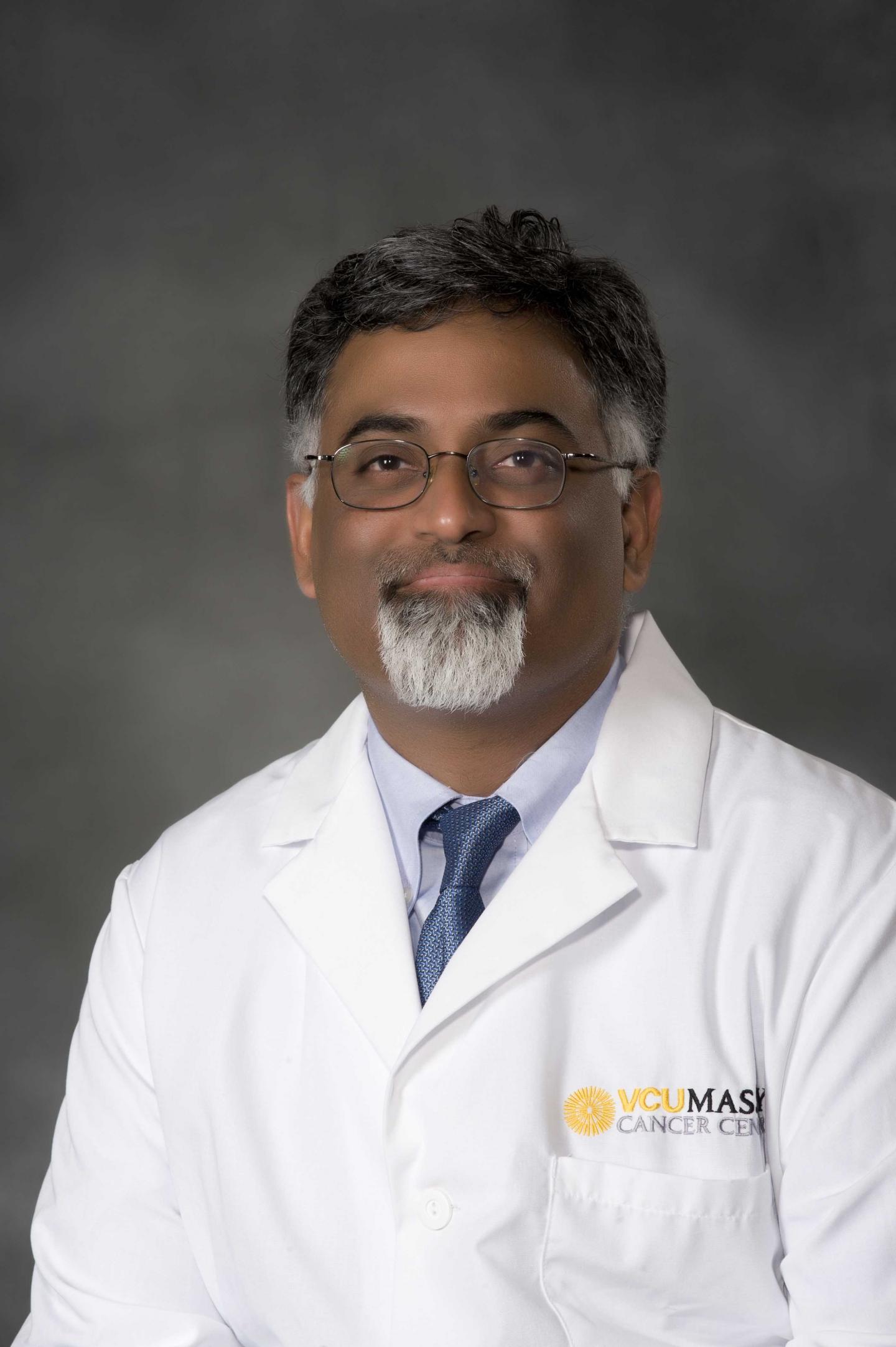
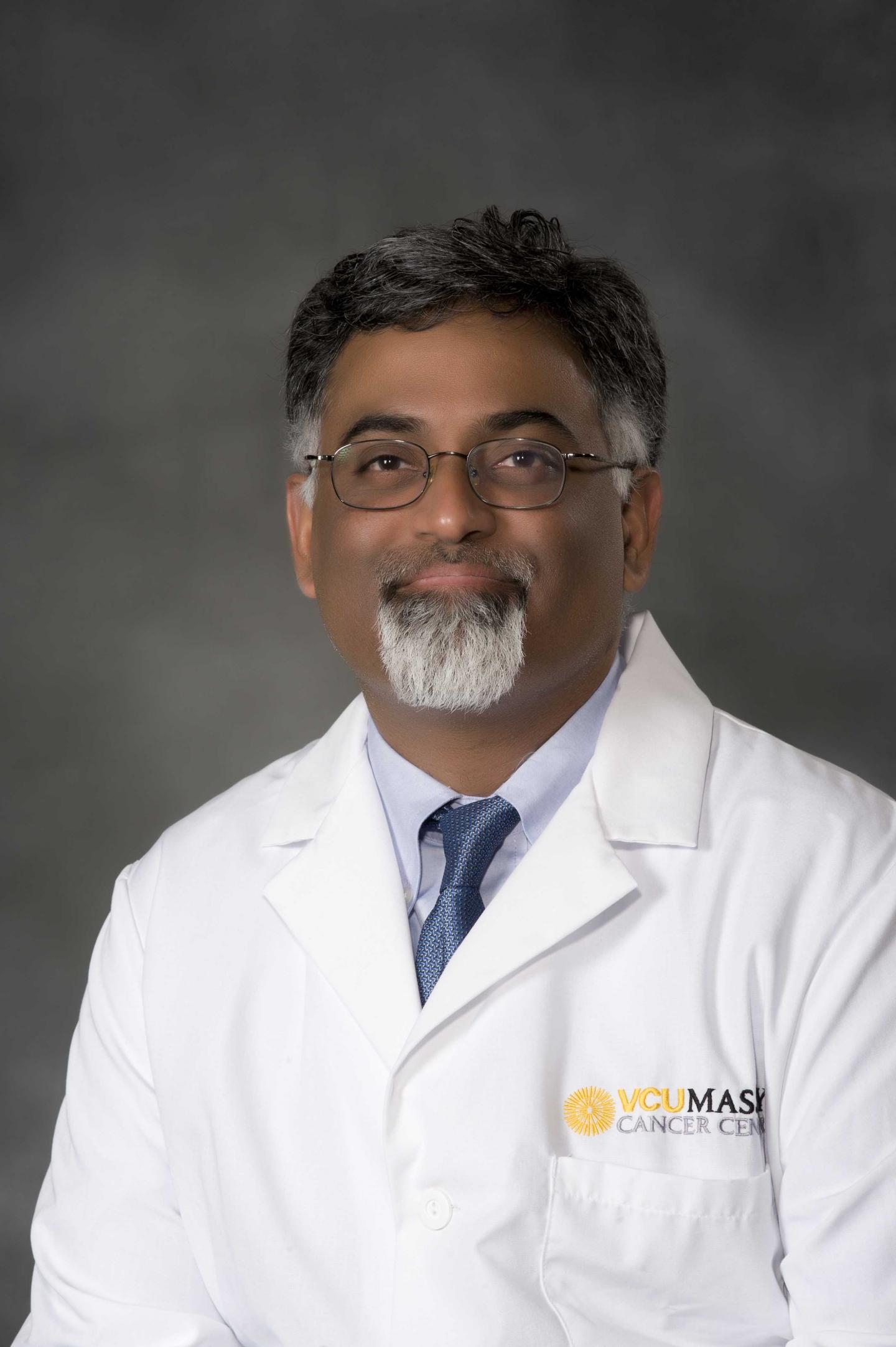
Credit: VCU Massey Cancer Center
Most healthy people barely notice infection with the human cytomegalovirus (hCMV), a form of the herpes virus that has evolved with humans over thousands of years and usually lays dormant in the body after initial infection. Now, in a study recently published in the journal PLOS ONE, a team of scientists from VCU Massey Cancer Center have shown a genetic relationship between the reactivation of hCMV and the onset of graft-versus-host disease (GVHD), a potentially deadly condition in which the immune system attacks healthy tissue following a bone marrow or stem cell transplant.
This new finding is the latest in a line of research led by physician-scientist, Amir Toor, M.D. Toor and his colleagues have been working to create computer models that simulate immune system recovery following stem cell transplantation in hopes of reducing complications such as GVHD and making transplantation an option for more patients. While the relationship between GVHD and hCMV has been described in medical literature since the 1980s, the connection was not well understood until one of Toor's mentees, Charles Hall, M.S., showed genetic similarities between the virus and tissue expressing GVHD.
"Until now, physicians have taken a 'wait and see' approach to antiviral therapies following transplantation," says Toor, a hematologist-oncologist in the Bone Marrow Transplant Program and member of the Developmental Therapeutics research program at VCU Massey Cancer Center as well as professor in the Division of Hematology, Oncology and Palliative Care at the VCU School of Medicine. "But, based on our data, we believe there is a case for early intervention with personalized antiviral treatments following stem cell transplantation in order to suppress hCMV reactivation."
Toor and his team sequenced the DNA of 77 stem cell donors and their recipients. They found a significant number of patients (18) experienced hCMV reactivation and GVHD, and a majority (13) of those patients experienced hCMV reactivation prior to GVHD onset. Using the information they uncovered through DNA sequencing along with data from a new database established by the Center for the Study of Biological Complexity at VCU called Cross Reactive Open Source Sequence Database, developed by Charles Hall, M.S., and Vishal Koparde, Ph.D., the team uncovered a novel connection between the virus and GVHD.
The scientists found similarities in HLA-bound peptide sequences between human and hCMV genomes. The HLA (human leukocyte antigen) is a system of genes responsible for regulating immune responses, and peptides are short chains of amino acids that play key roles in regulating the activities of other molecules. It turns out that hCMV peptides are very similar to peptides expressed in GVHD-affected tissue.
"We developed a computer model that shows how the immune system can react to hCMV peptides to trigger a graft-versus-host response," explained Toor. "By sequencing the DNA of stem cell donors and recipients, we believe we can use computer modeling to further identify patients at risk and better personalize post-transplant care to decrease the potential for graft-versus-host disease."
Toor hopes to further explore the relationship between hCMV and GVHD. His team is currently working to secure funding to apply their model to larger patient data sets.
Toor collaborated on this research with Michael C. Neale, Ph.D., professor in the Department of Psychiatry at the VCU School of Medicine; Gregory A. Buck, Ph.D., a Massey research member and director of the Center for the Study of Biological Complexity at VCU Life Sciences; Myrna G. Serrano, Ph.D., assistant professor at the VCU Center for the Study of Biological Complexity and director of the VCU Nucleic Acids Research Facilities; Daniel Nixon, D.O., director of the VCU HIV/AIDS Center, medical director of the VCU HIV Clinic and associate professor in the Department of Internal Medicine at the VCU School of Medicine; Max Jameson-Lee, M.D., resident in the Department of Internal Medicine at the VCU School of Medicine; David J. Kobulnicky, M.D., fellow in the Division of Hematology, Oncology and Palliative Care in the Department of Internal Medicine at the VCU School of Medicine; Charles E. Hall, M.S., clinical research associate in the Bone Marrow Transplant Program at VCU Massey Cancer Center; Allison F. Scalora, M.S., service line business analyst in the Cancer Informatics Core at VCU Massey Cancer Center; Catherine H. Roberts, Ph.D., clinical research manager in the Bone Marrow Transplant Program at VCU Massey Cancer Center; Vishal Koparde, Ph.D., previously a bioinformatics engineer and lab instructor at the VCU Center for the Study of Biological Complexity; and Abdelrhman Elnasseh, undergraduate student at VCU.
###
This study was supported by Virginia's Commonwealth Health Research Board Award #236-11-13, a VCU Massey Cancer Center pilot project grant and, in part, by Massey's NIH-NCI Cancer Center Support Grant P30 CA016059.
A link to the full manuscript of this study is available online at: http://journals.plos.org/plosone/article?id=10.1371/journal.pone.0178763
Media Contact
John Wallace
[email protected]
804-628-1550
@vcunews
http://www.vcu.edu