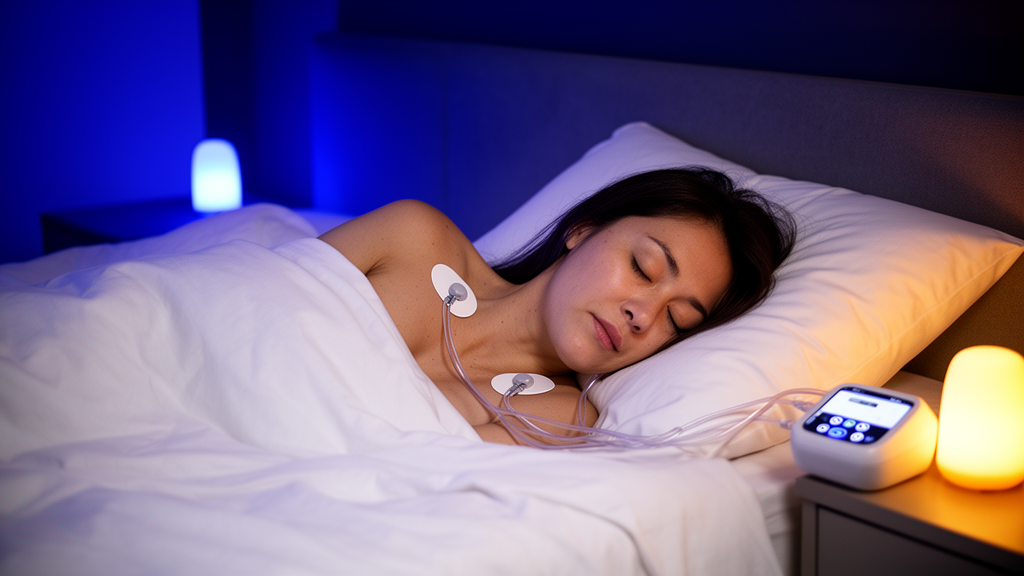
A randomized, double-blind, sham-controlled trial published in BMC Pulmonary Medicine has demonstrated that two weeks of microcurrent electrical nerve stimulation, or MENS, produces measurable short-term changes in sleep architecture and nocturnal autonomic activity among individuals diagnosed with obstructive sleep apnea. Specifically, investigators observed a statistically significant between-group difference in the alteration of deep sleep when comparing participants who received active electrical stimulation to those assigned to sham intervention.
The double-blind trial was specifically designed to evaluate whether short-term microcurrent electrical nerve stimulation could alter sleep-related outcomes, objective biochemical markers, and heart rate variability in individuals affected by obstructive sleep apnea.
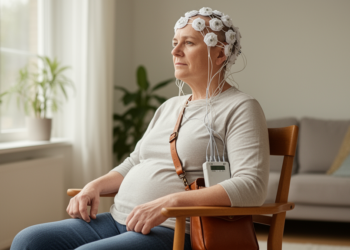
The experimental protocol randomized participants into two distinct study arms, where individuals received either active microcurrent electrical nerve stimulation or sham stimulation over a continuous two-week intervention window. To capture relevant physiologic parameters under normal living conditions, investigators conducted home-based sleep monitoring and biochemical assessments both prior to the start of stimulation and immediately following the completion of the two-week regimen.
A focused analysis of nocturnal heart rate variability demonstrated distinct shifts in cardiac autonomic regulation during sleep. Participants in the active stimulation group exhibited an attenuation of the early-sleep rise in the root mean square of successive differences, or RMSSD, as well as the standard deviation of normal-to-normal intervals, or SDNN, resulting in statistically significant between-group contrasts when compared with the sham cohort.
While autonomic and deep sleep measures exhibited measurable modifications, circulating biochemical indicators showed no divergent shifts between the study arms. Subsequent between-group analyses revealed that differences in low-density lipoprotein cholesterol, or LDL-C, and glycated hemoglobin, or HbA1c, were not statistically significant after two weeks of active microcurrent electrical nerve stimulation compared to sham therapy.
The researchers noted that these findings provide preliminary evidence of short-term sleep-related and heart rate variability changes associated with microcurrent electrical nerve stimulation in obstructive sleep apnea.
Subject of Research: Microcurrent electrical nerve stimulation effects in obstructive sleep apnea
Article Title: Potential short-term effects of microcurrent electrical nerve stimulation on sleep and heart rate variability in obstructive sleep apnea: a randomized, double-blind, sham-controlled study
Article References: Liu, W.-T., Liu, I.-J., Chien, R., Chen, Y.-Y., Chen, Y.-L., Majumdar, A., Kang, J.-H., Lee, K.-Y., Cheng, W.-H., Lin, Y.-C., Kuan, Y.-C., Lee, H.-C., & Tsai, C.-Y. (2026). Potential short-term effects of microcurrent electrical nerve stimulation on sleep and heart rate variability in obstructive sleep apnea: a randomized, double-blind, sham-controlled study. BMC Pulmonary Medicine. https://doi.org/10.1186/s12890-026-05043-y
Image Credits: AI Generated
DOI: 10.1186/s12890-026-05043-y
Keywords: obstructive sleep apnea, microcurrent electrical nerve stimulation, heart rate variability, deep sleep, RMSSD, SDNN, autonomic imbalance, metabolic dysregulation, low-density lipoprotein cholesterol, glycated hemoglobin, sham-controlled trial, randomized controlled trial, home sleep monitoring, polysomnography, sleep medicine, nocturnal HRV, cardiac autonomic regulation, biochemical assessments
News Source: Ophelia Keating. (November 26, 2026). Microcurrent Stimulation Alters Deep Sleep and Autonomic Patterns in Sleep Apnea. Scienmag.