• HOME
  • NEWS
  • EXPLORE
    • CAREER
      • Companies
      • Jobs
    • EVENTS
    • iGEM
      • News
      • Team
    • PHOTOS
    • VIDEO
    • WIKI
  • BLOG
  • COMMUNITY
    • FACEBOOK
    • INSTAGRAM
    • TWITTER
Wednesday, November 25, 2026
BIOENGINEER.ORG
No Result
View All Result
  • Login
  • HOME
  • NEWS
  • EXPLORE
    • CAREER
      • Companies
      • Jobs
        • Lecturer
        • PhD Studentship
        • Postdoc
        • Research Assistant
    • EVENTS
    • iGEM
      • News
      • Team
    • PHOTOS
    • VIDEO
    • WIKI
  • BLOG
  • COMMUNITY
    • FACEBOOK
    • INSTAGRAM
    • TWITTER
No Result
View All Result
Bioengineer.org
No Result
View All Result
Home NEWS Science News Biology

Nitrogen Mustard Triggers Stem Cell Dysfunction by Covalently Inhibiting TrxR1

by
November 25, 2026
in Biology
Reading Time: 2 mins read
0
Nitrogen Mustard Triggers Stem Cell Dysfunction by Covalently Inhibiting TrxR1

Nitrogen Mustard Triggers Stem Cell Dysfunction by Covalently Inhibiting TrxR1

Share on FacebookShare on TwitterShare on LinkedinShare on RedditShare on Telegram

Using activity-based protein profiling, researchers have identified that nitrogen mustard directly and covalently binds to the selenocysteine residue U498 of thioredoxin reductase 1, effectively inhibiting its enzymatic activity. This key binding event illuminates the precise molecular cascade responsible for mesenchymal stem cell dysfunction, resolving a long-standing question regarding how the dual-use chemotherapy compound and potent chemical warfare agent impairs regenerative processes.

Nitrogen mustard, also referred to as HN2, functions historically as a conventional chemotherapy drug and as a dangerous chemical warfare vesicant. Although researchers recognized that mesenchymal stem cell depletion and functional impairment represent central drivers of defective tissue regeneration after nitrogen mustard exposure, the direct molecular targets and mechanistic pathways inside these regenerative cells had remained completely undefined prior to this activity-based protein profiling investigation.

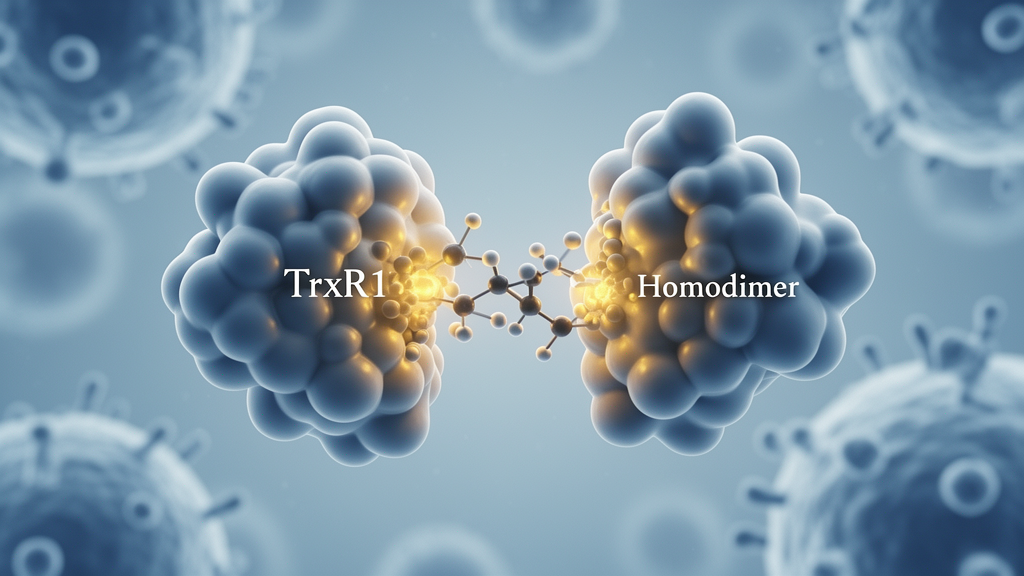
The research team found that covalent binding of nitrogen mustard to thioredoxin reductase 1, or TrxR1, does more than inhibit enzyme function. This binding substantially enhances the physical interaction between TrxR1 and Ras-GTPase-activating protein SH3 domain-binding protein 1, also designated G3BP1. Because G3BP1 acts as a primary stress granule nucleator, this heightened molecular association drives aberrant stress granule persistence throughout the mesenchymal stem cells.

The persistence of these stress granules triggers a devastating downstream cellular cascade within mesenchymal stem cells. The authors reported that this pathway disrupts essential redox homeostasis, leading directly to mitochondrial dysfunction and severe depletion of cellular ATP. Concurrently, the cascade induces cytoskeletal contraction, an internal physical restructuring that ultimately culminates in significantly impaired mesenchymal stem cell migration.

Collectively, these experimental findings reveal a distinct TrxR1-G3BP1 signaling axis that mechanistically unifies alkylation damage, redox collapse, and aberrant phase separation into a coherent pathogenic sequence. By establishing the exact molecular sequence through which nitrogen mustard causes stem cell dysfunction, the investigation pinpoints a promising druggable therapeutic target for mitigating vesicant injury and supporting tissue recovery.

Subject of Research: Molecular mechanism of nitrogen mustard toxicity in mesenchymal stem cells

Article Title: Covalent TrxR1 inhibition drives stress granule-dependent mesenchymal stem cell dysfunction induced by nitrogen mustard

Article References: Pei, Z., Zhao, X., Liu, J., Gong, Y., Nie, W., Li, J., Zhang, S., Cen, J., Sun, M., & Meng, W.-Q. (2026). Covalent TrxR1 inhibition drives stress granule-dependent mesenchymal stem cell dysfunction induced by nitrogen mustard. Cell Biology and Toxicology. https://doi.org/10.1007/s10565-026-10346-1

Image Credits: AI Generated

DOI: 10.1007/s10565-026-10346-1

Keywords: nitrogen mustard, HN2, thioredoxin reductase 1, TrxR1, mesenchymal stem cells, stress granules, G3BP1, activity-based protein profiling, selenocysteine U498, mitochondrial dysfunction, ATP depletion, cytoskeletal contraction, cell migration, redox homeostasis, alkylation damage, vesicant injury, phase separation

News Source: Drew Townsend. (November 25, 2026). Nitrogen Mustard Triggers Stem Cell Dysfunction by Covalently Inhibiting TrxR1. Scienmag.


Tags: Activity-based protein profilingalkylation damageATP depletioncell migrationcytoskeletal contractionG3BP1HN2mesenchymal stem cellsMitochondrial dysfunctionnitrogen mustardphase separationredox homeostasisselenocysteine U498stress granulesthioredoxin reductase 1TrxR1vesicant injury
Share12Tweet7Share2ShareShareShare1

Related Posts

Root Tuberization in Commelinaceae Reveals Four Distinct Vascular Anatomical Patterns

Root Tuberization in Commelinaceae Reveals Four Distinct Vascular Anatomical Patterns

November 25, 2026
Genomic Sequencing Uncovers Long-Term Decline in China's Endangered Karst Hickory

Genomic Sequencing Uncovers Long-Term Decline in China’s Endangered Karst Hickory

November 25, 2026

Neurotransmitters Alter Fatty Acid Profiles and Photosynthetic Pigments in Green Microalgae

November 25, 2026

Direct Deacetylation and Purification Yield High-Purity Chitosan from Aspergillus niger

November 25, 2026

POPULAR NEWS

  • Pull-Through Liposuction Cut Gynecomastia Complications Compared to Arthroscopic Shaver Excision

    Pull-Through Liposuction Cut Gynecomastia Complications Compared to Arthroscopic Shaver Excision

    29 shares
    Share 12 Tweet 7
  • Oesophagectomy Patient Symptoms Divide into Distinct Psychosocial and Somatic Recovery Networks

    29 shares
    Share 12 Tweet 7
  • European Blue Bioeconomy Practitioners Prioritize Food While Sidelining Cultural Ecosystem Services

    29 shares
    Share 12 Tweet 7
  • Wilms Tumor Protein 1 Promotes Visceral Beige Fat Formation in Mice

    29 shares
    Share 12 Tweet 7

About

We bring you the latest biotechnology news from best research centers and universities around the world. Check our website.

Follow us

Recent News

Root Tuberization in Commelinaceae Reveals Four Distinct Vascular Anatomical Patterns

Autopsy Analysis Reveals Fatal Pulmonary Thrombi Develop Across Multiple Distinct Stages

Genomic Sequencing Uncovers Long-Term Decline in China’s Endangered Karst Hickory

Subscribe to Blog via Email

Enter your email address to subscribe to this blog and receive notifications of new posts by email.

Join 89 other subscribers
  • Contact Us

Bioengineer.org © Copyright 2023 All Rights Reserved.

Welcome Back!

Login to your account below

Forgotten Password?

Retrieve your password

Please enter your username or email address to reset your password.

Log In
No Result
View All Result
  • Homepages
    • Home Page 1
    • Home Page 2
  • News
  • National
  • Business
  • Health
  • Lifestyle
  • Science

Bioengineer.org © Copyright 2023 All Rights Reserved.