A comprehensive molecular investigation combining bulk whole transcriptome sequencing with high-resolution in situ spatial transcriptomics has mapped distinct driver mutations, signaling pathways, and microenvironmental landscapes distinguishing the two histological subtypes of craniopharyngioma. By integrating whole transcriptome RNA sequencing with subcellular spatial transcriptomics, the research team established high-resolution molecular profiles that clarify tumor pathogenesis and identify promising diagnostic markers and therapeutic avenues.
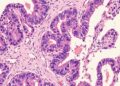
The investigation delineated distinct biological features of adamantinomatous craniopharyngioma and papillary craniopharyngioma, which exhibit divergent clinical, pathological, and genomic characteristics. Adamantinomatous craniopharyngioma demonstrates a bimodal age distribution, occurring in pediatric patients as well as older adults aged forty to sixty years. Histologically, adamantinomatous tumors present as mixed solid and cystic epithelial lesions defined by distinctive microscopic features, including peripheral palisading epithelium, stellate reticulum, wet keratin nodules, ghost cells, calcifications, and brain parenchyma invasion. In contrast, papillary craniopharyngioma occurs almost exclusively in adults and displays a well-differentiated papillary architecture supported by fibrovascular cores covered with mature squamous epithelium. Papillary lesions lack wet keratin and calcifications and are primarily driven by somatic BRAF p.V600E mutations activating the mitogen-activated protein kinase signaling pathway.
To profile these rare neoplasms comprehensively, the researchers assembled an archival cohort of twenty-four formalin-fixed paraffin-embedded tumor specimens surgically collected between 2012 and 2022. Neuropathologists confirmed diagnoses using hematoxylin and eosin staining alongside targeted immunohistochemistry for beta-catenin and mutated BRAF protein. In the papillary cohort, patients had a mean age of 48.0 years. Within the adamantinomatous cohort, the observed bimodal pattern separated pediatric cases, with a mean age of 7.3 years, from adult cases, with a mean age of 48.4 years. One adamantinomatous specimen was excluded due to extreme calcification that compromised nucleic acid recovery. Total RNA was isolated from archived paraffin blocks using automated magnetic extraction kits, followed by stranded complementary DNA library construction. High-throughput RNA sequencing was conducted on an advanced sequencing platform, generating an average of fifty million reads per sample. Bioinformatic workflows utilized read trimming and splice-aware alignment against the human transcriptome to quantify expression and detect expressed mutations.
Mutation detection workflows demonstrated that transcriptional analysis could capture primary oncogenic drivers while highlighting the necessity of complementary genomic techniques for challenging clinical specimens. Somatic mutation calling detected the BRAF p.V600E alteration in three papillary samples, while targeted amplicon-based DNA sequencing confirmed the mutation in the fourth case. Identifying this mutation resolved diagnostic ambiguity in two challenging papillary cases whose histopathological features resembled Rathke pouch cleft cysts with squamous metaplasia. Among adamantinomatous specimens, somatic mutations in exon three of CTNNB1 were confirmed across all analyzed tumors. However, in one specimen with low neoplastic cellularity of approximately twenty percent, bulk RNA sequencing failed to register the variant, which was subsequently uncovered through targeted DNA sequencing. In two additional adamantinomatous cases, computational pipelines failed to call the driver mutation automatically, though manual inspection using genome visualization software identified the alterations. Targeted Sanger sequencing of genomic DNA and complementary DNA across exon three validated these variants.
A particularly noteworthy finding emerged from genomic analysis of recurrent adamantinomatous tumors, revealing potential molecular indicators associated with disease recurrence. Among the analyzed tumor series, four specimens represented clinically recurrent lesions, and two additional patients experienced disease relapse later in life. Within these six recurrent cases, five tumors harbored one of two specific point mutations in exon three of CTNNB1, specifically the T41I or S37Y amino acid substitutions. While these observations provide a strong rationale for investigating specific CTNNB1 alterations as prognostic biomarkers for early recurrence monitoring, the authors noted that larger multi-center cohorts and longitudinal tracking are required to confirm whether these mutations can guide postoperative surveillance.
To evaluate broad transcriptomic alterations, the team conducted differential gene expression analysis comparing thirteen adamantinomatous craniopharyngiomas and four papillary craniopharyngiomas against forty-nine healthy pituitary tissue controls obtained from the Genotype-Tissue Expression database. Healthy pituitary tissue served as baseline reference because craniopharyngiomas are developmentally derived from epithelial remnants of Rathke pouch, the embryonic precursor of the adenohypophysis. Quality control analysis revealed residual genomic DNA contamination in six adamantinomatous samples despite prior enzymatic digestion, prompting their exclusion from differential expression analysis. Principal component analysis and unsupervised clustering demonstrated profound transcriptional separation between neoplastic tissues and normal pituitary controls. Tumor samples displayed marked downregulation of essential genes governing pituitary hormone production and endocrine regulation, including LHX3, FSHB, GH1, and TSHB.
Adamantinomatous tumors exhibited pronounced upregulation of genes encoding vital developmental morphogens, including sonic hedgehog, fibroblast growth factors, transforming growth factor-beta, and bone morphogenetic proteins. These secreted factors are characteristic products of epithelial whorls, which represent pathognomonic histological features of adamantinomatous craniopharyngioma. Significant sonic hedgehog upregulation points toward active cross-regulatory crosstalk with the hyperactive Wnt cascade. Concurrently, classic transcriptional targets of beta-catenin were substantially elevated in adamantinomatous tumors, including LEF1, WNT3A, WNT7A, AXIN1, AXIN2, APC, and NOTUM, reflecting extensive Wnt pathway feedback loops. Furthermore, both tumor subtypes displayed robust upregulation of multiple soft epithelial keratin genes, including KRT5, KRT7, KRT8, KRT10, KRT14, KRT17, KRT19, and KRT20, compared to pituitary controls where keratin expression is normally restricted.
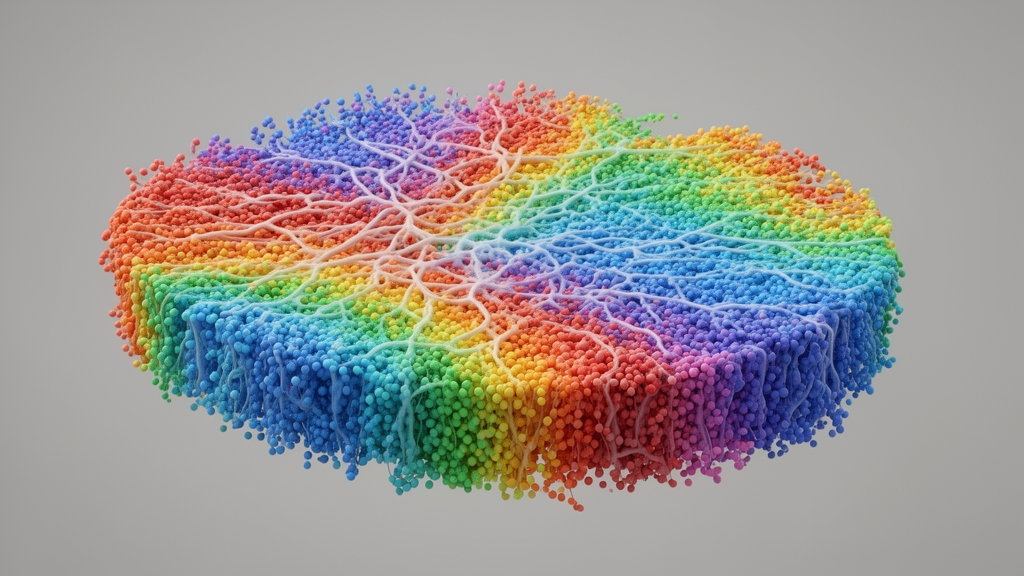
To overcome the spatial information loss inherent in bulk tissue homogenization, the researchers performed subcellular in situ spatial transcriptomics on three representative formalin-fixed paraffin-embedded tissue sections, comprising two adamantinomatous cases and one papillary case. Using the high-resolution Xenium platform and a curated cancer panel profiling three hundred seventy-seven target genes, the investigators resolved the precise spatial distribution of transcripts across 201,499 individual cells. Downstream computational analysis normalized transcript counts per cell and applied dimensionality reduction to group profiled cells into thirteen distinct transcriptional clusters. Visualized via uniform manifold approximation and projection coordinates alongside registered histological tissue images, these clusters revealed substantial intra-tumoral heterogeneity and architectural organization. By mapping gene expression patterns directly onto cellular coordinates, spatial transcriptomics clarified how distinct epithelial subpopulations, stromal elements, and neighboring cerebral tissue interact within the intact microenvironment, providing insights into localized signaling dynamics that cannot be detected by conventional bulk tissue sequencing.
Spatial differential expression analysis identified forty-one statistically significant differentially expressed genes between adamantinomatous and papillary tissues, illuminating divergent biological and immunological programs. Adamantinomatous sections showed marked elevation of genes linked to cell proliferation and survival, such as PPP1R1B, PROX1, and MCF2L, alongside distinct metabolic enzymes including HPX, CYP2B6, and GATM. Intriguingly, adamantinomatous tumors upregulated APCDD1, a membrane-bound glycoprotein that functions as a cell-surface inhibitor of Wnt signaling by sequestering lipid-modified Wnt ligands. Its elevation represents a negative feedback mechanism induced by constitutive beta-catenin hyperactivity that remains insufficient to overcome driver mutations. Reference-based cell annotation utilizing brain and tumor immune single-cell atlases resolved twenty-four separable cellular clusters. Perivascular macrophages were noticeably more abundant in papillary craniopharyngioma, whereas tumor-associated macrophages represented the dominant infiltrating immune population across both subtypes.
The study provides important proof-of-concept evidence that archival paraffin-embedded tissues can support combined whole transcriptome sequencing and spatial transcriptomics for rare intracranial neoplasms, while underscoring vital technical and biological caveats. The authors emphasized that archival RNA extraction requires rigorous technical safeguards, advising additional deoxyribonuclease treatment prior to complementary DNA library preparation to prevent persistent DNA contamination. Crucially, the researchers acknowledged that their findings are constrained by small sample sizes, particularly within the papillary cohort where only four specimens underwent bulk sequencing and a single section was profiled spatially. Consequently, observed immunological signatures, microenvironmental differences, and potential prognostic correlations associated with specific CTNNB1 mutations must be regarded as preliminary and hypothesis-generating. Future translational efforts will require larger, internationally annotated multi-center cohorts to validate these spatial biomarkers and determine whether targeted interventions—such as selective BRAF inhibitors for papillary tumors or pathway modulators targeting Wnt, hedgehog, or tumor-associated macrophages in adamantinomatous lesions—can improve clinical management and patient outcomes.
Subject of Research: Molecular characterization and spatial transcriptomics of craniopharyngioma subtypes
Article Title: Comprehensive molecular characterization of craniopharyngiomas using whole transcriptome and spatial transcriptomics approaches
Article References: Kert, Š., Matjašič, A., Pižem, J., Mlakar, J., Bošnjak, M., Jerala, M., Kotnik, P., Faganel Kotnik, B., Kitanovski, L., & Zupan, A. (2025). Comprehensive molecular characterization of craniopharyngiomas using whole transcriptome and spatial transcriptomics approaches. Brain Tumor Pathology, 42(4), 130-142. https://doi.org/10.1007/s10014-025-00509-z
Image Credits: AI Generated
DOI: 10.1007/s10014-025-00509-z
Keywords: Craniopharyngioma, Adamantinomatous Craniopharyngioma, Papillary Craniopharyngioma, Spatial Transcriptomics, Whole Transcriptome Sequencing, CTNNB1 Mutation, BRAF V600E, Wnt Signaling Pathway, MAPK Signaling Pathway, Xenium In Situ, Pituitary Gland, Keratin Gene Expression, APCDD1, Formalin-Fixed Paraffin-Embedded, DESeq2 Analysis, Tumor Microenvironment, Rathke's Pouch, Brain Tumor Pathology
News Source: Juliet Wilcox. (November 24, 2026). Spatial Profiling and Transcriptome Sequencing Map Gene Differences in Rare Craniopharyngioma Tumors. Scienmag.